

Workmen’s Compensation Insurance
Protects workers when workplace accidents cause injury or death
Get ₹15 Lakh Cover
Starting At ₹1,200/Year


Policy Provided By























Workmen’s Compensation Insurance
Protects workers when workplace accidents cause injury or death
Get Quotes in a Few Steps


Currently Reading
1. What Is Workmen's Compensation Insurance?
2. What Is The Workmen’s Compensation Act?
3. How is Employee Compensation Calculated Under the Act?
4. Who Needs a Workmen’s Compensation Policy?
5. Why is Workmen's Compensation Insurance Important for You?
6. What Does a Workmen's Compensation Insurance Cover?
7. Types of Workmen’s Compensation Policy?
8. Workmen's Compensation Policy: Add-Ons
9. Workmen's Compensation Policy: Exclusions
10. How Is the WC Premium Calculated?
11. How to Buy a WC Policy from BimaKavach?
12. WC Policy Claim Process
13. Documents Required to File a Claim
14. Real Workmen's Compensation Claim Examples
Workers' Compensation Insurance (WC Insurance) is a policy that helps employers cover their legal liability towards employees under the Employee Compensation Act. It pays the compensation payable to employees or their dependents for work-related injuries, disabilities, or death, including medical expenses, lost wages, disability benefits, rehabilitation costs, and death benefits, which is why it is also known as Employee's Compensation Insurance. The policy ensures that eligible compensation is paid promptly without placing a significant financial burden on the employer.
By transferring this liability to the insurer, the WC Policy protects businesses from unexpected compensation costs, legal disputes, and cash flow disruptions arising from workplace accidents. It also helps employers remain compliant with statutory requirements while providing financial security to employees and their families during difficult circumstances.
The Workmen's Compensation Act, 1923, renamed the Employees' Compensation Act, 1923 through the 2009 amendment, is an Indian labour law that requires employers to compensate employees or their dependents for work-related injuries, occupational diseases, disability, or death. The Act also lays down the method for calculating compensation based on factors such as the employee's wages, age, and the nature of the injury. The 2017 amendment further strengthened the Act by enhancing penalties for non-compliance and empowering the Central Government to revise compensation limits.
The Act was introduced to create a fair system that ensures employees or their dependents receive financial compensation in the event of a workplace injury, occupational disease, disability, or death. By providing a clear framework for compensation, the Act protects employees while helping employers fulfil their legal obligations efficiently and fairly.
The employee compensation amount is determined using factors such as the employee's monthly wages, age, loss of earning capacity, and the type of disability.
Key Terms Used in Compensation Calculation
Monthly Wage Cap:
For compensation calculations, the maximum monthly wage is capped at ₹15,000, even if the employee's actual wage is higher.
Age Factor:
A predefined multiplier specified in Schedule IV of the Act based on the employee's completed age.
Loss of Earning Capacity:
The percentage reduction in an employee's earning capacity due to a workplace injury, as specified in Schedule I of the Act.
Temporary Disability Period:
The period during which an employee is unable to work because of a workplace injury. Compensation is generally paid in half-monthly instalments for up to five years, subject to the provisions of the Act.
| Formula | Example | Compensation |
|---|---|---|
| 50% x Monthly Wages x Relevant Based on Age | Wage = ₹15,000 Age Factor (age is 35) = 197.06 | ₹14,77,950 (₹1,20,000 is the minimum compensation) |
Death
Formula
50% x Monthly Wages x
Relevant Based on Age
Example
Wage = ₹15,000
Age Factor (age is 35) = 197.06
Compensation
₹14,77,950
(₹1,20,000 is the minimum compensation)
Permanent Total Disability
Formula
60% x Monthly Wages x
Relevant Based on Age
Example
Wage = ₹15,000
Age Factor (age is 35) = 197.06
Compensation
₹17,73,540
(₹1,40,000 is the minimum compensation)
Permanent Partial Disability
Formula
60% x Monthly Wages x
Relevant Based on Age x
% of Loss of Earning Capacity
Example
Wage = 15,000
Age Factor (age is 35) = 197.06
Loss of one eye (50%)
Compensation
₹8,86,770
Temporary Disability
Formula
25% x Monthly Wages x
Disability Period / 15
Example
Disability Period = 90 Days;
Wage = ₹15,000
Compensation
₹12,000
Industries It Applies To
The WC Policy is generally required for employers covered under Schedule II of the Employees' Compensation Act. This includes businesses operating in industries such as:
- Construction
- Manufacturing
- Transport and logistics
- Mining
- And, plantations
It also mentions allied trades that require physical labour, machinery, or exposure to on-site risks
Any employer carrying out operations in these sectors, including contractors and sub-contractors who supply labour to a site, falls within the ambit of this Act.
When WC Applies vs ESI
Workmen's Compensation Insurance and the Employees' State Insurance (ESI) scheme share common ground, but not the same workforce. ESI applies to employees earning up to ₹21,000 per month at covered establishments in notified areas. Once a worker's wages exceed this limit, or the establishment falls outside the umbrella of ESI (seasonal operations, smaller units, or locations where ESI hasn't been extended), the employer's liability shifts back to the Employee Compensation Act. In such instances, a Workmen's Compensation Policy becomes the most appropriate cover.
Is It Legally Mandatory?
Buying Employee Compensation Insurance is not legally mandatory. But the payment of compensation is indeed mandatory. Under the Employee Compensation Act, employers are statutorily liable to pay compensation whenever a covered worker gets injured, disabled, or dies on the job, whether the employer holds a policy or not. A WC Policy is simply a way for employers to fund that existing liability rather than paying claims out of pocket. In fact, many contracts, tenders, and site licenses now require proof of such insurance cover before work starts.
- Employee Protection: WC Insurance protects employees both physically and financially by ensuring medical care and income support, right from the time of a workplace accident.
- Employer Liability Protection: It protects employers from unexpected financial losses by covering claims, medical costs, and compensation payouts arising from employee injuries.
- Protection from Penalties and Lawsuits: It helps employers respond promptly to claims, reducing the risk of penalties, prosecution, or costly lawsuits related to a workplace accident.
- Improved Employee Morale: When workers know they have a layer of protection, they feel more secure and valued. This leads to better employee commitment and retention.
The essence of a Workmen's Compensation Insurance is represented by these four fundamental covers, which come into play when an employee's health, income, or life is affected by a workplace accident. Together, this WC coverage takes care of the medical treatment of an employee, the employer's legal defence expenses, lost income during disability, and financial support for a worker's family in case of death. These are summarised below for quick reference.
| Hospitalisation, surgery, medicine, and rehabilitation costs following a workplace injury. Ensures the employee is treated without any financial strain to the employer. |
Injury & Medical Treatment
Hospitalisation, surgery, medicine, and rehabilitation costs following a workplace injury. Ensures the employee is treated without any financial strain to the employer.
Legal Expenses
Defence costs like lawyer fees, court fees, etc., if the employer is sued for a workplace injury or illness.
Temporary & Permanent Disability
Lost wages during recovery from a temporary disability, and a lump sum payout if the injury leads to permanent disability.
Death Benefits
A one-time payment to the dependents of the deceased worker. It helps cover funeral costs and provide ongoing financial support.
Workers' Compensation Policies are generally available in two types, depending on how employees are covered under the policy. Employers can choose the most suitable option depending on the size and nature of their workforce.
| What It Is | Best For |
|---|---|
| Covers employees listed individually by name, designation, and wage in the policy schedule. | Small businesses with a fixed, stable team where headcount rarely changes. |
Named Policy
What It Is
Covers employees listed individually by name, designation, and wage in the policy schedule.
Best For
Small businesses with a fixed, stable team where headcount rarely changes.
Unnamed Policy
What It Is
Provides group cover for the whole workforce, without listing individual names.
Best For
Businesses have variable, seasonal, or contract-based teams where headcount can fluctuate.
Please note that the exact coverage levels can vary from insurer to insurer.
Medical Expenses Add-On:
This add-on extends your Workmen's Compensation Policy to cover the entire cost of treating a workplace injury. It includes the costs of hospitalisation, surgery, medication, and rehabilitation, over and above the standard limits built into the base cover.
Terrorism Coverage Add-On:
This optional cover extends protection to injuries or deaths caused by a terrorist act at the workplace. This means the affected employees will still receive medical expenses, compensation for lost wages, and disability payouts even when the incident falls outside the normal workplace risk.
Contractors & Subcontractors Coverage Add-On:
It extends Workmen's Compensation Insurance coverage to contractors and subcontractors who work on your premises.
Occupational Disease Cover (Schedule III) Add-On:
This add-on covers illnesses caused by prolonged exposure to hazardous working conditions (as listed under Schedule III of the Employee Compensation Act). These include diseases linked to mining or chemical handling, for example, Compressed Air Disease among workers exposed to pressurised environments.
Injury Caused by War or Civil Unrest
Injuries resulting from war, civil unrest, or acts of terrorism are not covered by the policy. These events are considered beyond the scope of standard workplace accidents.
Self-Inflicted Injuries
Injuries that are intentionally self-inflicted by the employee are excluded from insurance. The policy does not compensate for harm caused deliberately by the worker.
Injuries Sustained from Intoxication
If an employee is under the influence of alcohol or drugs at the time of an injury, then Insurance will not cover the medical costs or compensation for lost wages.
Pre-Existing Injuries Before the Policy Period
Injuries or health conditions that existed before the start of the policy period are not covered. The policy applies only to injuries that occur after the policy begins.
Injuries or Accidental Death Outside the Workplace
Injuries or accidental death that occur outside of the workplace, during non-working hours, or off-site are excluded from Employee’s Compensation Insurance.
Penalties/Interest Imposed on the Employer Under Any Law
Employee’s Compensation Insurance does not cover penalties or interest that the employer may incur under any legal framework. This includes any fines or legal consequences resulting from non-compliance with laws.
The premium for a WC Policy is calculated based on your total wage bill and a risk rate assigned to your industry. It is not a fixed number, and this is why two businesses with similar headcounts can get very different Workmen's Compensation Insurance quotes. Insurers usually look into the following ‘cost-drivers’ while calculating a Workmen's Compensation Insurance quote:
- Nature of business and risk classification: Higher-risk trades like construction or mining can attract a higher rate than office-based work.
- Number of workers and their wages or salaries: The wage bill is the basis on which the premium rate is applied.
- Job classifications: Different risk weightages are assigned to skilled, semi-skilled, and unskilled workers within a workforce.
- Location of operations: The price for a multi-location office set up can be very different to that of a single, low-risk office set up.
- Safety record and past claims history: A clean claims record usually helps at renewal. At the same time, frequent or large claims in the past may result in a rate increase.
Because these factors vary by business, the only accurate way to know your number is to do some due diligence. You can check your premium online in a few minutes by entering your industry, headcount, and wage details.
Buying a Workmen's Compensation Policy online with BimaKavach involves three simple steps. You can go from a quote to an active cover in well under 30 minutes.
| 1. Get Instant Quotes Across 25+ Insurers: | 2. Pick Your Cover and Insurer | 3. Pay Online and Get Your Policy |
|---|---|---|
| Share a few basic details about your business, such as industry, headcount, and wage bill. The BimaKavach platform would pull quotes from over 25 insurers in seconds. | Compare premiums, coverage limits, and add-ons side by side. Then, choose the combination of cover and insurer that caters to your risk and budget. Our team of experts is available if you would like a second opinion before deciding. | Complete the payment securely on the platform, and your Workmen's Compensation Policy is issued digitally within minutes of payment. No paperwork, no need to sign in person. You will get the BimaKavach WC Policy in your email. |
Step by Step Process to get Policy through BimaKavach
1. Get Instant Quotes Across 25+ Insurers:
Share a few basic details about your business, such as industry, headcount, and wage bill. The BimaKavach platform would pull quotes from over 25 insurers in seconds.
2. Pick Your Cover and Insurer
Compare premiums, coverage limits, and add-ons side by side. Then, choose the combination of cover and insurer that caters to your risk and budget. Our team of experts is available if you would like a second opinion before deciding.
3. Pay Online and Get Your Policy
Complete the payment securely on the platform, and your Workmen's Compensation Policy is issued digitally within minutes of payment. No paperwork, no need to sign in person. You will get the BimaKavach WC Policy in your email.
Documents You'll Need
- Proposal form, with details filled in about your business and workers
- Company KYC with PAN, GST registration certificate, and certificate of incorporation
- Number of employees and their job profiles (whether skilled, semi-skilled or unskilled, etc.)
- Wage details for all covered employees
Everything from quotes to issuance happens directly on the same and secure platform of BimaKavach. Our seasoned experts will be with you, end to end, when you buy Workmen's Compensation Policy online.
1. Report the Incident (Within 24–48 Hours):
Inform us immediately after an employee is injured. We will immediately notify the insurer on your behalf, as most policies require the incident to be reported within 24 to 48 hours of the occurrence. This will keep the Workmen's Compensation claim process sailing smoothly.
2. Submit the Required Documents (Within 7 Days):
Share all the necessary documents that we would request, preferably within 7 days of intimation. Early submission of complete documents helps the insurer assess the claim without any unnecessary delays (see the full document checklist in the next section).
3. Investigation and Verification (7–15 Days):
The insurer investigates the incident and verifies if the injury is work-related and falls within the policy terms. They may speak to witnesses or the treating doctor as well. This step usually takes between 7 and 15 days after submitting the documents.
4. Liability Determination:
After the verified findings are reviewed, the insurer determines the liability. This includes calculating the amount of compensation payable, considering the employee's wages and the severity of the injury.
5. Legal Costs and Defence (If Applicable):
If the claim spirals into legal proceedings, obtain the insurer's consent before admitting liability or making payments. Approved legal defence costs are covered.
6. Payout and Settlement (Typically Within 30 Days):
Once the verification and compensation calculations are completed, the insurer settles the claim. Most straightforward cases see workers' compensation settlement within 30 days of complete documentation.
The documents needed to file a claim depend on whether the case involves disability or death. Submitting the right paperwork upfront keeps the workers' compensation claim process moving without unnecessary delays at the insurer's end.
Disability Claims
- Duly filled claim form
- Medical certificate from the treating doctor confirming the injury and the extent of disability
- Memorandum of Agreement, signed once the compensation is agreed upon between the employer and the employee
Fatal Claims
- Death certificate
- FIR (First Information Report) filed with the police
- Postmortem report
- Witness statements, where available
- Form 'A' (notice of accident/claim, as applicable)
Construction Site Fall
In 2023, a construction worker fell from scaffolding while working on a building site and suffered a broken leg. The worker required immediate surgery and was unable to work for two months. The company filed a claim under their Workmen Compensation Policy, which covered Rs. 40,000 for medical expenses, Rs. 50,000 for lost wages during recovery, and Rs. 1.5 Lakhs as a lump sum for partial permanent disability. The claim helped the employer manage costs and ensured the worker received timely support.
Fatal Accident in a Warehouse
In 2022, a fatal forklift accident occurred at a warehouse, leading to the death of a worker. The company’s Workmen's Compensation Policy provided Rs. 8 Lakhs as a death benefit to support the worker’s family. It also covered Rs. 1.5 Lakhs in legal costs and Rs. 1 Lakh towards the investigation of the accident. This allowed the family to receive financial help during a difficult time and helped the employer manage legal and safety-related expenses.
Manufacturing Plant Injury
In 2024, a worker at a manufacturing plant lost two fingers while operating machinery. The injury required multiple surgeries and three months of recovery. The company filed a claim that covered Rs. 60,000 for medical treatment, Rs. 75,000 for temporary disability, and Rs. 3 Lakhs for permanent disability due to the long-term impact. This support helped the worker recover without financial stress and allowed the company to handle the incident responsibly.
Trusted by India's Top Businesses















A new experience.
Built on intelligence. Covered in minutes.


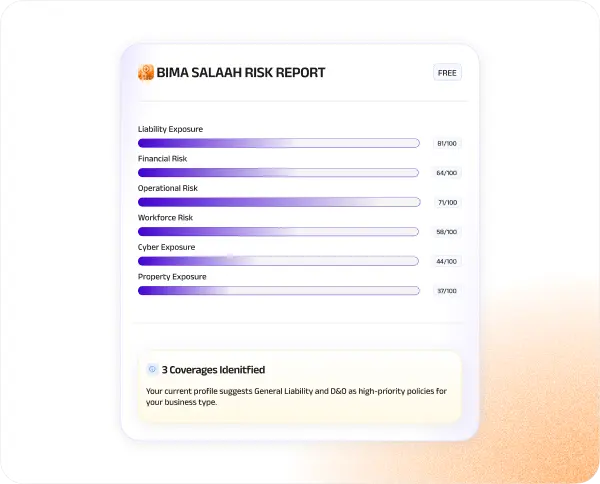
Every risk, read instantly.
Everything your business is exposed to, analysed before any cover is placed.
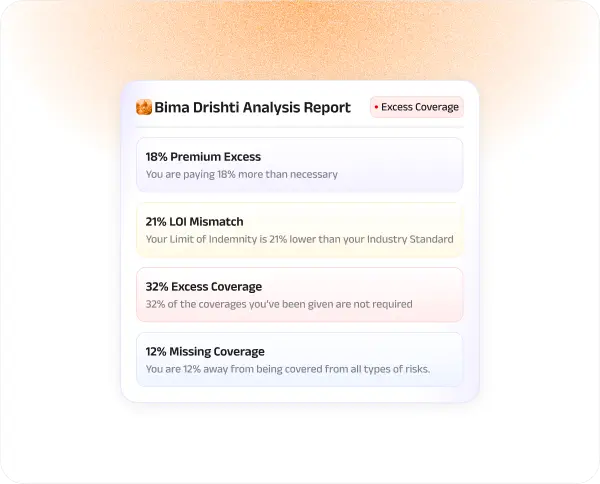
Every gap, caught early.
The gaps your current cover leaves open, surfaced before they turn into a claim.
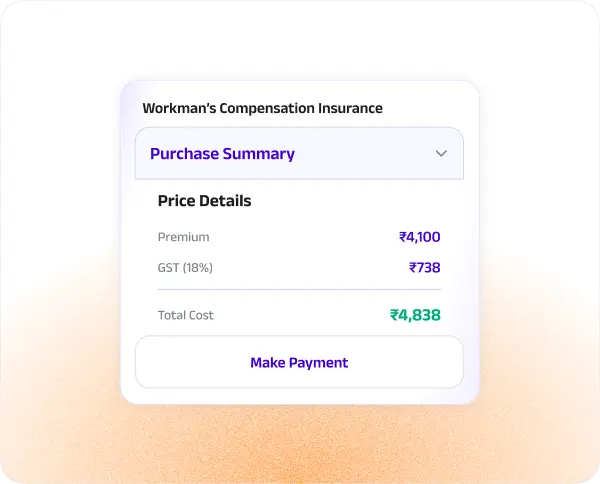
Right coverage, issued in minutes.
The right cover, priced and placed with India's top insurers, in minutes.



India's builders trust BimaKavach.

Learn More About
Workmen’s Compensation Insurance
Business Insurance, made Simple
A Workmen's Compensation Policy (also known as a WC Policy) is a legal requirement for employers in India to protect their employees from financial hardship due to workplace injuries or illnesses. This policy covers medical expenses, rehabilitation costs, lost wages, and death benefits, ensuring employees or their dependents receive compensation.
It mandates that an employer is liable to pay compensation to a worker who sustains an accidental injury in the course of employment. The Act specifically focuses on injuries and diseases arising out of and in the course of employment.
Under the Workmen's Compensation Act, 1923, any employer in industries like factories, construction, mining, transport, and agriculture is required to provide workmen's compensation. Companies with workers engaged in manual labour or high-risk jobs must cover employees for work-related injuries, illnesses, or fatalities. The employer is legally liable to pay, and failure to comply can result in penalties.
To buy a Workmen's Compensation Insurance policy, you'll usually need a few basic business and employee details. These include:
- A duly filled proposal form
- Company KYC documents, such as PAN, GST registration certificate, and Certificate of Incorporation
- The number of employees along with their job profiles (skilled, semi-skilled, or unskilled)
- Wage details of all employees to be covered under the policy
Any employee who suffers from a work-related injury, illness, or death is eligible for workmen's compensation, as long as they meet the requirements outlined by the policy and the Employees' Compensation Act.