

Workers Compensation Insurance for Small Business
Protects small businesses when workplace accidents cause employee injury or disability


Policy Provided By























Workers Compensation Insurance for Small Business
Protects small businesses when workplace accidents cause employee injury or disability
Get Quotes in a Few Steps


Currently Reading
1. What Is Workmen's Compensation Insurance for Small Business?
2. The Headcount Myth and Three Other Mistakes Small Businesses Make About WC
3. Which Employees in a Small Business Are Covered?
4. What Does Workers Compensation Insurance for Small Business Pay For?
5. When Can a Small Business Employee Claim Compensation?
6. What Workers Compensation Insurance Does Not Cover?
7. What Workers Compensation Insurance Does Not Cover?
8. How to Buy Workmen Compensation Insurance for Small Business from BimaKavach?
9. Two WC Claims That Small Business Owners Did Not See Coming
Workers' compensation insurance for small business is a policy that covers the employer's statutory liability when an employee suffers an injury, disability, or death arising out of and in the course of employment.
Consider a services firm with 12 employees. An accounts executive slips on a poorly lit staircase while carrying files between floors and fractures her wrist. She needs surgery, three months of recovery, and cannot work during that period. Under Chapter VII, the employer owes medical expenses plus temporary disability compensation calculated by the statutory formula. Without a WC policy, the firm owner pays the full amount personally. With the policy in place, the insurer settles the statutory compensation directly.
Most small business owners assume workers' compensation is something large factories and construction sites deal with. Here are four objections that come up repeatedly, and why each one falls apart:
"We Only Have 5 Employees, the Act Does Not Apply to Us"
Chapter VII applies based on the nature of employment and the wage threshold, not headcount. A workshop with three manual workers or a consultancy with one field executive falls within scope. There is no minimum employee count that exempts a business.
"Our Workers Do Desk Jobs, There Is No Injury Risk"
Office workplaces produce staircase falls, electrical faults, fire evacuations, and commuting accidents that carry employer liability. Work-from-home injuries during work hours can also trigger liability where a nexus to employment is established.
"We Already Provide Group Health Insurance"
Group health insurance pays for hospitalisation as an employee benefit. It does not discharge statutory liability under the Code on Social Security. When an employee is injured at work, compensation is calculated by a fixed formula (wages, age factor, nature of injury) regardless of what the health policy pays. The two serve different legal purposes, and one does not replace the other.
"WC Insurance Is Only for Factories and Construction"
The Code on Social Security replaced the Employees' Compensation Act 1923 and widened its scope. Chapter VII now applies to service businesses, retail shops, logistics firms, restaurants, and offices, not just factories.
It looks at whether the work involves manual, clerical, supervisory, or technical duties and whether the employee's wage falls within or above the ESI threshold. Here is how that maps to a typical small business workforce.
Office and Administrative Staff:
Receptionists, accountants, HR coordinators, and office assistants performing clerical or supervisory work. Chapter VII covers workplace injuries, including stair falls, electrical incidents, and fire-related injuries on the premises.
Field and Delivery Personnel:
Sales executives visiting client sites, delivery staff on two-wheelers, and technicians travelling to service locations. Covered for injuries during work-related travel and on-site duties, including commuting accidents where a nexus to employment is established under s.74(4).
Supervisory and Skilled Staff Above the ESI Wage Threshold:
Employees earning above Rs 21,000 per month fall outside ESIC coverage. Their workplace injury liability sits directly with the employer under Chapter VII. In a small business, this often includes the office manager, senior technician, or team lead, exactly the roles the owner wants to be "covered" by ESIC.
Contract and Daily-Wage Workers:
If the contractor cannot pay compensation, principal employer liability flows upward to the business that engaged the contractor. A small business that hires a cleaning crew, a maintenance worker, or seasonal help through a manpower supplier is not automatically shielded from liability.
The policy mirrors the employer's statutory obligation under the Code on Social Security. Each coverage head below maps to a specific provision in Chapter VII.
1. Medical Expenses for Workplace Injuries
Covers treatment, surgery, hospitalisation, and rehabilitation when an employee is injured at work, from a minor fracture to a serious burn.
2. Temporary Disability Compensation
When an employee cannot work because of a workplace injury, the employer owes periodic payments calculated as a percentage of monthly wages. The policy pays this for the duration of the disability, up to the limits set by the Code.
3. Permanent Disability Compensation
If a workplace injury results in permanent partial or total disablement, the statutory compensation is a lump sum calculated using monthly wages, an age-based multiplier from the Fourth Schedule, and the percentage of disability assessed.
4. Death Compensation to Dependents
Compensates the deceased worker’s dependents based on the employee’s wages and age, as prescribed under the Employees’ Compensation Act.
5. Occupational Disease Coverage Under the Third Schedule
The Code lists specific occupational diseases in the Third Schedule that are deemed workplace injuries when contracted in specified employments: prolonged chemical exposure, noise-induced hearing loss, and respiratory diseases from dust or fumes. Claims can be filed up to two years after the employee leaves employment.
The Code on Social Security defines a compensable injury as one arising out of and in the course of employment. For a small business, the triggers go well beyond factory floor accidents.
- Workplace Premises Injuries: An employee slips on a wet floor, falls on stairs, or sustains burns from an electrical fault in the office or shop. These are the most frequent small business claims and the ones owners least expect.
- Work-Related Travel and Commuting Accidents: A sales executive injured while travelling to a client site or a delivery rider injured during a drop may be covered. Commuting accidents may also qualify when the timing, route, and circumstances align with the employee’s work schedule.
- Occupational Diseases From Prolonged Exposure: A worker in a printing press develops respiratory issues from ink and solvent exposure. The Third Schedule lists these as deemed workplace injuries, with claims valid up to two years after leaving employment.
The employer must report any serious workplace injury or death to the competent authority within 7 days. Delayed reporting weakens the employer's legal defence and can attract a penalty.
It defines a compensable injury as one arising out of and in the course of employment. For a small business, the triggers go well beyond factory floor accidents.
| Workplace Premises Injuries: | Work-Related Travel and Commuting Accidents: | Occupational Diseases From Prolonged Exposure: |
|---|---|---|
| An employee slips on a wet floor, falls on stairs, or sustains burns from an electrical fault in the office or shop. These are the most frequent small business claims and the ones owners least expect. | A sales executive injured while travelling to a client site or a delivery rider injured during a drop may be covered. Commuting accidents may also qualify when the timing, route, and circumstances align with the employee’s work schedule. | A worker in a printing press develops respiratory issues from ink and solvent exposure. The Third Schedule lists these as deemed workplace injuries, with claims valid up to two years after leaving employment. |
Small Businesses WC Coverages:
Workplace Premises Injuries:
An employee slips on a wet floor, falls on stairs, or sustains burns from an electrical fault in the office or shop. These are the most frequent small business claims and the ones owners least expect.
Work-Related Travel and Commuting Accidents:
A sales executive injured while travelling to a client site or a delivery rider injured during a drop may be covered. Commuting accidents may also qualify when the timing, route, and circumstances align with the employee’s work schedule.
Occupational Diseases From Prolonged Exposure:
A worker in a printing press develops respiratory issues from ink and solvent exposure. The Third Schedule lists these as deemed workplace injuries, with claims valid up to two years after leaving employment.
The employer must report any serious workplace injury or death to the competent authority within 7 days. Delayed reporting weakens the employer's legal defence and can attract a penalty.
Every WC policy carries standard exclusions that define the boundary of the insurer's liability. Understanding these upfront prevents disputes at the time of a claim.
- Self-Inflicted Injuries: Any injury the employee intentionally causes to themselves is excluded.
- Injuries Caused by Intoxication: If the employee was under the influence of alcohol or drugs at the time of the accident and this contributed to the injury, the claim is excluded under the Code itself, not just the policy.
- Injuries Outside the Course of Employment: A personal errand during lunch break or a weekend accident at home with no connection to work duties falls outside scope.
- Pre-Existing Conditions Not Aggravated by Work: A medical condition that existed before employment and was not worsened by work duties is not compensable. The condition must be demonstrably connected to or aggravated by the employment.
| 1. Get Instant Quotes: | 2. Choose Your Coverage and Insurer: | 3. Pay Online and Get Your Policy: |
|---|---|---|
| Share your business type, employee count, and wage structure. Compare WC policy quotes across insurers within seconds. | Our experts help you compare policy limits, exclusions, and pricing to find the right fit for your team size and risk profile. | Complete payment digitally. Your policy documents arrive within minutes with no paperwork required. |
Step by Step Process to Get WC Policy Through BimaKavach
1. Get Instant Quotes:
Share your business type, employee count, and wage structure. Compare WC policy quotes across insurers within seconds.
2. Choose Your Coverage and Insurer:
Our experts help you compare policy limits, exclusions, and pricing to find the right fit for your team size and risk profile.
3. Pay Online and Get Your Policy:
Complete payment digitally. Your policy documents arrive within minutes with no paperwork required.
Documents You Will Need
- Business registration certificate or GST registration
- Employee headcount with job roles and monthly wage details
- ESIC registration number (if applicable)
- Previous WC policy copy (if renewing or switching insurers)
- Claims history for the last three years (if any)
The Staircase Fall in a 7-Person Accounting Firm
A junior accountant tripped on a loose stair carpet and fractured her knee. The firm owner assumed group health insurance would handle it. The GHI paid the hospital bill, but the employer owed separate statutory compensation for the three-month disability period under the Code on Social Security: approximately Rs 1.8 lakh on top of the medical costs. A WC policy would have settled the statutory amount directly.
The Delivery Rider's Road Accident at a Small E-Commerce Startup
A 10-person startup's delivery rider was hit by a truck and suffered 40% permanent partial disability. The founders assumed the motor policy covered it, but the rider was the employer's own employee, not a third party. The statutory compensation for a 25-year-old earning Rs 15,000 per month came to approximately Rs 4 to 5 lakh. The startup funded it from its seed round, delaying product development by six months. A WC policy with coverage for workers in transportation and logistics would have settled the entire amount.
Workmen's Compensation Insurance, for Every Kind of Business
Workmen's Compensation Insurance
Protects workers when workplace accidents cause injury or death
For Factory Workers
Protects factories against financial liabilities arising from workplace accidents that cause worker injuries or death.
For Manufacturing
Protects manufacturing units when factory floor accidents cause worker injury or death
For Restaurant Staff
Protects restaurants against financial liabilities when staff or cleaners suffer injuries from burns or other workplace accidents.
For Transportation Workers
Protects transporting firms when road accidents cause worker injury
Trusted by India's Top Businesses















A new experience.
Built on intelligence. Covered in minutes.


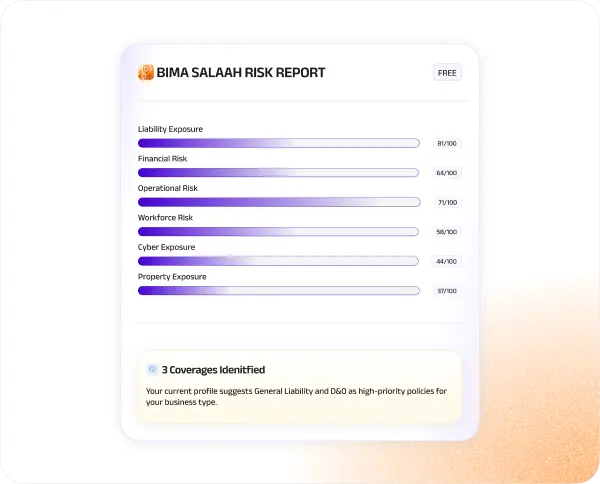
Every risk, read instantly.
Everything your business is exposed to, analysed before any cover is placed.
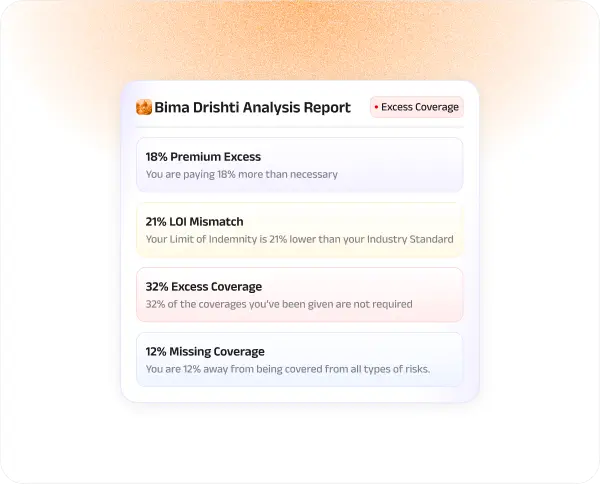
Every gap, caught early.
The gaps your current cover leaves open, surfaced before they turn into a claim.
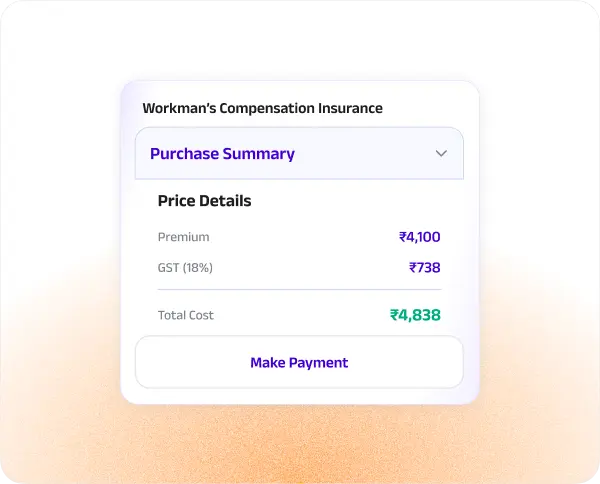
Right coverage, issued in minutes.
The right cover, priced and placed with India's top insurers, in minutes.



India's builders trust BimaKavach.

Learn More About
Workers Compensation Insurance for Small Business
Workers Compensation Insurance for Small Business, made Simple
If the injury occurred during work hours and has a demonstrable connection to work duties, the employer may be liable under the Code. Work-from-home injury claims are an emerging category, and courts assess the nexus between the injury, the time, and the work being performed when the injury happened.
It does not mandate the purchase of insurance. However, the liability is uninsured without a policy, and several state governments (Maharashtra, Karnataka, Tamil Nadu) have gazette-notified mandatory WC insurance for specific sectors. Many MNC clients and government tenders also require WC proof as a condition.
Contract and daily-wage workers must be declared to the insurer at policy issuance. If the contractor cannot pay compensation for an injured worker, principal employer liability under s.74 of the Code flows to the business that engaged the contractor. Undeclared workers may be excluded by the policy, but the statutory liability on the employer remains.
ESIC covers employees earning up to Rs 21,000 per month in notified areas. Workers above this wage threshold fall outside ESIC and under direct employer liability for workplace injuries. A WC policy covers that direct liability. In a small business with a mixed workforce, both ESIC registration and a WC policy may be needed.
The premium depends on the number of employees, their job roles, the industry risk category, and the wage structure. For a low-risk office-based business, premiums start at approximately Rs 1,200 per year for Rs 15 lakh cover. Higher-risk roles (field, delivery, manual) attract higher premiums. Talk to our experts for a quote specific to your team.
Exclusive Cyber Risk Assessment
Bima Netra
 Instant Cyber Risk Report
- Actionable Posture Insights