

Cyber Insurance for NBFC & Financial Institutions
Protects banks, NBFCs when cyberattacks target financial data or transactions


Policy Provided By





















Cyber Insurance for NBFC & Financial Institutions
Protects banks, NBFCs when cyberattacks target financial data or transactions
Get Quotes in a Few Steps


Currently Reading
1. What Is Cyber Insurance for Financial Institutions?
2. Three Incidents That Generate Claims Against Banks and NBFCs
3. From Forensics to Regulatory Hearings: What the Policy Pays For?
4. Where Cyber Cover Ends for a Financial Institution?
5. How to Buy Cyber Insurance for Financial Institutions From BimaKavach?
6. How Cyber Insurance Responded in Two BFSI Incidents
Cyber insurance for financial institutions pays the forensic investigation costs, the regulatory defence expenses, and the customer and partner claims your bank or NBFC faces when a data breach, a ransomware attack, or a payment fraud incident hits your operations. It is the financial recovery instrument that sits behind the controls framework, absorbing the costs that compliance itself cannot.
That distinction is what makes this product confusing for banks that already invest heavily in security. The RBI Cyber Security Framework mandates governance structures, security operations centres, penetration testing, and incident response plans. CERT-In requires you to report any cyber incident within 6 hours. The DPDP Act, 2023 treats your customer data as sensitive and imposes breach notification obligations and penalties. All of these mandates tell you what to do before and immediately after an incident. None of them pay a single rupee of the forensic investigation, the system restoration, the customer notification, or the regulatory defence that follows. Cyber insurance is built for exactly this gap: it converts an unbudgeted, potentially balance-sheet-threatening event into a managed, pre-funded response.
Three incident patterns account for most cyber insurance claims in Indian financial services. Each one creates exposure that a general IT security budget does not anticipate.
- A ransomware attack encrypts the core banking system at a regional NBFC, locking 1.2 lakh customer accounts for 9 days. Branch operations revert to manual vouchers. CERT-In requires the 6-hour report. RBI's CSIRT-Fin expects a parallel notification. The forensic investigation, the system rebuild, the business interruption loss from 9 days of degraded operations, and the regulatory defence when the inspector questions the NBFC's patch management collectively run into Rs 1.8 crore. The NBFC's IT security budget has no line item for any of this.
- An attacker compromises the SWIFT messaging environment at a mid-size bank and initiates fraudulent cross-border transfers totalling Rs 4.5 crore before the anomaly detection triggers. The bank recovers Rs 1.2 crore through correspondent bank recall requests. The remaining Rs 3.3 crore, plus the forensic investigation and the RBI inquiry defence, land on the bank's balance sheet.
- A data breach at the bank's card processing vendor exposes 3.5 lakh debit card numbers and CVVs. The bank did not store the data, the vendor did. But the customers hold the bank's card, the RBI expects the bank to respond, and the DPDP Act places the data fiduciary obligation on the entity that collected the data. The bank faces: card reissuance costs (Rs 35 lakh), customer notification and credit monitoring (Rs 20 lakh), forensic investigation of its own integration layer (Rs 18 lakh), and the regulatory inquiry defence (Rs 25 lakh). A cyber policy with third-party vendor breach coverage responds to all four.
Cyber insurance for financial institutions funds the full response chain, from the first hour after detection through the regulatory proceedings that follow. Each coverage responds to a specific regulatory obligation or financial exposure that the RBI framework mandates but does not fund.
Forensic Investigation:
The cost of engaging a cyber forensics firm to identify the attack vector, confirm which customer records or transactions were compromised, and produce the technical reports needed for CERT-In's 6-hour notification and RBI CSIRT-Fin's parallel reporting requirement.
System Restoration and Recovery:
Rebuilding core banking environments, re-imaging workstations, validating transaction integrity across branch and digital channels, and restoring card processing and payment gateway integrations.
Business Interruption:
Lost revenue and fixed operating costs during the period the bank's digital channels are down, including branch operations disruption, ATM network downtime, and internet banking unavailability.
Breach Notification and Customer Support:
Notifying affected account holders as required by the DPDP Act, issuing public disclosures, and providing credit and identity monitoring services for customers whose Aadhaar, PAN, or financial data was exposed.
Account Takeover and Funds Transfer Fraud:
Refunded transaction amounts under the zero-liability circular, plus unrecovered funds from SWIFT or NEFT fraud, covered under the account takeover and social engineering endorsements.
Regulatory Defence:
Legal costs of defending inquiries by RBI, CERT-In, the Data Protection Board, SEBI (for market intermediaries), or state cooperative registrars, including show-cause notices, directed audits, and penalty proceedings (insurable penalties covered, subject to policy terms).
Vendor and Third-Party Breach Liability:
Claims from customers and partners when a breach at the bank's card processor, payment gateway, or technology vendor exposes data that the bank collected.
Cyber Extortion Defence:
Professional negotiation support, the extortion payment where legally permissible (payments to sanctioned entities excluded), and parallel system restoration costs.
Crisis Communications:
PR and communications support to manage depositor confidence, media inquiries, and counterparty trust during and after the incident.
Every cyber policy carries standard exclusions. Read the full policy wording for the complete list, since insurers vary on the specifics.
Trading Losses and Market Volatility:
If a cyber incident disrupts trading systems and the bank incurs losses from market movements during the downtime, those are market losses, not cyber losses. The policy covers the system restoration and business interruption, but not the trading position losses that result from being unable to execute trades during the outage.
Direct Credit Defaults and Loan Forgiveness:
If a breach exposes borrower data and the resulting reputational damage leads to a spike in loan defaults, those credit losses are a portfolio risk, not a cyber loss. The policy covers the breach response costs, the notification, and the regulatory defence, not the loan book deterioration.
Wilful Violation of Financial Regulations:
If the bank knowingly operated in violation of the RBI Cyber Security Framework, failed to implement controls it represented in the proposal form, or deliberately bypassed security protocols, the insurer may decline the claim. The policy expects the bank to maintain the security posture it described at inception.
Telecom or Core Power Grid Failures:
If the bank's systems go down because a major telecom provider suffers a backbone outage or the power grid fails, those are infrastructure events, not cyber incidents. The policy responds to attacks and security failures, not to utility-level disruptions.
Getting covered is straightforward when you buy cyber insurance for financial institutions online through BimaKavach, an IRDAI-registered platform.
| 1. Get Instant Quotes: | 2. Choose Your Coverage and Insurer: | 3. Pay Online and Get Your Policy: |
|---|---|---|
| Enter your asset size, customer base, and digital channel details. Quotes from multiple insurers appear within seconds. | Our experts walk you through first-party and third-party limits, the account takeover endorsement, the vendor breach extension, and the social engineering sub-limit so the policy matches your institution's exposure. | Complete payment digitally and receive policy documents within minutes. |
Step by Step Process to Get Cyber Policy Through BimaKavach
1. Get Instant Quotes:
Enter your asset size, customer base, and digital channel details. Quotes from multiple insurers appear within seconds.
2. Choose Your Coverage and Insurer:
Our experts walk you through first-party and third-party limits, the account takeover endorsement, the vendor breach extension, and the social engineering sub-limit so the policy matches your institution's exposure.
3. Pay Online and Get Your Policy:
Complete payment digitally and receive policy documents within minutes.
Documents You Will Need
- Completed proposal form
- Institution KYC: RBI licence or registration certificate, certificate of incorporation, PAN, and GST details
- Asset size, deposit base, and customer count for the most recent financial year
- Details of core banking system, card processing, SWIFT integration, UPI, and internet banking platforms
- RBI cyber audit compliance report or ISO 27001 certification (if available)
- CERT-In empanelled auditor assessment or latest penetration test report (if available)
- Claims history and any prior cyber incidents disclosed
Two scenarios show how the policy pays out across different types of cyber events in Indian financial services.
A Core Banking Ransomware That Shut Down 85 Branches for 11 Days
A cooperative bank in western India with Rs 3,200 crore in deposits and 85 branches discovers that ransomware has encrypted its core banking server and backup tapes. Branch counters cannot process deposits, withdrawals, or loan disbursements. ATMs across the network go offline. CERT-In receives the 6-hour report. RBI's regional office opens an inquiry into the bank's business continuity preparedness.
The bank engages a forensic firm through the cyber policy's incident response panel (Rs 28 lakh). The system rebuild takes 11 days, during which 85 branches operate on manual vouchers with severe transaction limits. Business interruption loss: Rs 1.1 crore in lost fee income and deposit attrition. Customer notification to 4.2 lakh affected account holders: Rs 22 lakh. Regulatory defence for the RBI inquiry: Rs 18 lakh. Total covered costs: Rs 1.79 crore against a policy with a Rs 3 crore limit.
Cyber Insurance, for Every Kind of Business
Cyber Insurance
Protects businesses when cyber threats lead to financial damages
For Healthcare
Protects hospitals when data breaches or ransomware target patient records
Trusted by India's Top Businesses















A new experience.
Built on intelligence. Covered in minutes.


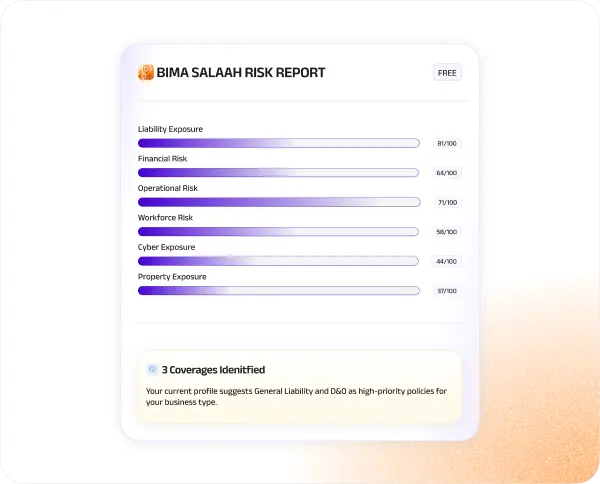
Every risk, read instantly.
Everything your business is exposed to, analysed before any cover is placed.
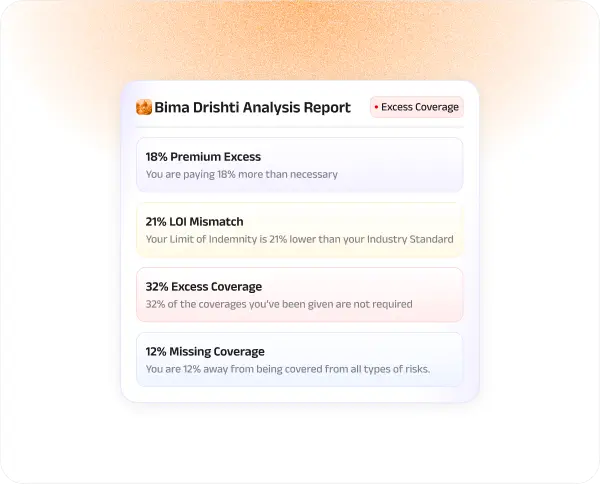
Every gap, caught early.
The gaps your current cover leaves open, surfaced before they turn into a claim.
Right coverage, issued in minutes.
The right cover, priced and placed with India's top insurers, in minutes.



India's builders trust BimaKavach.

Learn More About
Cyber Insurance for NBFC & Financial Institutions
Cyber Insurance for NBFC & Financial Institutions, made Simple
Yes. The RBI framework prescribes controls: governance, SOC operations, penetration testing, and incident response plans. Cyber insurance pays for the financial consequences when an incident still happens despite those controls: the forensic investigation, the system restoration, the customer notification, the business interruption, and the regulatory defence. The framework itself references insurance as part of the risk transfer toolkit. Compliance reduces risk; insurance covers the cost when risk materialises.
The vendor's standard agreement typically caps its liability at the annual licence fee. If a breach originates in the vendor's system but exposes your customer data, your institution bears the notification obligation under the DPDP Act, the RBI expects your institution to respond, and CERT-In expects your institution to report. A cyber policy with third-party vendor breach coverage fills the gap between the vendor's contractual cap and your actual exposure.
Yes. Regulatory defence costs for inquiries by RBI, SEBI, CERT-In, and the Data Protection Board are all covered under the policy. If your institution is a market intermediary under SEBI's Cybersecurity and Cyber Resilience Framework alongside your RBI obligations, the policy covers the defence costs across both regulators. Confirm that the policy wording does not limit regulatory defence to a single named regulator.
Exclusive Cyber Risk Assessment
Bima Netra
 Instant Cyber Risk Report
- Actionable Posture Insights