

Cyber Insurance for Fintech Companies
Protects fintechs when cyberattacks target financial data or transactions


Policy Provided By


















Cyber Insurance for Fintech Companies
Protects fintechs when cyberattacks target financial data or transactions
Get Quotes in a Few Steps


Currently Reading
1. What Is Cyber Insurance for Fintech Companies?
2. Four Ways a Cyber Incident Hits a Fintech Company
3. From Forensics to Regulatory Defence: What the Policy Pays For?
4. When Your Payment Partner Gets Breached?
5. Where Cyber Cover Ends for a Fintech Company?
6. What Underwriters Look at Before Quoting a Fintech Company
7. How to Buy Cyber Insurance for Fintech Companies from BimaKavach?
Cyber insurance for fintech companies pays the forensic investigation costs, the regulatory defence expenses, and the third-party claims your company faces when a data breach, a payment fraud incident, or a platform outage hits your fintech operations. It is the financial backstop for a category of risk that sits at the intersection of three separate insurance products, and that intersection is where most fintech founders get caught off guard.
Here is the problem. A fintech company that processes digital loans, runs a payment aggregator, or operates a prepaid instrument touches financial data, runs a technology platform, and moves money. A professional indemnity (Tech E&O) policy covers claims when the platform fails or produces wrong outputs. A crime or fidelity policy covers the direct loss of funds from fraud or employee theft. A cyber policy covers the breach notification, forensics, extortion, business interruption, and regulatory defence that follow an attack on your systems. When a single incident, say a compromised API credential that leads to unauthorised fund transfers and a data breach simultaneously, triggers all three exposures, only the cyber policy responds to the first-party response costs. Neither PI nor crime fills that gap.
Four patterns account for most fintech cyber claims in India. Each one creates exposure that a standard SaaS or IT services policy does not anticipate.
A Borrower Data Breach on Your Lending Platform:
An attacker exfiltrates Aadhaar numbers, bank statements, and credit bureau data from your loan origination system. Under the DPDP Act, 2023, your company must notify the Data Protection Board as the data fiduciary. CERT-In Direction 70B requires a report within 6 hours. Every lending partner whose borrowers were exposed has a contractual indemnity claim against you. Three regulatory responses and multiple partner settlements land simultaneously.
Social Engineering That Diverts a Settlement Payment:
An attacker impersonates a banking partner's treasury team and tricks your operations staff into redirecting Rs 45 lakh to a fraudulent account. No system was breached, but the funds are gone. A cyber policy covers this under the social engineering endorsement, including the forensic review and recovery costs. Without that endorsement, this loss falls between your cyber and crime policies.
A Vendor API Breach That Exposes Your Users' Data:
A breach at your account aggregator or KYC provider exposes borrower records that your platform requested. Your users blame your app, not the vendor. The DPDP Act places the notification obligation on the data fiduciary, which is your company. A cyber policy with contingent or dependent business coverage responds to these third-party claims.
Ransomware During a Settlement Cycle:
An attacker encrypts your transaction database days before merchant payouts are due. Every day of downtime triggers SLA penalties across your merchant agreements, and RBI expects the incident reported alongside the CERT-In notification. The policy covers the negotiation support, system restoration, and business interruption loss.
Cyber insurance for fintech companies funds two categories of expense: the costs your company bears directly when an incident hits, and the claims that clients, regulators, and affected individuals bring against you afterwards
Forensic Investigation:
The cost of hiring a cyber forensics firm to determine the attack vector, the data exposed, and the containment status, including the accelerated timeline needed to meet CERT-In's 6-hour reporting requirement
Data Restoration and System Recovery:
Rebuilding databases, redeploying clean environments, and validating transaction integrity across merchant and lending partner accounts after a ransomware attack or destructive breach
Breach Notification:
Notifying affected data principals and lending or banking partners with contractual notification clauses, plus credit and identity monitoring services for affected borrowers
Crisis Communications:
PR and communications support to manage partner, investor, and public messaging during and after the incident
Regulatory Defence:
Legal costs of defending inquiries by CERT-In, the Data Protection Board, RBI, or any sectoral regulator, including show-cause notices, directed audits, and penalty proceedings under the DPDP Act (insurable penalties covered, subject to policy terms)
Social Engineering and Payment Fraud Losses:
Funds lost through attacks where an employee is tricked into authorising a fraudulent transfer, under the social engineering endorsement, plus the forensic review and legal costs of recovering misdirected funds
Vendor and API Breach Liability:
Third-party claims when a breach at your API partner (account aggregator, KYC provider, payment processor) exposes data that your platform requested, plus contingent business interruption losses when a critical vendor outage takes your platform offline
Ransomware and Extortion Defence:
professional negotiation support, the extortion payment where legally permissible (payments to sanctioned entities excluded), and system restoration costs
Business Interruption:
Lost revenue and fixed operating costs during platform downtime, plus SLA penalty settlements with merchant or lending partners triggered by the outage
This is the scenario fintech companies rarely plan for until it happens. Your platform processes transactions through a payment gateway or a banking-as-a-service provider. That partner suffers a breach, and your customers' payment data is exposed. Your app collected the data. Your users trusted your brand. The claims arrive at your door, not the gateway's.
The payment gateway's standard service agreement typically limits its liability to the fees paid over the preceding 12 months. That cap almost never covers the actual notification costs, the regulatory defence, or the client compensation claims the fintech company faces. For a licensed payment aggregator, RBI's framework holds the PA accountable for end-to-end data security regardless of where in the chain the breach occurred, so the regulatory exposure sits with the fintech company even when the vulnerability was in the gateway's system.
Consider the specifics. Your gateway's indemnity clause may pay back Rs 8 lakh in annual fees. Your exposure includes forensic investigation (Rs 20 lakh), breach notification to 25,000 users (Rs 10 lakh), CERT-In and Data Protection Board defence (Rs 15 lakh), and partner indemnity claims from 3 NBFC lending partners (Rs 60 lakh). The gateway's contractual cap leaves over Rs 97 lakh unfunded. A cyber policy with third-party vendor breach coverage closes this gap.
A related misconception: "Our payment gateway handles PCI DSS compliance, so we are covered." PCI DSS certification demonstrates that the gateway met card data security standards at the time of the last assessment. It does not pay for the fintech company's own notification costs, regulatory defence, or client settlements when an incident still happens. Compliance reduces risk; it does not transfer the financial consequences of a breach.
Five standard exclusions apply to fintech cyber policies. Read the full policy wording for the complete exclusion list, since insurers vary on the fine print.
- If an attacker drains customer wallet balances or crypto holdings, a standard cyber policy does not cover the loss of those funds. The policy covers the breach response, forensic investigation, and regulatory defence, but the actual stolen funds require a specific funds-held endorsement on the cyber policy.
- If your lending platform suffers a breach and borrowers stop repaying, the resulting credit losses are a business risk, not a cyber loss. The policy covers the breach response costs and the regulatory defence, not the portfolio write-off that may follow.
- Certain regulatory penalties, depending on how Indian courts classify them, may be excluded as uninsurable. The policy covers insurable penalties and the full cost of defending the regulatory inquiry. Confirm the DPDP Act penalty coverage with your insurer, particularly if your company may be designated as a Significant Data Fiduciary.
- Losses attributed to declared acts of war or state-backed cyber campaigns may fall outside standard coverage. This exclusion is evolving globally, and the language varies by insurer.
- If a breach exploits a known vulnerability for which a patch was available and your team did not apply it within a reasonable timeframe, or if your platform did not meet the minimum controls required by RBI's digital lending framework, the insurer may decline the claim. The policy expects you to maintain the security posture that the proposal form described.
Every insurer weights these factors differently. Treat any estimate as indicative until underwriting is complete.
Annual Revenue and Transaction Volume:
The primary rating factor. Higher payment throughput means a larger blast radius per incident and higher potential liability per claim.
RBI Licence Type and Regulatory Scope:
A licensed payment aggregator or an NBFC with a digital lending platform attracts closer underwriting than a fintech operating as a lending service provider under a partner's licence. The licence type determines your direct regulatory exposure.
Number of API Partners and Vendor Dependencies:
More third-party integrations mean more entry points for a vendor-chain breach. Underwriters ask specifically about your account aggregator, KYC provider, and payment gateway dependencies.
Data Sensitivity and Volume:
Fintech platforms that collect Aadhaar, bank statements, and credit bureau data face higher rates than platforms handling only transactional metadata. The DPDP Act penalty exposure scales with the sensitivity of the data processed.
Security Certifications and Controls:
SOC 2 Type II, ISO 27001, PCI DSS compliance, and penetration testing reports signal lower risk. Certifications can earn a premium discount or broader policy terms.
Claims History:
Any prior cyber incident or disclosed circumstance increases the rate. A clean record over several years can reduce renewal costs.
Sum Insured and Deductible:
A higher sum insured raises the premium; a higher deductible lowers it.
Getting covered is straightforward when you buy cyber insurance for fintech companies online through BimaKavach, an IRDAI-registered platform.
| 1. Get Instant Quotes: | 2. Choose Your Coverage and Insurer: | 3. Pay Online and Get Your Policy: |
|---|---|---|
| Enter your revenue, transaction volume, and licence type. Quotes from multiple insurers appear within seconds. | Our experts walk you through first-party and third-party limits, the social engineering endorsement, and the vendor breach extension so the policy matches your platform's exposure. | Complete payment digitally and receive policy documents within minutes. |
Step by Step Process to Get Cyber Policy Through BimaKavach
1. Get Instant Quotes:
Enter your revenue, transaction volume, and licence type. Quotes from multiple insurers appear within seconds.
2. Choose Your Coverage and Insurer:
Our experts walk you through first-party and third-party limits, the social engineering endorsement, and the vendor breach extension so the policy matches your platform's exposure.
3. Pay Online and Get Your Policy:
Complete payment digitally and receive policy documents within minutes.
Documents You Will Need
- Completed proposal form
- Company KYC: certificate of incorporation, PAN, and GST details
- Revenue and transaction volume for the most recent financial year
- RBI licence or partnership agreement confirming your regulatory status
- SOC 2, ISO 27001, or PCI DSS certification copies (if available)
- Details of API partners, payment gateways, and banking-as-a-service providers used
- Claims history and any prior cyber incidents disclosed
Cyber Insurance, for Every Kind of Business
Cyber Insurance
Protects businesses when cyber threats lead to financial damages
For SaaS
Protects SaaS companies when platform outages or breaches affect customers
For NBFC & Financial Firms
Protects banks, NBFCs when cyberattacks target financial data or transactions
For Healthcare
Protects hospitals when data breaches or ransomware target patient records
For Startups
Protects startups when early-stage data breaches or cyber incidents threaten business continuity
Trusted by India's Top Businesses















A new experience.
Built on intelligence. Covered in minutes.


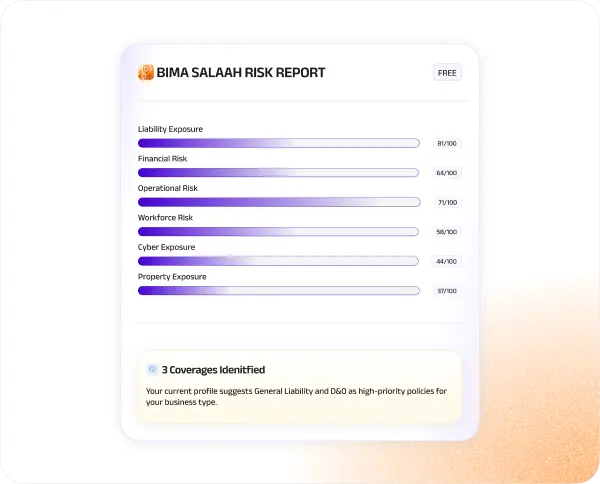
Every risk, read instantly.
Everything your business is exposed to, analysed before any cover is placed.
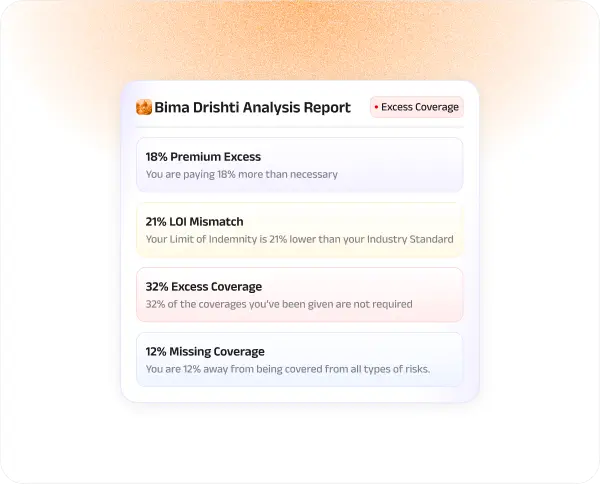
Every gap, caught early.
The gaps your current cover leaves open, surfaced before they turn into a claim.
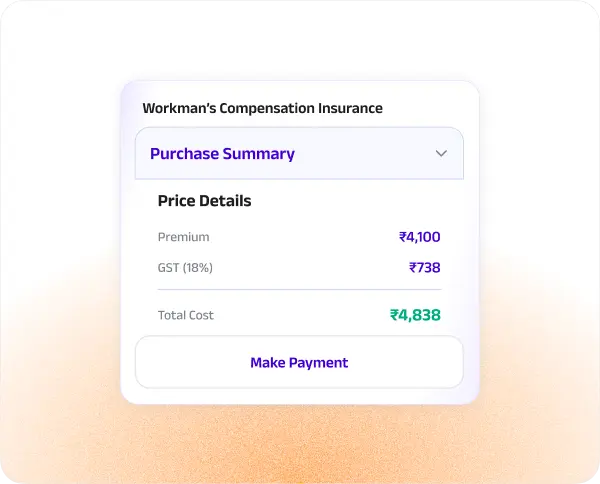
Right coverage, issued in minutes.
The right cover, priced and placed with India's top insurers, in minutes.



India's builders trust BimaKavach.

Learn More About
Cyber Insurance for Fintech Companies
Cyber Insurance for Fintech Companies, made Simple
Yes. Tech E&O covers claims when your platform fails or produces wrong outputs. Crime covers direct fund losses from fraud or theft. Cyber covers the breach notification, forensic investigation, business interruption, extortion defence, and regulatory proceedings that follow an attack on your systems. A single incident at a fintech company can trigger all three exposures simultaneously, and neither Tech E&O nor crime funds the first-party response costs that a cyber policy covers.
No. PCI DSS certification means the gateway met card data security standards at the time of assessment. It does not pay for your notification costs, your regulatory defence, or the claims your users and partners file against you after a breach. The gateway's contractual liability is typically capped at the fees you paid. Cyber insurance covers the gap between that cap and your actual exposure.
Yes. Regulatory defence costs for inquiries by RBI, CERT-In, and the Data Protection Board are covered under the policy. This includes the legal costs of responding to show-cause notices, directed audits, and penalty proceedings. Insurable penalties are covered; penalties that Indian law classifies as uninsurable are excluded.
The DPDP Act applies from the day you collect a borrower's phone number or Aadhaar. Investor due diligence for Series A onwards now routinely asks for cyber insurance evidence. A breach at the early stage, when your reputation and your next funding round depend on trust, is exactly the scenario where the absence of cover does the most damage. Entry-level fintech cyber cover starts at approximately Rs 50,000 per year for Rs 50 lakh sum insured.
Yes, if the policy includes contingent or dependent business coverage for third-party vendor breaches. The policy covers your notification costs, your regulatory defence, and the third-party claims that arrive at your door because borrowers shared their data through your platform. The partner's own liability and indemnity obligations are separate from your cyber cover.
Exclusive Cyber Risk Assessment
Bima Netra
 Instant Cyber Risk Report
- Actionable Posture Insights