

Cyber Insurance for Healthcare
Protects hospitals when data breaches or ransomware target patient records


Policy Provided By



















Cyber Insurance for Healthcare
Protects hospitals when data breaches or ransomware target patient records
Get Quotes in a Few Steps


Currently Reading
1. What Is Cyber Insurance for Healthcare?
2. Every Digital System That Creates Cyber Exposure in a Hospital
3. Where Professional Indemnity Ends and Cyber Insurance Begins
4. From the First Hour to the Final Hearing: What the Policy Pays For?
5. Where Cyber Cover Ends for a Hospital?
6. Four Assumptions That Leave Hospitals Unprotected
7. What Underwriters Evaluate Before Quoting a Hospital?
8. How to Buy Cyber Insurance for Healthcare From BimaKavach?
Cyber insurance for healthcare pays the forensic investigation costs, the breach notification expenses, and the regulatory defence your hospital faces when a data breach, ransomware attack, or system compromise hits your patient data infrastructure. It is the financial backstop for an exposure that most hospitals do not realise they carry until the incident arrives.
The DPDP Act, 2023 treats health records as sensitive personal data. A hospital that stores patient records digitally, runs an ABHA-linked health information system, or transmits diagnostic reports electronically has the same data protection obligations as a technology company. When a ransomware attack locks your hospital management system and 40,000 patient records are at risk, the forensic investigation, the CERT-In 6-hour inciden t report, the Data Protection Board notification, and the patient privacy claims all land on the hospital's balance sheet. Professional indemnity insurance, which hospitals already carry for malpractice, does not cover any of these costs. Cyber insurance exists for precisely this gap: it transfers the financial consequences of a data breach or cyberattack to the insurer so the hospital can focus on restoring clinical operations.
A hospital's cyber exposure is not limited to the IT department's server room. Every system that touches patient data, transmits clinical information, or connects to the hospital network is an entry point for an attack and a source of liability when that data is compromised.
Hospital Information System (HIS) and Electronic Health Records:
The core system storing patient demographics, treatment histories, prescriptions, and billing data. A breach here exposes the most sensitive records in the hospital. Most HIS platforms are cloud-hosted or web-based, which means the hospital is the data fiduciary under the DPDP Act regardless of where the server sits.
PACS Imaging and Radiology Systems:
Picture Archiving and Communication Systems store and transmit X-rays, MRIs, CT scans, and ultrasound images tagged with patient identifiers. These systems often run on older protocols (DICOM) with minimal encryption, making them a known target for attackers looking for an unguarded entry point into the hospital network.
Connected Medical Devices:
Ventilator monitors, infusion pumps, patient bedside monitors, and lab analysers increasingly connect to the hospital network for remote monitoring and data logging. A ransomware attack that spreads from the IT network to these devices does not just lock data; it can shut down clinical operations and force the hospital to divert patients. The device manufacturer's warranty does not cover the hospital's response costs when this happens.
ABHA-Linked Systems and Ayushman Bharat Digital Health Mission:
Hospitals participating in the ABDM ecosystem share patient health records through ABHA IDs and Health Information Exchange platforms. A breach in the hospital's integration layer exposes not just its own records but the linked health data across the ABDM network, multiplying the notification and regulatory exposure.
Telemedicine Platforms and Patient Portals:
Video consultation systems, appointment booking portals, and patient-facing apps collect personal data, health complaints, and payment information. A compromised telemedicine platform leaks data from patients who never physically visited the hospital, extending the breach footprint beyond the institution's walls.
This is the distinction most hospitals miss. Professional indemnity insurance covers clinical negligence: a wrong diagnosis, a surgical error, a medication mistake. Cyber insurance covers data breaches and cyberattacks on your systems. When a hospital administrator hears "data breach", the instinct is to assume the existing PI policy covers it. It does not. Here is how the two policies respond to five scenarios that hospitals actually face.
- Ransomware Encrypts the HIS, Locking 40,000 Patient Records for 5 Days. PI does not respond because no clinical negligence occurred. Cyber insurance covers the forensic investigation, system restoration, business interruption, extortion negotiation, and CERT-In reporting costs.
- An Employee Emails 500 Patient Diagnostic Reports to the Wrong Recipient. PI does not respond because no medical error in diagnosis or treatment took place. Cyber insurance covers breach notification to affected patients, regulatory defence before the Data Protection Board, and crisis communications.
- A Hacker Exfiltrates Aadhaar and Insurance Details From the Billing Database. PI does not respond because billing data theft is not a clinical act. Cyber insurance covers the forensic investigation, breach notification, credit monitoring for affected patients, and third-party claims.
- A Phishing Attack Tricks the Accounts Team Into Transferring Rs 25 Lakh to a Fraudulent Vendor. PI does not respond because financial fraud is not medical malpractice. Cyber insurance covers the lost funds under the social engineering endorsement, plus forensic review and recovery costs.
- A Misdiagnosis Leads to a Patient Filing a Consumer Complaint. Cyber insurance does not respond because no data breach or cyberattack occurred. PI insurance covers the legal defence and compensation for clinical negligence.
The pattern is clear: PI covers what goes wrong in the consultation room. Cyber covers what goes wrong on the network. A hospital needs both, because neither replaces the other.
Cyber insurance for healthcare funds the entire incident response chain, from the first hour after detection through the regulatory proceedings that can follow months later.
Forensic Investigation (Hour 1 to Week 2):
A cyber forensics firm determines the attack vector, confirms which patient records were accessed, and produces the technical report needed for CERT-In's 6-hour notification and the Data Protection Board filing. For a mid-size hospital, forensic investigations typically cost between Rs 15 lakh and Rs 80 lakh depending on the number of systems compromised.
System Restoration and Clinical Recovery (Week 1 to Week 4):
Rebuilding the HIS environment, restoring patient databases from clean backups, re-imaging workstations, and validating that connected medical devices are free of malware. The policy covers the IT recovery costs and the expenses of operating in manual or paper mode during the restoration period.
Breach Notification and Patient Support (Week 2 to Month 2):
Notifying every affected patient as required by the DPDP Act, issuing public disclosures where mandated, and providing credit and identity monitoring services for patients whose Aadhaar or financial data was exposed. For a hospital with 40,000 affected records, notification costs alone can run into Rs 15 lakh to Rs 30 lakh.
Business Interruption (Day 1 to Week 4):
Lost revenue from cancelled surgeries, diverted emergencies, and suspended outpatient services during the period the hospital's systems are down. The policy covers the measurable revenue loss and fixed operating costs during the interruption.
Cyber Extortion Defence:
Professional negotiation support when the attacker demands a ransom. The policy covers the negotiator's fees, the ransom payment where legally permissible (payments to sanctioned entities excluded), and the parallel restoration costs. Paying the ransom does not guarantee data recovery: the Sophos 2024 State of Ransomware report found that 40% of healthcare victims who paid recovered less than 80% of their data. The policy funds both tracks: negotiation and independent restoration.
Regulatory Defence (Month 2 to Month 12):
Legal costs of defending inquiries by CERT-In, the Data Protection Board, the state Clinical Establishments authority, or any sectoral regulator. The DPDP Act can impose penalties up to Rs 250 crore on Significant Data Fiduciaries. Hospitals processing health records at scale may be designated as SDFs. Insurable penalties are covered, subject to policy terms.
Crisis Communications:
PR and communications support to manage patient trust, media inquiries, and referring physician confidence during and after the incident.
Report any incident immediately through the cyber insurance claims process. The notification window under the policy starts from the moment the hospital becomes aware of the incident, not from when the forensic investigation concludes.
Every cyber policy carries standard exclusions. Read the full policy wording for the complete list, since insurers vary on the specifics.
Medical Malpractice and Bodily Injury
If a patient files a negligence claim for a wrong diagnosis, a surgical complication, or a medication error, that is a clinical liability claim handled by professional indemnity insurance. Cyber insurance does not cover medical malpractice even if the hospital's digital systems were involved in the treatment workflow. The boundary is the nature of the claim: clinical outcome versus data security.
Failure to Implement Minimum Statutory Safeguards
If the hospital did not maintain the minimum security controls described in the proposal form, or failed to implement safeguards required by CERT-In directions or the DPDP Act's reasonable security practices standard, the insurer may decline the claim. The policy expects the hospital to maintain the security posture it represented at inception.
Unapproved Medical Hardware and Shadow IT
If a breach traces back to an unapproved medical device, a personal laptop connected to the hospital network without authorisation, or shadow IT systems installed outside the IT department's knowledge, the insurer may contest coverage. Hospitals must maintain an asset register and enforce network access controls for the policy to respond fully.
Intentional Sale or Misuse of Patient Data
If a hospital employee deliberately sells patient data, shares it with unauthorised third parties for commercial gain, or misuses it in a manner that constitutes a criminal act, the policy excludes the intentional misconduct. The policy covers the hospital's response costs for investigating and containing the incident, but not the liability arising from the deliberate act itself.
Four assumptions come up repeatedly when hospital administrators evaluate cyber insurance. Each one is understandable. Each one falls apart against the data.
- Hospitals using digital systems remain exposed to cyberattacks, even when they maintain paper patient records.
- Internal IT teams may lack specialised forensic investigators, legal experts, and breach response resources.
- Cybercriminals target weak security configurations, making smaller hospitals vulnerable alongside large healthcare chains.
- Professional indemnity covers clinical negligence, while cyber insurance addresses data breaches, ransomware, and related response costs.
Every insurer weights these factors differently. Treat any estimate as indicative until underwriting is complete.
Digital Maturity and System Count:
Hospitals running a full HIS, PACS, laboratory information system, e-pharmacy, and telemedicine platform have a wider attack surface than a facility with standalone systems. The number of networked systems directly affects the premium.
Connected Medical Devices (IoMT):
Ventilator monitors, infusion pumps, and bedside monitors connected to the hospital network create additional entry points. Underwriters ask specifically about IoMT inventory and segmentation controls.
NABH Accreditation and Security Certifications:
NABH-accredited hospitals with documented information security policies, ISO 27001 certification, or regular penetration testing reports signal lower risk. Certifications can earn a premium discount or broader policy terms.
Claims History:
Any prior cyber incident or disclosed circumstance increases the rate. A clean record over several years can reduce renewal costs.
Sum Insured and Deductible:
A higher sum insured raises the premium; a higher deductible lowers it.
Getting covered is straightforward when you buy cyber insurance for healthcare online through BimaKavach, an IRDAI-registered platform.
| 1. Get Instant Quotes: | 2. Choose Your Coverage and Insurer: | 3. Pay Online and Get Your Policy: |
|---|---|---|
| Enter your bed count, patient volume, and system details. Quotes from multiple insurers appear within seconds. | Our experts walk you through first-party and third-party limits, the social engineering endorsement, and connected device coverage so the policy matches your hospital's exposure. | Complete payment digitally and receive policy documents within minutes. |
Step by Step Process to Get Cyber Policy Through BimaKavach
1. Get Instant Quotes:
Enter your bed count, patient volume, and system details. Quotes from multiple insurers appear within seconds.
2. Choose Your Coverage and Insurer:
Our experts walk you through first-party and third-party limits, the social engineering endorsement, and connected device coverage so the policy matches your hospital's exposure.
3. Pay Online and Get Your Policy:
Complete payment digitally and receive policy documents within minutes.
Documents You Will Need:
- Completed proposal form
- Hospital KYC: registration certificate under the Clinical Establishments Act or state equivalent, PAN, and GST details
- Bed count and annual patient volume
- List of digital systems in use: HIS, PACS, LIS, e-pharmacy, telemedicine, and patient portal details
- Connected medical device inventory (if available)
- NABH accreditation certificate, ISO 27001 certification, or penetration test reports (if available)
- Claims history and any prior cyber incidents disclosed
Cyber Insurance, for Every Kind of Business
Cyber Insurance
Protects businesses when cyber threats lead to financial damages
For SaaS
Protects SaaS companies when platform outages or breaches affect customers
For Fintech Companies
Protects fintechs when cyberattacks target financial data or transactions
For NBFC & Financial Firms
Protects banks, NBFCs when cyberattacks target financial data or transactions
For Startups
Protects startups when early-stage data breaches or cyber incidents threaten business continuity
Trusted by India's Top Businesses















A new experience.
Built on intelligence. Covered in minutes.


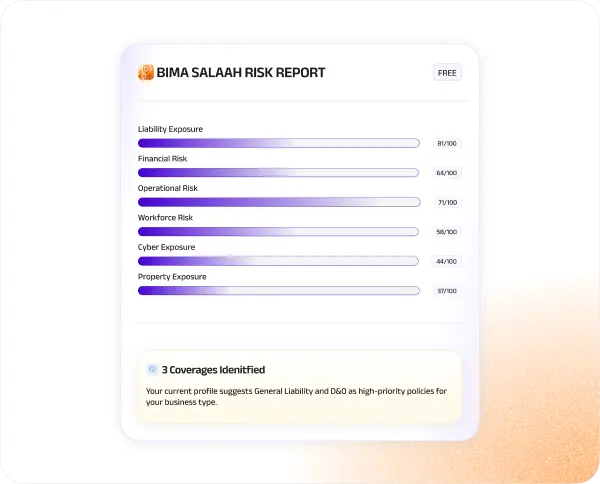
Every risk, read instantly.
Everything your business is exposed to, analysed before any cover is placed.
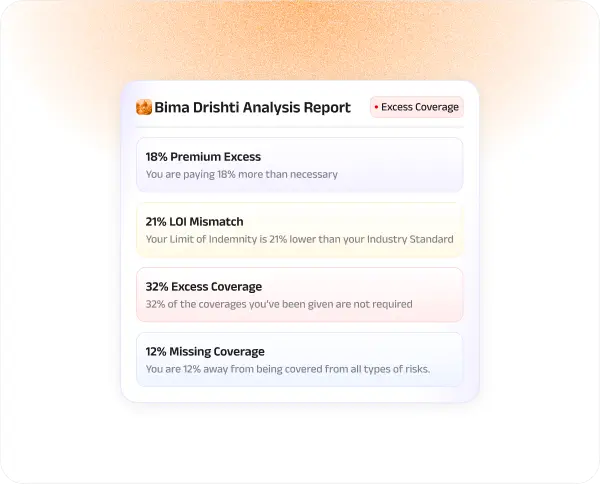
Every gap, caught early.
The gaps your current cover leaves open, surfaced before they turn into a claim.
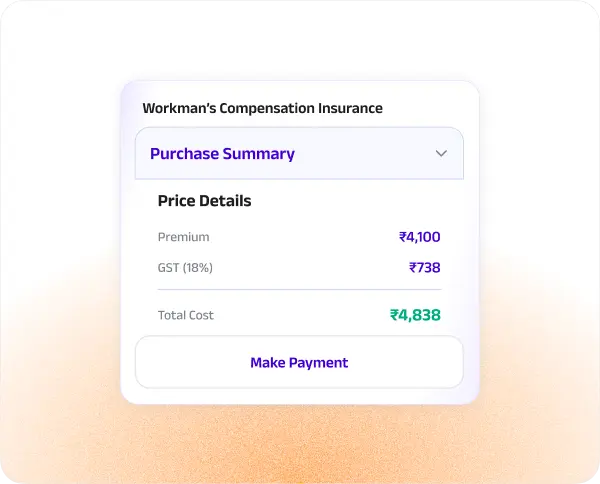
Right coverage, issued in minutes.
The right cover, priced and placed with India's top insurers, in minutes.



India's builders trust BimaKavach.

Learn More About
Cyber Insurance for Healthcare
Cyber Insurance for Healthcare, made Simple
Yes. Professional indemnity covers clinical negligence claims: a wrong diagnosis, a surgical error, a treatment complication. Cyber insurance covers data breaches and cyberattacks on your hospital's systems: the forensic investigation, breach notification to affected patients, system restoration, business interruption, and regulatory defence before the Data Protection Board. A ransomware attack that locks your HIS for five days triggers zero response from the PI policy. Both policies cover different risks, and a hospital needs both.
Yes. The policy covers the forensic investigation, the system and device restoration costs, the business interruption loss from cancelled procedures and diverted patients, and the extortion negotiation. If patient data was also compromised during the attack, it covers the breach notification and regulatory defence as well. The device manufacturer's warranty does not cover the hospital's incident response costs.
Yes. If a breach in your hospital's ABHA integration layer exposes linked patient health records, the policy covers the forensic investigation, the notification to affected data principals, and the regulatory defence. The DPDP Act places the notification obligation on the data fiduciary, which is your hospital, regardless of whether the vulnerability was in the integration layer or the ABDM platform.
Yes. The business interruption coverage includes the additional operating expenses of running manual processes, including overtime staff costs and temporary paper-based workflows, during the restoration period. It also covers the revenue lost from cancelled or deferred procedures during the downtime.
Exclusive Cyber Risk Assessment
Bima Netra
 Instant Cyber Risk Report
- Actionable Posture Insights