

SaaS Cyber Insurance
Protects SaaS companies when platform outages or breaches affect customers


Policy Provided By



SaaS Cyber Insurance
Protects SaaS companies when platform outages or breaches affect customers
Get Quotes in a Few Steps


Currently Reading
1. What Is SaaS Cyber Insurance?
2. What Triggers a Cyber Claim Against a SaaS Company?
3. Which SaaS Companies Need Cyber Insurance?
4. First-Party Costs the Policy Covers
5. Third-Party Liabilities the Policy Covers
6. What Happens When Your Cloud Provider Fails
7. What the Policy Does Not Cover?
8. How to Buy SaaS Cyber Insurance From BimaKavach?
9. How Cyber Insurance Works in Practice: SaaS Claim Scenario
SaaS cyber insurance pays the forensic investigation costs, the client compensation, and the business interruption losses your company faces when a cyber incident disrupts your platform or exposes customer data. It is the financial backstop for the gap that your cloud provider explicitly does not fill.
That gap is worth understanding before anything else on this page. AWS, Azure, and GCP all operate under a shared responsibility model. The cloud provider secures the physical infrastructure, the hypervisor, and the network. Everything above that layer, including your application logic, your access controls, your customer data, and the way your code handles that data, is your responsibility. When a misconfiguration in your application exposes 50,000 customer records, AWS does not pay the notification costs, the legal defence, or the client settlements. Their SLA refund, if one applies at all, credits future hosting fees. It does not cover a single rupee of the actual loss. SaaS cyber insurance is built for exactly this exposure.
A SaaS platform's architecture creates claim triggers that look different from a traditional IT services firm. The common thread is that one incident on your side becomes a problem for many clients at once.
- Ransomware Shuts Your Platform Down And 200 Clients Claim SLA Losses. Your application goes down for 14 hours because of a ransomware attack on your deployment pipeline. Every customer on the platform loses access, enterprise clients with 99.9% uptime SLAs start calculating the business interruption on their side, and the aggregate exposure across 200 affected accounts dwarfs what any single-client IT project would produce.
- An Access Control Flaw Leaks Data Between Tenants. A misconfiguration in your multi-tenant architecture lets one customer's users see another customer's data. Every affected tenant has an independent DPDP Act notification obligation and an independent claim against you, while CERT-In requires you to report the incident within 6 hours of detection. The costs multiply by the number of tenants involved, not by the number of records.
- A Compromised Update Pushes Malicious Code Into Client Systems. Your SaaS product integrates with a client's environment via API. A compromised update pushes malicious code through that integration, taking down their ERP for three days. The client's claim is not about your subscription fee; it is about the revenue they lost while their own systems were offline.
- An Extortion Demand Lands During Your Busiest Quarter. An attacker encrypts your production database and demands payment while every day of downtime costs you subscription revenue and triggers SLA penalty claims. The cyber extortion payment, the forensic investigation, and the business interruption loss all land on your balance sheet simultaneously.
Every SaaS company that stores customer data or runs customer-facing workloads carries cyber exposure. But the urgency and the sizing differ by business model and client base.
B2B Enterprise SaaS:
If your platform serves mid-market or enterprise clients under MSAs, those contracts almost certainly contain uncapped data breach indemnity clauses. US and European enterprise buyers require SOC 2 Type II or ISO 27001 as table stakes, but certifications do not cap liability. Insurance is the backstop for the indemnity exposure that your MSA creates but your subscription revenue cannot absorb.
Vertical SaaS in Regulated Industries:
A SaaS platform serving hospitals processes health data. One serving banks or NBFCs handles financial records. Both face sectoral regulatory scrutiny on top of the DPDP Act. A breach at the platform level triggers regulatory action against the SaaS company and against every client that used the platform to process regulated data. The compound exposure across clients and regulators is what makes vertical SaaS a distinct risk class.
API-First And Infrastructure SaaS:
Platforms that other software depends on (payment orchestrators, authentication providers, messaging APIs) carry a cascading risk. A single vulnerability in an API gateway can propagate through hundreds of downstream applications. The SaaS company faces claims from every downstream customer whose end users were affected.
Early-Stage And Growth-Stage SaaS:
Investor due diligence for Series A onwards now routinely asks for cyber insurance evidence. Beyond diligence, a pre-revenue SaaS company collecting user emails and payment data already meets the DPDP Act, 2023 definition of a data fiduciary, with obligations enforceable from May 2027. The law does not have a startup exemption.
These are the first-party costs your own company bears directly when a cyber incident hits your platform
Forensic Investigation:
The cost of hiring a cyber forensics firm to determine what happened, how the attacker got in, what data was accessed, and whether the breach is contained. CERT-In Direction 70B requires organisations to report cyber incidents within 6 hours of detection, so the forensic team needs to move fast. For a mid-market SaaS company, forensic investigations typically run between Rs 15 lakh and Rs 1 crore depending on the complexity and the number of systems involved.
Data Restoration And System Recovery:
The cost of rebuilding databases, redeploying clean environments, and validating data integrity across tenants after a ransomware attack or a destructive breach.
Business Interruption:
Lost subscription revenue and fixed operating costs during the period your platform is down. For a SaaS company billing monthly, every day offline is a direct, measurable revenue loss.
Cyber Extortion Defence:
Covers the cost of a professional negotiator, the ransom payment where legally permissible, and the alternative restoration costs if the company decides not to pay. Payment to sanctioned entities is excluded.
Crisis Communications:
The cost of PR and communications support to manage client and public messaging during and after the incident.
These are the third-party liabilities that clients, regulators, and affected individuals bring against your company after an incident.
Client Compensation Claims:
When a breach or outage causes your customers a financial loss, they claim against you. The policy covers legal defence costs and any settlement or award up to the sum insured.
Breach Notification Costs:
The expense of notifying affected data principals (individuals whose data was compromised) and, where required, providing credit monitoring services. For a multi-tenant SaaS platform, the notification obligation can run to thousands of individuals across multiple client accounts.
Regulatory Defence And Penalties:
Covers the legal costs of defending an inquiry by the Data Protection Board (under the DPDP Act, 2023), CERT-In, or a sectoral regulator such as RBI or IRDAI. The DPDP Act holds data fiduciaries liable for breaches with penalties reaching up to Rs 250 crore for Significant Data Fiduciaries, and SaaS companies face dual exposure as both processors (contractual indemnity to clients) and potentially as SDFs themselves. Insurable regulatory penalties are covered, subject to policy terms and the insurability of the specific penalty under Indian law.
Media Liability:
If a breach exposes proprietary content or communications hosted on your platform, the resulting defamation or privacy claims from affected parties fall under digital media liability cover.
Payment Card Industry (PCI) Fines And Assessments:
If your platform processes or stores cardholder data, PCI DSS non-compliance fines imposed following a breach are covered under most policies.
This is the section most SaaS companies do not think about until it happens. Your production environment runs on AWS, Azure, or GCP. The provider's infrastructure fails, taking your platform down for 18 hours. Your customers lose access, your SLA obligations trigger, and the business interruption losses begin accumulating.
Here is what the cloud provider's SLA actually gives you versus what a cyber insurance policy covers:
Your Lost Subscription Revenue:
The cloud provider's SLA credits apply only to future hosting fees. Your actual revenue loss during the outage is not compensated. A cyber insurance policy covers this under business interruption, measured against your actual revenue loss during the downtime.
Your Customers' Claims Against You:
The SLA is between you and the provider, not between the provider and your customers. Client claims land entirely on you. A cyber policy covers the defence costs and settlements for client claims arising from the outage under third-party liability.
Forensic Costs After an Attack on Provider Infrastructure:
The cloud provider does not pay for the investigation. If the outage was caused by an attack such as a DDoS or credential compromise, a cyber policy funds the forensic costs.
Regulatory Penalties From Downtime You Did Not Cause:
The cloud provider does not cover regulatory inquiries or penalties arising from the outage. A cyber policy covers insurable penalties and the cost of defending the regulatory inquiry.
Notification Costs Across Every Affected Tenant:
The cloud provider does not cover the cost of notifying affected data principals. A cyber policy covers the notification costs and follow-up support.
The cloud provider's credit is a commercial concession, not a risk transfer. It does not even attempt to make you whole. Cyber insurance fills this gap.
A related misconception: "We are on AWS, so our security is best-in-class." AWS's own documentation states that the customer is responsible for security of everything deployed on the infrastructure. Configuration errors, weak access controls, and unpatched application libraries are the top three breach causes in cloud environments according to the 2024 edition of the Verizon Data Breach Investigations Report, and all three sit squarely on the customer's side of the line.
Five standard exclusions apply to SaaS cyber policies. Read the full policy wording for the complete exclusion list, since insurers vary on the fine print.
Routine Software Performance Bugs:
If a client claims that your software is slow, produces wrong outputs, or fails to meet functional specifications, that is a product quality issue, not a cyber incident. Claims arising from the failure of the technology you deliver sit outside the cyber policy and are handled by a separate technology errors and omissions cover. The boundary matters: technology delivery failures and cyberattacks on your systems are two distinct exposures, and most SaaS companies carry cover for both.
Known, Unpatched Vulnerabilities:
If a patch was available for a critical vulnerability (zero-day or otherwise) and your team did not apply it within a reasonable timeframe, and the breach exploited that exact vulnerability, the insurer may decline coverage. The policy expects you to maintain reasonable security hygiene. What counts as "reasonable" depends on the insurer's assessment and your documented patch management process.
Major ISP or Public Utility Blackouts:
If your platform goes down because the national power grid fails or a major ISP suffers a backbone outage, those are infrastructure events, not cyber incidents. The policy responds to attacks and security failures, not to utility-level disruptions.
War, Sanctions, And State-Sponsored Attacks:
Certain cyber warfare events and attacks attributed to sanctioned state actors may fall outside standard coverage. War and sanctions exclusion language varies by insurer and is an area of active legal development globally.
Getting covered is simple when you buy SaaS cyber insurance online through BimaKavach, an IRDAI-registered platform. Here is a brief explanation of how the system works:
| 1. Get Instant Quotes: | 2. Choose Your Coverage and Insurer: | 3. Pay Online and Get Your Policy: |
|---|---|---|
| Enter your ARR, tenant count, and client geography. Quotes from multiple insurers appear within seconds. | Our experts walk you through first-party and third-party limits, the cloud dependency extension, and coverage add-ons so the policy matches your platform's exposure. | Complete payment digitally and receive policy documents within minutes. |
Step by Step Process to Get Cyber Policy Through BimaKavach
1. Get Instant Quotes:
Enter your ARR, tenant count, and client geography. Quotes from multiple insurers appear within seconds.
2. Choose Your Coverage and Insurer:
Our experts walk you through first-party and third-party limits, the cloud dependency extension, and coverage add-ons so the policy matches your platform's exposure.
3. Pay Online and Get Your Policy:
Complete payment digitally and receive policy documents within minutes.
Documents You Will Need
- Completed proposal form
- Company KYC: certificate of incorporation, PAN, and GST details
- ARR and customer count for the most recent financial year
- SOC 2, ISO 27001, or other security certification copies (if available)
- Details of client geographies served and key MSA terms
- Claims history and any prior cyber incidents disclosed
A Ransomware Attack During a Product Launch
A growth-stage SaaS company in Bengaluru is preparing for a major product launch when ransomware encrypts its production database and staging environment. The attacker demands Rs 45 lakh for the decryption key. The company's incident response team estimates 9 days to restore from backups. During those 9 days, 300 paying customers lose platform access, generating SLA penalty exposure of Rs 22 lakh. The company engages a professional negotiator through the cyber policy's incident response panel. The negotiator reduces the demand to Rs 12 lakh. The company decides to pay (after confirming the attacker is not a sanctioned entity) and simultaneously restores from backups as a parallel track. Total costs covered by the policy: negotiation fees (Rs 3 lakh), ransom payment (Rs 12 lakh), forensic investigation (Rs 15 lakh), business interruption loss during the 4-day partial outage (Rs 8 lakh), and SLA penalty settlements with three enterprise clients (Rs 14 lakh). Total payout: Rs 52 lakh.
Cyber Insurance, for Every Kind of Business
Cyber Insurance
Protects businesses when cyber threats lead to financial damages
For Fintech Companies
Protects fintechs when cyberattacks target financial data or transactions
For NBFC & Financial Firms
Protects banks, NBFCs when cyberattacks target financial data or transactions
For Healthcare
Protects hospitals when data breaches or ransomware target patient records
For Startups
Protects startups when early-stage data breaches or cyber incidents threaten business continuity
Trusted by India's Top Businesses















A new experience.
Built on intelligence. Covered in minutes.


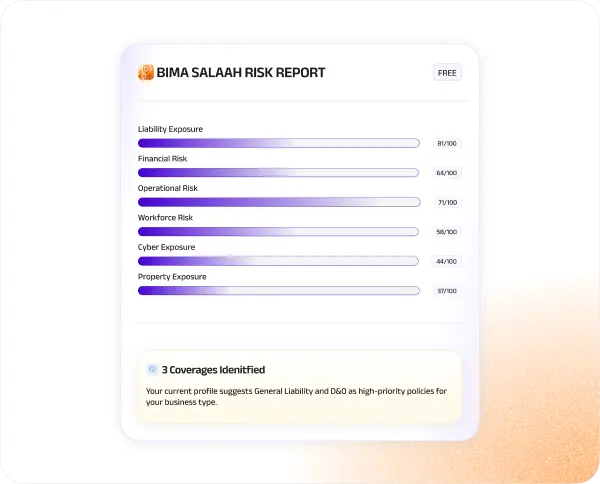
Every risk, read instantly.
Everything your business is exposed to, analysed before any cover is placed.
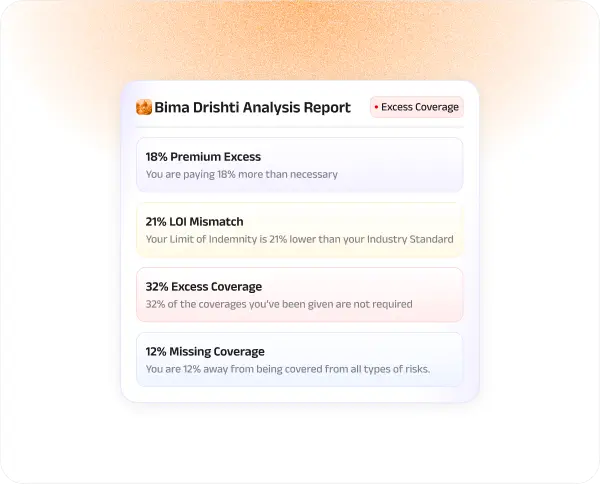
Every gap, caught early.
The gaps your current cover leaves open, surfaced before they turn into a claim.
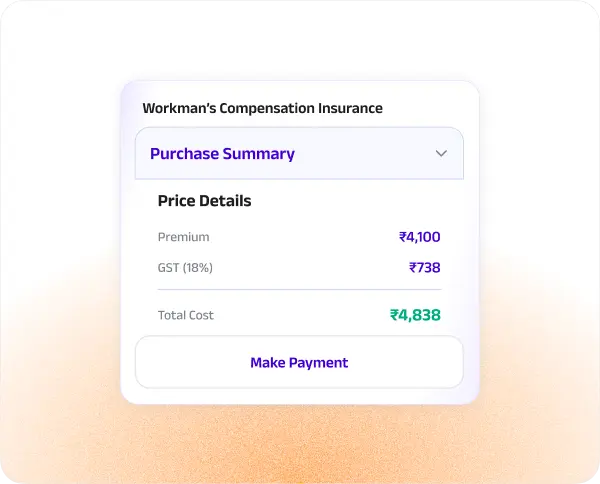
Right coverage, issued in minutes.
The right cover, priced and placed with India's top insurers, in minutes.



India's builders trust BimaKavach.

Learn More About
SaaS Cyber Insurance
SaaS Cyber Insurance, made Simple
Yes. Technology errors and omissions cover responds when the service you deliver fails or causes a client loss. Cyber covers attacks on your own systems: breach notification, forensics, extortion, business interruption, and first-party data recovery. When a client data breach is caused by a software flaw, errors and omissions responds to the client's claim and cyber responds to the first-party costs. Neither replaces the other.
No. AWS secures the physical infrastructure and the hypervisor. Your application logic, access controls, and customer data are your responsibility. When a breach is caused by a misconfiguration in your code or a compromised credential on your side, AWS's SLA credit covers only future hosting fees, not your actual financial loss. Cyber insurance fills this gap.
Insurable regulatory penalties and the legal costs of defending an inquiry before the Data Protection Board are typically covered, subject to policy terms. Penalties that Indian law classifies as uninsurable are excluded. Confirm the specific DPDP coverage with your insurer, especially if your platform may be designated as a Significant Data Fiduciary.
Start with the aggregate exposure: your largest client's uncapped indemnity clause, the number of tenants whose data you hold, and the revenue you would lose per day of platform downtime. A sum insured between Rs 50 lakh and Rs 5 crore is a common range for growth-stage SaaS companies, but the right number depends on your ARR, client geography, and MSA terms. Talk to Our Experts to size the cover against your actual exposure.
A cloud dependency extension covers business interruption losses when your platform goes down because of a failure at your cloud provider. Not all policies include this extension by default. Confirm it is in your policy if your uptime depends entirely on a single cloud provider.
Exclusive Cyber Risk Assessment
Bima Netra
 Instant Cyber Risk Report
- Actionable Posture Insights