

Directors & Officers Insurance for Fintech Firms
Protects fintech directors when regulatory or investor claims arise


Policy Provided By







Directors & Officers Insurance for Fintech Firms
Protects fintech directors when regulatory or investor claims arise
Get Quotes in a Few Steps


Currently Reading
1. What Is D&O Insurance for Fintech Firms?
2. The Regulatory Stack That Creates Personal Liability for Fintech Directors
3. Where Do Claims Against Fintech Directors Come From?
4. What Does D&O Insurance for Fintech Firms Cover?
5. Founders, Designated Partners, and Officers: Who Is Protected?
6. What a Fintech D&O Policy Does Not Cover?
7. What Drives the D&O Premium for a Fintech Company?
8. How to Buy D&O Insurance for Fintech Firms from BimaKavach?
9. Fintech D&O Claims That Have Played Out in India
D&O insurance for fintech firms protects the personal assets of directors, founders, and designated partners when they are sued or investigated for decisions made while running the business. The policy covers legal defence costs, settlements, and damages up to the sum insured, so the individual does not bear those costs out of pocket.
Consider a payment aggregator whose director receives an RBI show-cause notice for non-compliance with the Master Directions on Payment Aggregators. The notice names the director individually, alleging inadequate KYC controls. Legal representation, regulatory counsel fees, and the cost of responding to the investigation over 12 to 18 months run into lakhs. A D&O policy would advance those defence costs from the first notice itself, keeping the director's personal savings separate from the company's compliance battle.
This page focuses on the fintech-specific exposures that make D&O cover different from what a general technology or services company needs.
A fintech company does not answer to a single regulator. Depending on the licence it holds and the data it processes, its directors face personal exposure under several overlapping frameworks. Each one can name an individual officer, not just the company.
| RBI and FIU-IND: | SEBI: | DPDP Act, 2023: |
|---|---|---|
| Directors may face regulatory action over failures involving digital lending, payment services, KYC, and anti-money laundering compliance. | Directors may face enforcement action for insider trading, unfair trade practices, and other violations involving SEBI-regulated activities. | Fintechs may face data protection penalties, while directors may face personal exposure depending on their responsibilities and the circumstances. |
Key Regulatory Risks for Fintech Directors
RBI and FIU-IND:
Directors may face regulatory action over failures involving digital lending, payment services, KYC, and anti-money laundering compliance.
SEBI:
Directors may face enforcement action for insider trading, unfair trade practices, and other violations involving SEBI-regulated activities.
DPDP Act, 2023:
Fintechs may face data protection penalties, while directors may face personal exposure depending on their responsibilities and the circumstances.
D&O insurance does not replace compliance with any of these frameworks. What it does is fund the legal defence and cover the personal financial exposure when a regulatory action, despite the company's compliance efforts, names an individual director.
Fintech directors face a wider range of claimants than directors in most other sectors, because the business sits at the intersection of financial regulation, data protection law, and technology risk. The claims tend to arrive from more than one direction at the same time.
Regulators (RBI, SEBI, FIU-IND, DPDP Board, MCA/SFIO):
Show-cause notices, penalty proceedings, and formal investigations that name individual directors. A single compliance lapse can trigger parallel actions from more than one regulator: an AML failure could draw both RBI and FIU-IND scrutiny simultaneously.
Investors and Shareholders:
Allegations of misrepresentation during fundraising, disputes over valuation at a down round, or claims that the board failed to disclose a material regulatory risk before a funding close.
Employees and Former Employees:
Wrongful termination claims, ESOP disputes, harassment and discrimination allegations under the POSH Act. Fintechs scaling rapidly through hiring cycles are particularly exposed to employment practices claims.
Customers and Platform Users:
Claims alleging that a director authorised practices resulting in data misuse, unfair lending terms, or transaction failures that caused financial loss.
Partners and Vendors:
A lending partner, a banking correspondent, or a technology vendor alleging that the fintech's directors authorised a contract breach or misrepresented the company's regulatory status.
The policy responds when a director, founder, or designated partner faces a claim in their personal capacity for a decision made while managing the business. Here is what a typical fintech D&O policy pays for:
Side A (Personal Cover When the Company Cannot Indemnify):
Pays defence costs, settlements, and damages directly to the director when the company is unable or not permitted to reimburse them. This is the most important layer for fintech directors, because in an insolvency or resolution scenario the company's ability to indemnify disappears entirely.
Side B (Company Reimbursement):
Reimburses the company when it indemnifies a director out of its own funds. This protects the balance sheet and preserves runway for a fintech that is still burning capital.
Side C (Entity Cover for Securities Claims):
Covers the company itself when it is named alongside its directors in a securities-related claim. Relevant once the cap table grows large or the company approaches a public offering.
Regulatory Investigation Defence Costs:
Pays the cost of responding to formal investigations, show-cause proceedings, and penalty hearings by RBI, SEBI, FIU-IND, the DPDP Board, or any other statutory authority where a named director is under scrutiny
Defence Cost Advancement:
Most policies advance legal costs as the matter unfolds, not on conclusion. This is significant for fintech regulatory matters that can stretch over 12 to 24 months.
Employment Practices Claims:
Covers defence and damages for wrongful termination, harassment, and discrimination claims brought against individual directors or officers.
Notify the insurer as soon as a claim, a notice, or a circumstance that could become a claim appears. Late notification is one of the most common reasons D&O claims are disputed, and it is entirely avoidable.
The policy protects individuals in their management capacity, not the company's products or operations. For a fintech, this means a broader group than the founding team alone.
Directors and founders on the board of a fintech company incorporated under the Companies Act 2013 are covered for claims arising from their board-level decisions. This includes the CEO, CTO, CFO, and any director nominated by a VC or PE investor. The nominee director carries personal duties under Section 166 of the Companies Act regardless of who nominated them, and the policy covers them on that basis.
Designated partners of a fintech structured as an LLP are covered for claims arising from their statutory role. An LLP limits contractual and tort liability to the firm's assets, but it does not limit statutory liability under the Income Tax Act, GST Act, FEMA, or PMLA. D&O cover addresses the gap that the LLP structure leaves open.
Senior officers acting in a managerial capacity, such as a Chief Risk Officer, a Head of Compliance, or a Chief Information Security Officer, are covered when a regulatory action or a claim names them for a decision within their delegated authority. For fintechs where the CRO or CISO is named in the RBI or CERT-In framework, this layer is not optional.
Past and future directors remain covered for decisions made during their tenure, provided the policy is active when the claim is notified. If a founder exits the board, any claim arising from their period of service is still covered as long as the company maintains the policy or purchases run-off cover.
Understanding the boundaries of coverage is as important as understanding what the policy pays for. The following are standard exclusions:
- Proven Fraud and Intentional Criminal Acts: Deliberate dishonesty or personal illegal gain is excluded once established by a court judgment or admission. Defence costs are typically advanced until that finding, so the director is not undefended during the proceedings.
- Prior and Pending Claims at Inception: Claims the director knew about, or circumstances already notified under a previous policy, fall outside coverage. Full and accurate disclosure at proposal stage is the best protection against this gap.
- Bodily Injury and Property Damage: These are general liability claims, not management liability claims. A separate CGL policy covers them.
- Professional Service Errors and Technology Failures: If a claim alleges that the fintech's product or service itself was negligently designed or delivered, that falls under professional indemnity or Tech E&O cover, not D&O. D&O responds to management decisions, not product performance.
- Fines and Penalties Not Legally Insurable: Indian law does not permit insurance of certain regulatory penalties, and these are excluded.
Premiums depend on the company's risk profile, and any figure should be treated as indicative until underwriting is complete. The factors that carry the most weight for fintechs are:
- Regulatory Licences Held: A PA/PG licence, an NBFC licence, or a SEBI registration each adds a regulatory exposure layer that underwriters price separately.
- Funding Stage and Investor Base: More capital raised and a larger cap table mean higher claim potential. The presence of a US or UK investor significantly increases the premium.
- Revenue Source and Business Model: Digital lending, payment processing, and wealth management each carry different risk profiles and attract different rates.
- Board Composition: Independent directors, investor-nominated directors, and a documented governance framework are viewed favourably.
- Data Handling Scale: The volume of personal and financial data processed affects the DPDP and cyber-adjacent risk, which in turn influences the D&O premium.
Our advisors will run your fintech's profile across insurers and present options with clear comparisons before you decide
Getting covered is simple when you buy d&o insurance for fintech firms online through our platform. Here is how the process works:
| 1. Get Instant Quotes: | 2. Choose Your Coverage and Insurer: | 3. Pay Online and Get Your Policy: |
|---|---|---|
| Based on your regulatory licences, funding stage, and board composition, compare D&O quotes across insurers within seconds. | Our experts help you compare Side A, Side B, and Side C limits, EPL extensions, and pricing so you pick the right fit for your fintech's exposure. | Complete payment digitally and receive your policy documents within minutes. No paperwork, no waiting. |
Step by Step Process to Get a Fintech D&O Policy Through BimaKavach
1. Get Instant Quotes:
Based on your regulatory licences, funding stage, and board composition, compare D&O quotes across insurers within seconds.
2. Choose Your Coverage and Insurer:
Our experts help you compare Side A, Side B, and Side C limits, EPL extensions, and pricing so you pick the right fit for your fintech's exposure.
3. Pay Online and Get Your Policy:
Complete payment digitally and receive your policy documents within minutes. No paperwork, no waiting.
Documents You Will Need:
- Completed proposal form
- Certificate of incorporation (company) or LLP agreement (LLP)
- Details of directors, designated partners, and officers (name, DIN/DPIN, PAN)
- RBI/SEBI licence or registration certificate (where applicable)
- Latest audited financial statements or management accounts
- Cap table or shareholding pattern
- Claims record or details of any pending regulatory proceedings (if any)
RBI Penalty Notice Names the CEO Personally
A digital lending NBFC received an RBI show-cause notice alleging non-compliance with the fair practices code. The notice named the CEO and the designated compliance officer individually. Legal defence and regulatory counsel over 14 months cost the individuals over 25 lakhs before the matter was resolved with a reduced penalty. A D&O policy with regulatory investigation cover would have advanced the defence costs from the date of the notice.
Investor and Regulator Hit at the Same Time
A payment aggregator's Series B investor filed a claim against the founders, alleging that the company had not disclosed an ongoing SEBI inquiry during the fundraise. In parallel, SEBI issued a supplementary notice to the directors. The dual exposure (civil claim from investor plus regulatory action from SEBI) required separate legal teams and ran defence costs well above 40 lakhs. Side A and Side B cover would have funded both defence tracks up to the policy limit.
Employee Files Wrongful Termination Claim After Layoff
A fintech that reduced headcount by 30% after a funding shortfall faced a wrongful termination claim from a senior product manager. The claim named the CEO and the HR head personally, alleging that the layoff process violated the terms of the employment contract and the internal POSH committee's recommendations. With an EPL extension on the D&O policy, the defence costs and the eventual settlement would have been covered.
Directors and Officers Insurance, for Every Kind of Business
Directors and Officers Insurance
Protects executives when business decisions lead to lawsuits
For Startups
Protects startup founders when investor or regulatory actions target leadership
For Tech Companies
Protects tech company directors when scaling decisions trigger claims
Trusted by India's Top Businesses















A new experience.
Built on intelligence. Covered in minutes.


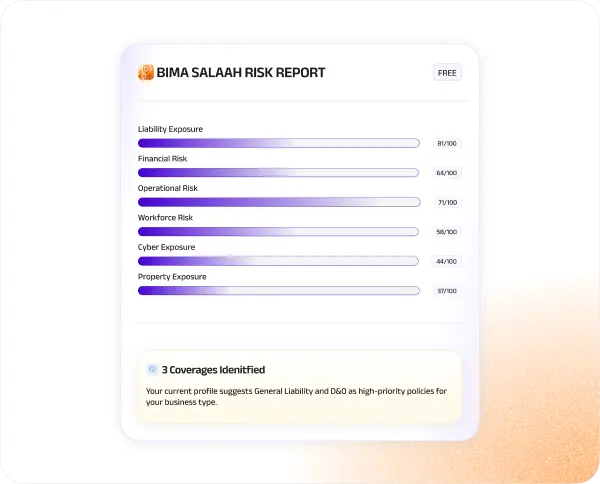
Every risk, read instantly.
Everything your business is exposed to, analysed before any cover is placed.
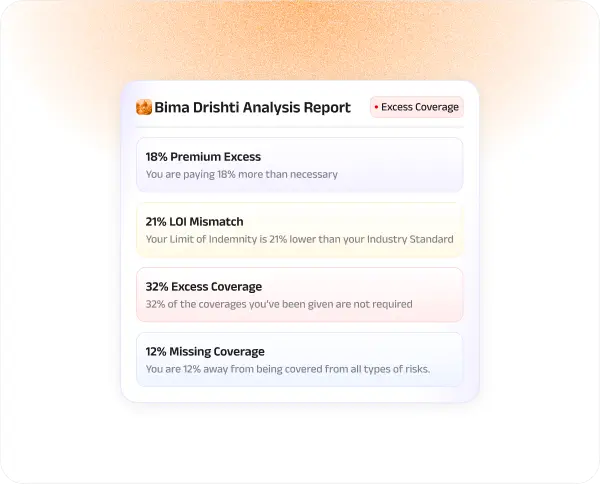
Every gap, caught early.
The gaps your current cover leaves open, surfaced before they turn into a claim.
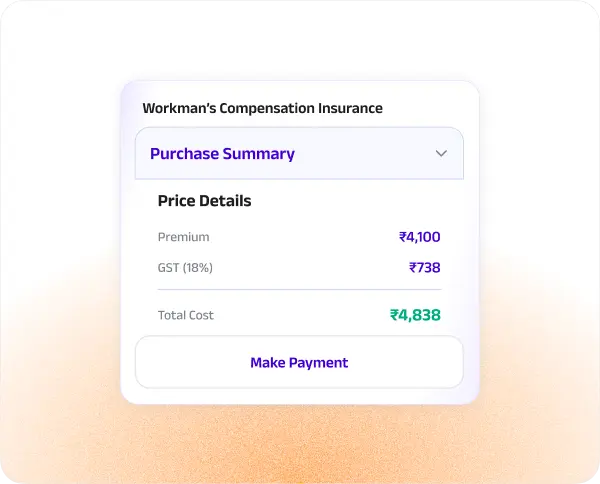
Right coverage, issued in minutes.
The right cover, priced and placed with India's top insurers, in minutes.



India's builders trust BimaKavach.

Learn More About
Directors & Officers Insurance for Fintech Firms
Directors & Officers Insurance for Fintech Firms, made Simple
RBI compliance reduces the likelihood of a regulatory action but does not eliminate it. When a show-cause notice or penalty proceeding names a director personally, the legal defence costs fall on that individual. D&O insurance covers those costs regardless of whether the company was compliant at the time.
Yes. The LLP structure limits contractual liability to the firm's assets, but it does not limit statutory liability under the Income Tax Act, GST Act, FEMA, or PMLA. D&O insurance covers the personal exposure that the LLP structure leaves open for designated partners.
Most D&O policies include cyber-related exclusions, which may restrict cover for claims arising from data breaches or violations of data protection laws, including the DPDP Act. Coverage for legal defence costs in DPDP Board proceedings and notices must be specifically included in the policy. Whether regulatory penalties are covered depends on the policy wording and their insurability under Indian law.
Fund indemnity covers claims from the fund itself, not from regulators, employees, customers, or government agencies. Companies Act Section 166 duties apply to the nominee director personally, regardless of who nominated them. D&O insurance responds to the full range of claims, not just the investor relationship.
It is not statutorily mandatory. However, most institutional investors require D&O cover as a condition of investment, and RBI's digital lending guidelines have increased the personal accountability of directors to the point where going without cover is a significant financial risk.
Exclusive Cyber Risk Assessment
Bima Netra
 Instant Cyber Risk Report
- Actionable Posture Insights