

Directors &Officers Insurance for Non-Profit Boards
Protects trustees when board decisions lead to legal claims


Policy Provided By







Directors &Officers Insurance for Non-Profit Boards
Protects trustees when board decisions lead to legal claims
Get Quotes in a Few Steps


Currently Reading
1. What Is D&O Insurance for Non-Profit Boards?
2. Which Legal Structure Faces What Risk?
3. Where Do Claims Against Non-Profit Trustees Come From?
4. What Does a Non-Profit D&O Policy Pay For?
5. Trustees, Directors, and Staff: Who Gets Protection?
6. Exclusions That Every Trustee Should Know
7. Factors That Shape Your Non-Profit's D&O Premium
8. How to Buy Non Profit D&O Insurance from BimaKavach?
9. Real Claims That Hit Non-Profit Boards
Nonprofit D&O insurance covers the personal liability of trustees, directors, and board members of a registered trust, society, or Section 8 company. When a donor, a regulator, or an employee brings a claim against someone on the board, the policy picks up the lawyers' fees, settlement amounts, and court-ordered damages so the individual does not pay out of pocket.
Most non-profit boards assume they are too small or too charitable to be sued. That assumption breaks the moment the Income Tax department names a managing trustee in a show-cause notice, or a corporate donor demands repayment from the individuals who signed off on a grant. This page walks through who faces that risk, what the policy covers, and how to get it in place.
Non-profits in India operate under three main legal structures, and each one exposes its governing members to a different set of personal liabilities. Before evaluating cover, a board member needs to know which statute holds them accountable.
1. Registered Trust:
Governed by the Indian Trusts Act 1882 and the relevant state Public Trusts Act. Trustees are personally liable, individually and collectively, for breach of trust, misapplication of funds, and failure to follow the trust deed.
2. Society:
Governed by the Societies Registration Act 1860 and state amendments. Members of the managing committee carry personal liability for fund mismanagement, ultra vires activity, and failure to file returns with the Registrar.
3. Section 8 Company:
Governed by the Companies Act 2013 (Sections 149, 166, 8). Directors and officers in default face personal exposure for breach of fiduciary duty under Section 166, non-compliance with statutory filings, and fraud liability under Section 447.
The assumption that non-profits are too small or too charitable to attract litigation does not hold up once you look at where claims actually originate. The fact that the organisation earns no profit does not reduce the personal exposure of its board.
Donors and Grantors:
A corporate donor or a foundation that provided a restricted grant alleges that the funds were spent outside the grant conditions. The claim targets the board for breach of fiduciary duty and demands repayment from the individuals who approved the expenditure.
Government Regulators:
The Income Tax department, the Charity Commissioner, the Registrar of Societies, or the FCRA authority issues a show-cause notice or initiates prosecution against named office-bearers for non-compliance, diversion of funds, or failure to maintain proper accounts.
Employees and Volunteers:
A former programme manager files a wrongful termination claim. A volunteer alleges harassment by a board member. Employment practices claims are the fastest-growing category of non-profit D&O claims globally, and Indian non-profits with paid staff face the same exposure.
Beneficiaries and the Public:
A beneficiary or a public interest litigant alleges that the organisation failed to deliver on its stated mission, or that programme negligence caused harm. Courts have entertained such claims where the organisation holds itself out as providing a specific service.
Co-trustees or Fellow Board Members:
An outgoing trustee files a petition alleging oppression or mismanagement by the remaining board, or a whistleblower within the board brings a complaint to the Charity Commissioner about financial irregularities.
The policy responds to claims made against individuals on the governing board, not against the organisation's programmes or assets. Here is what a typical non-profit D&O policy covers:
- Pays legal fees, court costs, and regulatory response expenses, subject to policy terms and timely notification.
- Covers settlements and court-awarded damages for wrongful acts committed in a trustee’s or director’s governing capacity.
- Covers defence costs for formal investigations by tax, charity, registration, and FCRA authorities involving board members.
- Covers legal defence costs for donor or grantor allegations involving misuse or misallocation of funds.
- Covers defence costs and damages arising from employee or volunteer claims involving wrongful termination, discrimination, or harassment.
The policy protects individuals, not the organisation's assets or programmes. For a non-profit, this means everyone who carries personal liability for board-level decisions.
Trustees of a registered trust are covered for claims arising from their role as trustees, whether they are paid or unpaid. The Indian Trusts Act 1882 does not distinguish between compensated and volunteer trustees when it comes to breach of trust, and neither does the policy.
Directors of a Section 8 company receive the same individual protection as directors of any private company. This includes nominee directors placed by a funding body or a government department, who carry personal duties under Section 166 of the Companies Act 2013 regardless of who nominated them.
Members of the managing committee of a society are covered for claims related to their role on the committee. The Societies Registration Act 1860 and state amendments hold committee members accountable for the society's governance, and the policy responds to that exposure.
Senior staff members acting in a managerial capacity, such as a CEO or a programme director who exercises board-delegated authority, are also covered if they are named in a claim for a decision within their delegated scope.
Past trustees and directors remain covered for decisions made during their tenure, provided the policy is active at the time the claim is notified. If a trustee resigns, any claim arising from their period of service is still covered as long as the organisation maintains the policy or purchases run-off cover.
No D&O policy covers everything, and understanding the boundaries is as important as understanding the cover itself.
Proven Fraud, Embezzlement, or Deliberate Misuse of Funds:
If a trustee or director is found by a court or admits to intentional fraud, embezzlement, or deliberate misuse of the organisation's funds, the policy will not pay. However, defence costs are typically advanced until fraud is established by final adjudication, so the individual is not left undefended during the proceedings.
Personal Profit or Illegal Remuneration:
If a board member received compensation or benefits they were not legally entitled to, any claim arising from that remuneration falls outside the policy.
Bodily Injury and Property Damage:
A volunteer injured at a fundraising event or a visitor hurt on the organisation's premises is a general liability claim, not a D&O claim. These are covered under a separate CGL policy.
Prior or Pending Litigation:
Claims or circumstances the board was aware of before the policy started, or matters already notified under a previous policy, are excluded. Full disclosure at inception is the best way to avoid this gap.
Premiums vary based on the organisation's profile, and any figure should be treated as indicative until the underwriting is complete. The factors that influence pricing the most are:
- Organisation Size and Annual Budget: A larger budget and more employees mean a wider exposure base and a higher premium.
- Funding Sources: Organisations that receive foreign contributions (FCRA-registered) or government grants face additional regulatory scrutiny, which increases the risk profile.
- Board Composition and Turnover: A stable, experienced board with clear governance policies is viewed more favourably than a board with frequent turnover or no formal induction process.
- Claims History: Prior claims or known regulatory proceedings affect both pricing and terms.
- Legal Structure: Section 8 companies may attract different terms than trusts or societies because of the Companies Act compliance layer.
- Scope of Activities: Organisations involved in advocacy, human rights, or politically sensitive work may face higher rates due to the greater likelihood of regulatory action.
The retention (deductible) on a non-profit D&O policy is usually borne by the organisation on Side B claims, where the organisation indemnifies the individual. Side A claims, where the individual is exposed because the organisation cannot or will not indemnify them, typically carry no retention.
Our advisors will assess your organisation's profile across insurers and present options with clear comparisons before you decide.
Getting covered is simple when you buy non profit D&O insurance online through our platform. Here is a brief explanation of how the system works:
| 1. Get Instant Quotes: | 2. Choose Your Coverage and Insurer: | 3. Pay Online and Get Your Policy: |
|---|---|---|
| Based on your organisation's legal structure, annual budget, and board composition, compare D&O quotes across insurers within seconds. | Our experts help you compare Side A and Side B limits, employment practices extensions, and pricing so you pick the right fit for your board. | Complete payment digitally and receive your policy documents within minutes. No paperwork, no waiting. |
Step by Step Process to Get a Non-Profit D&O Policy Through BimaKavach
1. Get Instant Quotes:
Based on your organisation's legal structure, annual budget, and board composition, compare D&O quotes across insurers within seconds.
2. Choose Your Coverage and Insurer:
Our experts help you compare Side A and Side B limits, employment practices extensions, and pricing so you pick the right fit for your board.
3. Pay Online and Get Your Policy:
Complete payment digitally and receive your policy documents within minutes. No paperwork, no waiting.
Documents You Will Need
- Completed proposal form
- Registration certificate (trust deed, society registration, or Section 8 incorporation certificate)
- PAN of the organisation and governing document (memorandum, bylaws, or articles)
- List of current trustees, directors, or managing committee members with identification details
- Latest audited financial statements or annual report
- Claims record or details of any pending regulatory proceedings (if any)
FCRA Show-Cause Notice Names the Secretary
A Delhi-based NGO received a show-cause notice from the Ministry of Home Affairs alleging that foreign contributions were used for purposes not specified in the FCRA registration. The notice named the chief functionary and the secretary personally. Legal defence over two years cost the individuals over 15 lakhs before the matter was resolved. A D&O policy would have advanced the defence costs from day one, preventing the individuals from bearing the financial burden out of their personal funds
Donor Sues Trustees for Fund Diversion
A corporate foundation that provided a 50 lakh restricted grant to a registered trust alleged that a portion of the funds was used for general administration rather than the specified programme. The foundation filed a civil suit against the managing trustee and the treasurer in their personal capacity, seeking recovery of the misallocated amount plus damages. A D&O policy would have funded the legal defence and any negotiated settlement up to the sum insured.
Directors and Officers Insurance, for Every Kind of Business
Directors and Officers Insurance
Protects executives when business decisions lead to lawsuits
For Startups
Protects startup founders when investor or regulatory actions target leadership
For Tech Companies
Protects tech company directors when scaling decisions trigger claims
For Fintech Firms
Protects fintech directors when regulatory or investor claims arise
Trusted by India's Top Businesses















A new experience.
Built on intelligence. Covered in minutes.


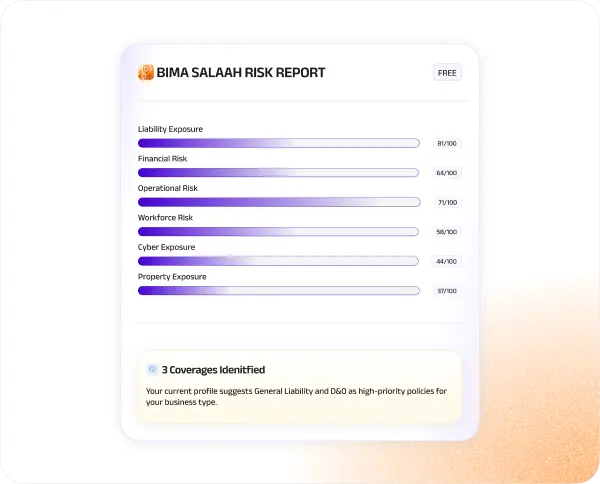
Every risk, read instantly.
Everything your business is exposed to, analysed before any cover is placed.
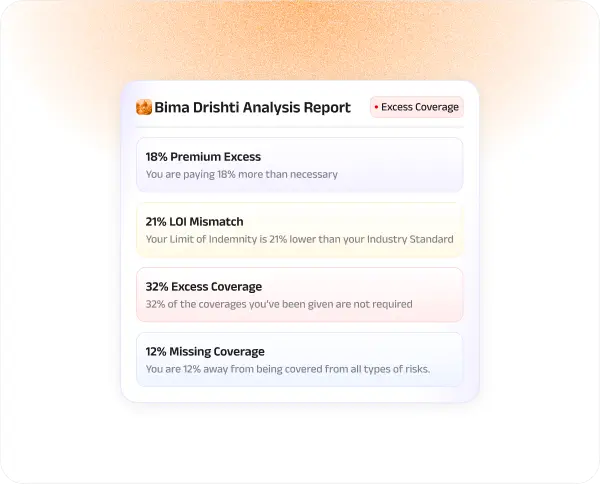
Every gap, caught early.
The gaps your current cover leaves open, surfaced before they turn into a claim.
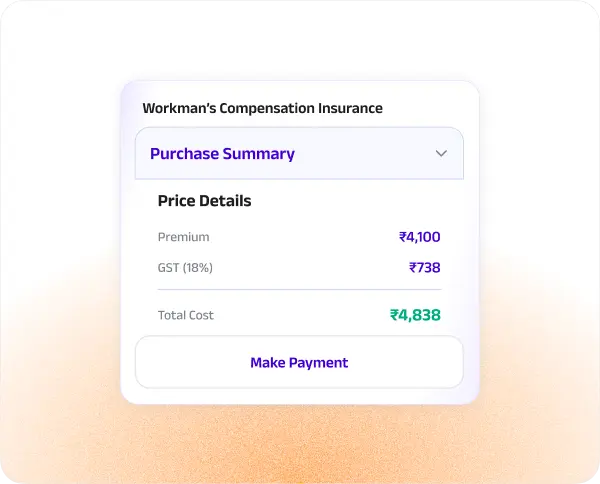
Right coverage, issued in minutes.
The right cover, priced and placed with India's top insurers, in minutes.



India's builders trust BimaKavach.

Learn More About
Directors &Officers Insurance for Non-Profit Boards
Directors &Officers Insurance for Non-Profit Boards, made Simple
Yes. The Indian Trusts Act 1882 and state Public Trusts Acts hold trustees accountable for breach of trust regardless of whether they receive compensation. Volunteer status does not remove the personal liability that comes with signing off on how funds are used.
A governing document sets the rules, but it cannot override the statute. If a trustee acts outside the trust deed or a committee member mismanages funds, the governing law (Indian Trusts Act, Societies Registration Act, or Companies Act) creates personal liability that the document cannot limit.
The claim sources differ, but the personal exposure is comparable. Non-profit boards face donor disputes, FCRA and Income Tax proceedings, employment claims, and beneficiary complaints. The absence of profit does not reduce the number or cost of these claims.
It is not legally mandatory. However, many institutional donors, foreign grantors, and government funding bodies now require proof of D&O cover before releasing funds. Boards that want to attract experienced independent members also find that candidates expect this protection as a condition of joining.
FCRA compliance reduces the probability of a regulatory action, but it does not eliminate it. If a show-cause notice or prosecution is initiated, the legal defence costs fall on the named individuals. D&O insurance covers those costs regardless of whether the organisation was compliant.
Exclusive Cyber Risk Assessment
Bima Netra
 Instant Cyber Risk Report
- Actionable Posture Insights