

Directors & Officers Insurance for Startups
Protects startup founders when investor or regulatory actions target leadership


Policy Provided By







Directors & Officers Insurance for Startups
Protects startup founders when investor or regulatory actions target leadership
Get Quotes in a Few Steps


Currently Reading
1. What Is D&O Insurance for Startups?
2. Why Do Startups Need D&O Insurance?
3. Who Needs D&O Insurance at Which Stage?
4. What Can Trigger a D&O Claim for Startups in India?
5. Who Is Covered Under a Startup D&O Policy?
6. Types of D&O Coverages for Startups?
7. Add-Ons and Extensions Worth Considering for Startups
8. What Is Not Covered Under a Startup D&O Policy?
9. How Is a Startup’s D&O Premium Calculated?
10. How to Buy D&O Insurance for Startups from BimaKavach?
Directors and Officers Insurance for Startups covers legal defence costs, settlements, and damages paid to third parties when a startup’s founders, directors, or senior managers are sued in their personal capacity for decisions they made while running the business. This coverage is designed to address issues that startups often face, including investor disputes, co-founder fallouts, employee claims, and regulatory scrutiny during periods of rapid growth.
Startups can face personal claims against founders, directors, and senior managers as the business grows and new investors, employees, and stakeholders become involved. These may include investor disputes, co-founder fallouts, employee claims, and regulatory scrutiny. D&O Insurance helps protect the personal assets of directors and officers when such claims arise from their decisions or actions in their management capacity.
Let's have a typical illustration:
A seed-stage founder raises a bridge round at a lower valuation. An existing angel investor claims the founder misrepresented the runway in board updates and files a claim for damages. The company has limited funds; hence, the founder is exposed to personal liability. In such an instance, a D&O policy would cover the expenses related to legal defence and any settlement up to the sum insured, saving the founder’s house and savings.
Pre-Seed and Bootstrapped:
It is a low priority when the team comprises only two or three close colleagues. However, once the company receives investments and outside money or an independent director comes in, D&O coverage becomes necessary.
Seed to Series A:
This is the turning point for most startups. As the team grows and new relationships develop between founders, employees, senior management, and investors, the chances of disputes and allegations can increase. It is common to see an investor requesting that the term sheet include a D&O policy as one of the closing conditions. The investor-nominated director also expects D&O protection from the very beginning.
Series B and Beyond:
Higher sums insured, EPL as standard, and closer underwriting of financials and governance. The presence of a US investor or US client can push up the D&O insurance costs quite a bit and make the terms more restrictive.
Preparing to List:
POSI and run-off planning start 12 to 18 months before the offer.
As startups grow, directors and senior officers can face claims arising from business decisions, management disputes, regulatory issues, and allegations by employees or other stakeholders. Some common situations include:
- A down round or bridge round is challenged: Existing investors may question a financing decision if they believe the new round has reduced the value of their investment or was not handled properly.
- A co-founder exit leads to a management dispute: Disagreements over a founder’s exit, ownership, voting rights, or company decisions can escalate into allegations of oppression and mismanagement against the directors.
- An employee raises allegations against management: Directors or senior officers may face claims involving alleged discrimination, harassment, retaliation, wrongful termination, or other employment-related conduct.
- Regulatory authorities hold directors accountable: Notices or proceedings from authorities such as the Registrar of Companies (RoC) or GST authorities may name directors personally for alleged non-compliance with statutory requirements.
- An ESOP dispute arises: Employees or former employees may challenge matters such as ESOP eligibility, exercise price, vesting, cancellation, or clawback, potentially bringing claims against the company’s directors or officers.
- A former employer raises IP or confidentiality concerns: If a founder previously worked elsewhere, their former employer may allege that the founder breached confidentiality obligations or used intellectual property or proprietary information improperly.
The policy is for individuals, not for companies alone. For a startup, this means a wider group than the founders envisage. A startup D&O policy usually covers:
Founders and Executive Directors
Everyone in an executive capacity on the board (including the CEO, CTO, and CFO) is covered for claims made against them on the grounds of their management decisions.
Directors Nominated by Investors
Directors that a VC/PE fund puts on the board are covered. Funds almost always have this condition before they let their partner hold a board seat, because the director is personally liable under the Companies Act 2013.
Senior Employees Acting in a Managerial Capacity
Claims against function heads (for example, a VP Finance or a Head of HR) are also covered if they are sued for acts carried out in their managerial capacity(for example, a wrongful termination).
The Company Itself, in Limited Situations
In case of a securities-related claim against the company alongside its directors, entity cover (Side C cover) becomes applicable. This is most significant when a startup has a large number of shareholders or is about to go public.
Past and Future Directors
A director who has resigned will remain covered for decisions made while he/ she was in office, as long as the policy remains in force or the policy has a run-off cover in place.
There are three main parts to a D&O insurance policy. Typically, a startup policy is made to cover all three, but the largest proportion goes to Side A and Side B.
| What it pays for | Why a startup needs it |
|---|---|
| Defence and settlement expenses for a director when the company cannot or refuses to indemnify them | Early-stage companies often do not have the cash reserves or the legal ability to indemnify. This coverage can provide core protection |
Side A
What it pays for
Defence and settlement expenses for a director when the company cannot or refuses to indemnify them
Why a startup needs it
Early-stage companies often do not have the cash reserves or the legal ability to indemnify. This coverage can provide core protection
Side B
What it pays for
Reimburses the company when it indemnifies a director
Why a startup needs it
Safeguards the balance sheet and runway of the startup
Side C
What it pays for
The own liability of the company in a securities claim
Why a startup needs it
Important when the cap table is large, or the company is planning to launch an IPO
Beyond the above, a startup policy typically covers:
- Legal defence costs are usually compensated as the matter unfolds rather than only upon completion
- Costs related to formal regulatory investigations against a named director
- Settlements and court payments of damages are paid up to the sum insured
- Pre-authorisation defence costs before the formal acceptance of the appointment of counsel by the insurer
Employment Practices Liability (EPL):
Extension of coverage in respect of claims for employment and conduct in the workplace, such as hiring, firing, and other workplace-related claims. Important if the workforce has more than 25 to 30 members.
Outside Directorship Cover:
Provided to a founder who is a director of a portfolio company, a subsidiary, or an industry body.
Run-off Cover:
Ensures that directors are still protected for previous actions following an acquisition or during a wind-down period (usually 6 or 7 years).
Public Offering of Securities Insurance (POSI):
A distinct set of coverage for the exposures created by an IPO.
Knowing what is not covered is just as important ( if not more!) as knowing what is covered.
Proven Fraud and Dishonesty
Deliberate dishonesty or liability for personal illegal gain is excluded. However, it needs to be established by judgment or admission. In general, defence costs are paid in such instances until that point.
Prior and Known Claims
Anything the director was aware of, or any matter or fact notified under a previous policy, is excluded. Make sure that the proposer discloses what he knows when a proposal is made.
Bodily Injury and Property Damage
Such claims are covered by a Commercial General Liability (CGL) policy, not by a D&O policy.
Insured Versus Insured Claims
Claims made by one insured director against another are usually excluded. However, most policies carve out co-founder claims that are adversarial in nature and shareholder derivative actions.
Fines and Penalties That Are Uninsurable by Law
Indian law does not permit insurance of certain specific penalties, and these are excluded from policy coverage.
Professional Services Claims
If there are claims that the company showed negligence while delivering its actual product/ service, such claims are covered under Professional Indemnity Insurance and not by a D&O policy.
Premiums can vary widely. Hence, you should consider any figure as indicative until the completion of the underwriting process. The primary drivers are:
- Funding stage and amount raised: more capital and more shareholders can increase the exposure.
- Sector: Businesses in fintech, crypto, healthtech, and other heavily regulated industries can attract higher rates.
- Board composition: independent and investor-nominated directors are viewed favourably when calculating premiums.
- Financial health: runway, burn, and audited accounts.
- Jurisdiction of investors and customers: US/UK exposure is the single biggest multiplier.
- Claims history: prior claims/known circumstances.
Our advisors will run your profile across insurers and will help you with price comparisons side by side before you can make your decision.
Getting covered is simple when you buy D&O Insurance for Startups online through our platform. Here is a brief explanation of how the system works:
| 1. Get instant quotes | 2. Choose your coverage & insurer | 3. Pay online & get your policy |
|---|---|---|
| Based on your funding stage, sector, and board composition, compare a D&O insurance quote across 25+ insurers within seconds | Our seasoned experts help you compare Side A, Side B, and Side C limits, EPL and run-off add-ons, and pricing so you can find the right fit before your round closes. | Complete payment digitally at your own convenience and receive your policy documents within minutes. No paperwork, no waiting. |
Step-by-step process to get a D&O Policy through BimaKavach
1. Get instant quotes
Based on your funding stage, sector, and board composition, compare a D&O insurance quote across 25+ insurers within seconds
2. Choose your coverage & insurer
Our seasoned experts help you compare Side A, Side B, and Side C limits, EPL and run-off add-ons, and pricing so you can find the right fit before your round closes.
3. Pay online & get your policy
Complete payment digitally at your own convenience and receive your policy documents within minutes. No paperwork, no waiting.
Documents You Will Need:
- Completed proposal form
- Certificate of incorporation and CIN
- Details of directors and officers (name, DIN, PAN)
- Cap table or shareholding pattern
- Latest financials or the term sheet for the round in progress
- Claims record (if any)
With instant quotes and coverage in minutes, buying D&O insurance for your startup on our platform is built for speed, so a policy is in place well before a term sheet's closing conditions come due.
Directors and Officers Insurance, for Every Kind of Business
Directors and Officers Insurance
Protects executives when business decisions lead to lawsuits
Trusted by India's Top Businesses















A new experience.
Built on intelligence. Covered in minutes.


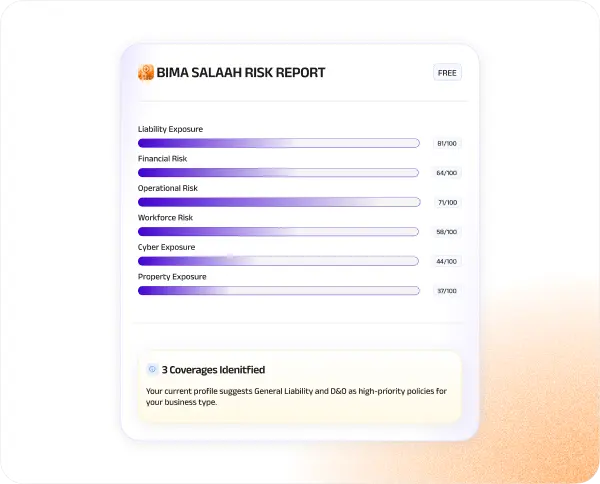
Every risk, read instantly.
Everything your business is exposed to, analysed before any cover is placed.
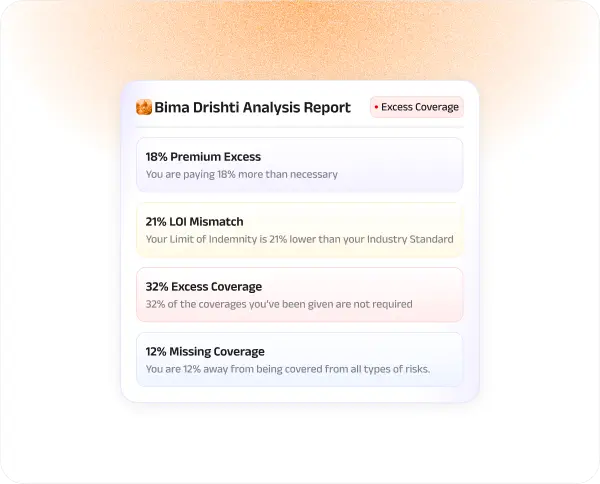
Every gap, caught early.
The gaps your current cover leaves open, surfaced before they turn into a claim.
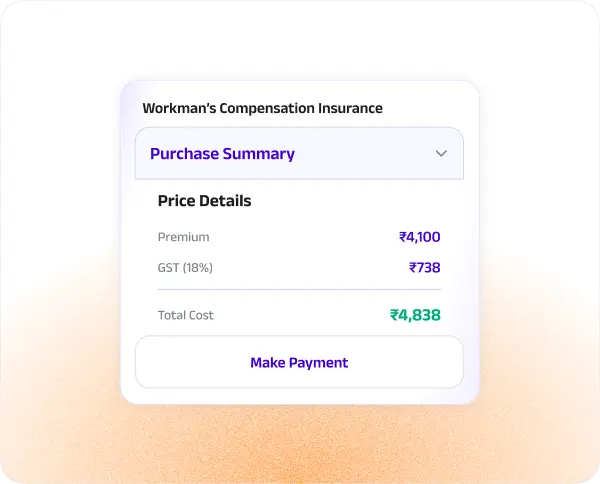
Right coverage, issued in minutes.
The right cover, priced and placed with India's top insurers, in minutes.



India's builders trust BimaKavach.

Learn More About
Directors & Officers Insurance for Startups
Directors & Officers Insurance for Startups, made Simple
No. It is not statutorily required for private companies. In reality, many venture investors will require it as a condition of funding. Hence, a startup usually purchases it before its seed or Series A round rather than because the law mandates it.
A sum insured between 1 crore and 5 crore is a common starting point at seed to Series A, depending on the amount raised and the investor base. Our advisors will guide you while setting the limit as per your cap table and term sheet.
First, it protects the individual directors and officers. Secondly, it compensates the company for indemnifying a director, and lastly, it can cover the company itself for securities-related claims once the shareholder base becomes large enough.
Proven fraud, claims a director was aware of, bodily injury and property damage, and claims that the company provided its product or service negligently. The last two fall into general liability and professional indemnity cover.
Once the proposal form and the latest financials are ready, you would typically receive a quote instantly. The cover can be made available before the closure of a funding round.
Exclusive Cyber Risk Assessment
Bima Netra
 Instant Cyber Risk Report
- Actionable Posture Insights