

Directors & Officers Insurance for Tech Companies
Protects tech company directors when scaling decisions trigger claims


Policy Provided By

Directors & Officers Insurance for Tech Companies
Protects tech company directors when scaling decisions trigger claims
Get Quotes in a Few Steps


Currently Reading
1. What Is D&O Insurance for Tech Companies?
2. Four Risk Zones That Put Tech Directors on the Line
3. Who Files Claims Against Tech Company Directors and Clients?
4. What Does a Tech Company D&O Policy Pay For?
5. Directors, CTOs, Investor Nominees, and Employees: Who Gets Protection?
6. Standard Exclusions on a Tech Company D&O Policy
7. Policy Features a Tech Company Should Negotiate
8. Factors That Shape the D&O Premium for a Tech Company
9. How to Buy D&O Insurance for Tech Companies from BimaKavach?
10. Three Claims That Hit Tech Company Boards
D&O insurance for tech companies covers the personal liability of founders, directors, senior officers, and all employees when they are sued or investigated for decisions made while running the business. The policy pays for legal defence costs, settlements, and court-ordered damages up to the sum insured, so the individual does not bear those costs from personal funds.
Consider a mid-size SaaS company whose CTO is named in a patent infringement suit filed by a competitor. The allegation is that the CTO authorised the use of a proprietary algorithm despite internal warnings about IP overlap. Legal defence over 18 months runs into tens of lakhs, and the company's cash reserves are committed to a product launch. A D&O policy would advance those defence costs from the date of the suit, keeping the CTO's personal assets separate from the company's IP battle. This page covers the tech-specific exposures that shape D&O cover for this sector.
Tech companies concentrate personal liability in four areas that other industries rarely face in combination. A director who understands where the exposure sits can make better decisions about the sum insured and the policy extensions they negotiate.
Intellectual Property Disputes:
Patent infringement suits, trade secret misappropriation claims, and open-source licence violation allegations can name the director who authorised the product roadmap or the acquisition of a code library. In a tech company, IP is the core asset, and decisions about it carry personal exposure for the board members who approved them.
Data Privacy and Regulatory Investigations:
The DPDP Act 2023 can impose penalties of up to 250 crore on the company for inadequate data safeguards, and the Data Protection Board can proceed against the individuals responsible for compliance oversight. CERT-In's six-hour incident reporting requirement adds another layer where a director's delay becomes personal accountability
M&A and Failed Acquisition Liability:
Tech companies acquire and get acquired at a pace that most sectors do not match. When a target's technology turns out to be encumbered, or a merger's projected synergies fail to materialise, the acquiring company's shareholders or the target's investors can file claims against the directors who approved the transaction.
Governance Disputes During Rapid Scaling:
Hypergrowth creates governance gaps. A company that triples its headcount in a year often outpaces its compliance infrastructure. Board members who failed to establish adequate financial controls, ESOP governance, or related-party transaction oversight face personal claims under Section 166 of the Companies Act 2013.
The range of claimants is broader than most tech founders expect, because the business sits at the intersection of intellectual property, financial regulation, data protection, and employment law.
- Investors and Shareholders: Allegations of misrepresentation during a fundraise, disputes over valuation methodology at a down round, or claims that the board failed to disclose a material IP risk or a regulatory investigation before closing
- Regulators and Government Bodies: Show-cause notices from SEBI for disclosure failures under LODR, DPDP Board proceedings for data breach mishandling, MCA or SFIO investigations into financial reporting, and Income Tax notices naming directors for statutory defaults
- Employees and Former Employees: Wrongful termination claims during layoff cycles, ESOP disputes over exercise terms or clawback provisions, and harassment allegations under the POSH Act that name the board or committee members personally.
- Competitors and IP Holders: Patent infringement suits, trade secret claims from a former employer of a key hire, and open-source compliance disputes that allege the board knowingly distributed encumbered code.
- Acquirers and M&A Counterparties: Claims from a buyer alleging that the seller's directors misrepresented the IP position, the revenue pipeline, or the regulatory status of the business during due diligence.
The policy responds when a director, founder, or senior officer faces a claim in their personal capacity for a management decision. Here is how the coverage layers work for a tech company:
Side A: Personal Cover When the Company Cannot Indemnify
Pays defence costs, settlements, and damages directly to the individual when the company is unable or not permitted to reimburse them. In a wind-down or insolvency scenario, Side A is the only financial barrier between the director and personal asset attachment. For tech companies burning capital through growth phases, this is the most critical layer.
Side B: Company Reimbursement
Reimburses the company when it indemnifies a director from its own funds. This protects the balance sheet and preserves runway. A tech company that pays 30 lakhs defending a director against a regulatory notice recovers that amount from the insurer under Side B.
Side C: Entity Cover for Securities Claims
Covers the company itself when it is named alongside its directors in a securities-related claim. This layer becomes significant once the cap table grows large or the company files for an IPO, triggering SEBI LODR obligations.
Regulatory Investigation Defence
Pays the cost of responding to formal investigations by SEBI, the DPDP Board, MCA, SFIO, or the Income Tax Department where a named director is under scrutiny. Defence costs are advanced as the matter unfolds, not on conclusion. Notify the insurer as soon as a notice or a circumstance that could become a claim appears, because late notification is one of the most common reasons D&O claims are disputed.
Employment Practices Claims
Covers defence and damages for wrongful termination, discrimination, and harassment claims brought against individual directors or officers. Tech companies in rapid hiring and layoff cycles are particularly exposed to this category.
D&O insurance protects directors, officers, and other employees against covered claims arising from their decisions and actions while performing their roles in the company, subject to the policy's terms and exclusions.
Board Directors:
Whether executive or non-executive, are covered for claims arising from their board-level decisions. This includes the CEO, CFO, and directors nominated by VC or PE investors. Nominee directors have personal duties under Section 166 of the Companies Act, 2013, regardless of who appointed them.
Chief Officers:
The CTO, CISO, and other senior technology officers are covered for claims arising from management decisions within their responsibilities. For example, a CTO may face a claim related to product architecture decisions, while a CISO may face allegations concerning security oversight.
Senior Management:
Senior managers, such as a VP of Engineering or Head of Product, are also covered for eligible claims arising from their managerial responsibilities.
Employees:
Employees may also be covered when a claim arises from an act or omission within their employment duties, depending on the policy wording. This can include allegations involving workplace conduct, compliance failures, or decisions made while carrying out assigned responsibilities.
Past and future directors and officers may also receive protection for covered claims relating to their respective periods of service, subject to policy terms, continuity of cover, and any applicable run-off provisions.
Every D&O policy has boundaries, and a tech company director should know exactly where those lines are drawn.
- Proven Fraud and Deliberate Criminal Acts: Deliberate dishonesty or personal illegal gain is excluded once a court establishes it by final adjudication or the individual admits to it. Defence costs are typically advanced until that point, so the director is not left undefended during the proceedings.
- Prior and Pending Claims at Inception: Claims the director knew about, or circumstances already notified under a previous policy, fall outside coverage. Full and accurate disclosure at proposal stage prevents this gap from opening.
- Professional Services and Product Errors: If a claim alleges that the company's software, platform, or technology service was negligently designed or delivered, that falls under Professional Indemnity or Tech E&O cover, not D&O. The distinction matters: D&O responds to management decisions, not product performance.
- Bodily Injury and Property Damage: A visitor injured at the office or a server fire that damages a co-located facility is a general liability claim, not a management liability claim.
- Fines and Penalties Not Legally Insurable: Indian law does not permit the insurance of certain regulatory penalties, and these are excluded. Defence costs for the proceedings that led to the penalty, however, are typically covered.
A standard D&O policy covers the core exposures, but tech companies should negotiate specific extensions that match their risk profile. These are not automatic inclusions, and missing them can leave a material gap.
Run-off Cover:
Ensures that directors are protected for pre-acquisition decisions after the company is sold. A run-off period of six to seven years is standard. Tech companies should negotiate this before signing an M&A term sheet, not after, because the premium is lower and the terms are better when it is placed proactively.
POSI Extension (Public Offering of Securities Insurance):
A dedicated layer for IPO-related liability. Planning should start 12 to 18 months before the offer document is filed. For pre-IPO tech companies, adding this extension early locks in better terms than purchasing it at the last stage.
Employment Practices Liability (EPL):
Covers wrongful termination, discrimination, and harassment claims. For tech companies with more than 25 employees, this is not optional.
Outside Directorship Cover:
Protects a founder who sits on the board of a subsidiary, a portfolio company, or an industry body. Many tech founders hold multiple board seats without realising each one creates a separate personal exposure.
Investigation Cost Advancement:
Ensures that defence costs for regulatory investigations are advanced as the matter progresses, not reimbursed after resolution. For matters that stretch over 12 to 24 months, this is the difference between a director funding the defence out of pocket and the insurer funding it in real time.
Premiums vary based on the company's risk profile, and any figure should be treated as indicative until underwriting is complete. The factors that carry the most weight for tech companies are:
- Funding Stage, Cap Table, and No. of Employees: More capital raised, more shareholders, and a larger board increase the claim potential. The presence of a US or UK investor on the cap table is one of the biggest premium multipliers.
- Revenue Model and Sector: SaaS, fintech, healthtech, and AI companies each attract different rates because the underlying regulatory and litigation environments differ.
- IP Portfolio and Litigation History: A company with pending patent disputes or a history of IP claims will face tighter terms and higher premiums.
- Data Handling Scale: The volume of personal and financial data the company processes affects the DPDP-adjacent risk, which influences the D&O premium alongside any separate cyber cover.
- Board Composition and Governance: Independent directors, a documented governance framework, and an audit committee are viewed favourably. A board with no independent directors or no formal compliance oversight attracts a loading.
- Claims History and Known Circumstances: Prior claims, ongoing regulatory proceedings, or circumstances disclosed at inception.
Getting covered is straightforward when you buy D&O insurance for tech companies online through our platform. Here is how the process works:
| 1. Get Instant Quotes: | 2. Choose Your Coverage and Insurer: | 3. Pay Online and Get Your Policy: |
|---|---|---|
| Based on your funding stage, revenue model, and board composition, compare D&O quotes across insurers within seconds. | Our experts help you compare Side A, Side B, and Side C limits, EPL and run-off extensions, and pricing so you pick the right fit for your tech company's exposure. | Complete payment digitally and receive your policy documents within minutes. No paperwork, no waiting. |
Step by Step Process to Get a Tech Company D&O Policy Through BimaKavach
1. Get Instant Quotes:
Based on your funding stage, revenue model, and board composition, compare D&O quotes across insurers within seconds.
2. Choose Your Coverage and Insurer:
Our experts help you compare Side A, Side B, and Side C limits, EPL and run-off extensions, and pricing so you pick the right fit for your tech company's exposure.
3. Pay Online and Get Your Policy:
Complete payment digitally and receive your policy documents within minutes. No paperwork, no waiting.
Documents You Will Need
- Completed proposal form
- Certificate of incorporation and CIN
- Details of directors and officers (name, DIN, PAN)
- Cap table or shareholding pattern
- Latest audited financial statements or management accounts
- Details of any IP litigation, regulatory proceedings, or known circumstances (if any)
- Claims record (if any)
Investor Sues After Failed Acquisition Integration
A Series B investor filed a claim against the founders of a mid-size tech company, alleging that the board approved the acquisition of a smaller firm without disclosing that the target's core IP was subject to a pending infringement dispute. The investor argued that the acquisition destroyed value and that the directors breached their fiduciary duty by failing to conduct adequate IP due diligence. Defence costs over 14 months exceeded 35 lakhs before a negotiated settlement. A Side A and Side B policy would have funded the defence and the settlement up to the policy limit.
DPDP Board Notices the Chief Data Officer
A SaaS company processing customer data for financial institutions received a notice from the Data Protection Board alleging inadequate data safeguards after a breach exposed user records. The notice named the Chief Data Officer and the CEO individually, citing compliance oversight failures. Regulatory counsel and forensic response coordination over 12 months cost the individuals over 20 lakhs out of pocket. A D&O policy with regulatory investigation cover would have advanced the defence costs from the date of the notice.
Laid-off Engineering Lead Files Wrongful Termination Claim
A tech company that reduced its engineering team by 40% after a funding shortfall faced a wrongful termination claim from a senior engineering lead. The claim named the CTO and the HR head personally, alleging that the layoff process violated contractual severance terms and that the selection criteria were discriminatory. With an EPL extension on the D&O policy, the defence costs and the eventual settlement would have been covered.
Directors and Officers Insurance, for Every Kind of Business
Directors and Officers Insurance
Protects executives when business decisions lead to lawsuits
For Startups
Protects startup founders when investor or regulatory actions target leadership
For Fintech Firms
Protects fintech directors when regulatory or investor claims arise
Trusted by India's Top Businesses















A new experience.
Built on intelligence. Covered in minutes.


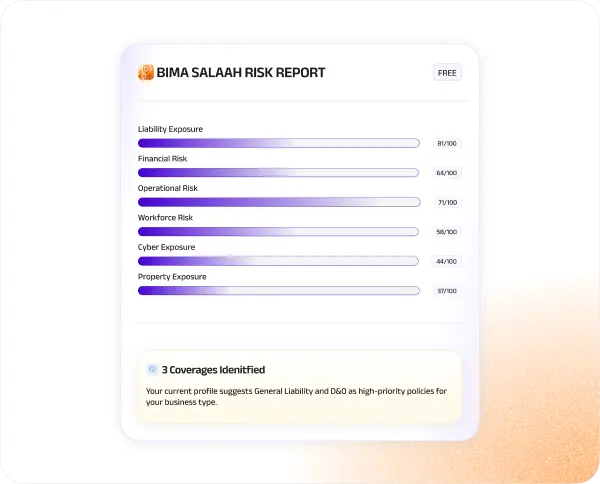
Every risk, read instantly.
Everything your business is exposed to, analysed before any cover is placed.
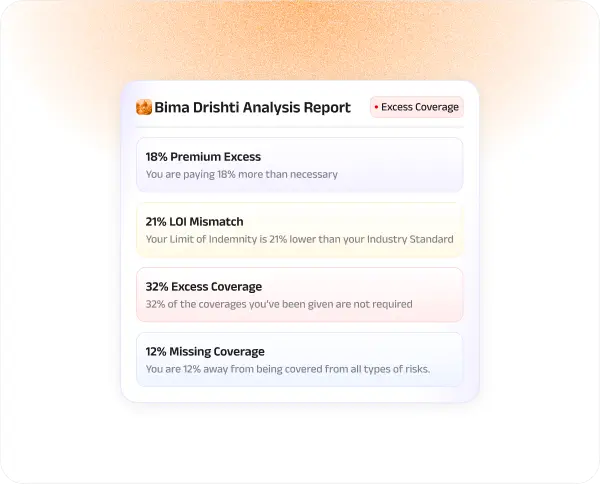
Every gap, caught early.
The gaps your current cover leaves open, surfaced before they turn into a claim.
Right coverage, issued in minutes.
The right cover, priced and placed with India's top insurers, in minutes.



India's builders trust BimaKavach.

Learn More About
Directors & Officers Insurance for Tech Companies
Directors & Officers Insurance for Tech Companies, made Simple
D&O covers the personal liability of a director who authorised a decision that led to the IP dispute. If the claim alleges that the director failed in their governance duty by approving the use of encumbered technology, the policy responds. If the claim is about the product's technical performance itself, that falls under Tech E&O cover.
No. Cyber insurance covers the incident response costs and third-party claims arising from a data breach. D&O covers the personal liability of a director who is alleged to have failed in overseeing data security or who misrepresented the company's security posture to investors. A single breach event can trigger both policies for different claims.
Any tech company with a board of directors, external shareholders, or employees can face a D&O claim. The Companies Act 2013 imposes personal duties on directors under Section 166 regardless of whether the company is listed, funded, or bootstrapped. The risk is lower for a two-person bootstrapped firm, but it is not zero once the company has clients, employees, or a cap table.
Yes, if they hold a management role and the claim arises from a decision within their delegated authority. A CTO who approved the product architecture or a CISO who signed off on the security framework is covered when a regulatory action or an investor claim names them for that decision.
The acquiring company's policy does not automatically cover the seller's directors for pre-acquisition decisions. Run-off cover should be negotiated before the transaction closes. A standard run-off period is six to seven years, covering any claim that arises from decisions made before the acquisition.
Exclusive Cyber Risk Assessment
Bima Netra
 Instant Cyber Risk Report
- Actionable Posture Insights