

Fire Loss of Profit Insurance
Protects business income when fire damages business
Get ₹50 Lakh Cover
Starting At ₹7,000/Year


Policy Provided By











Fire Loss of Profit Insurance
Protects business income when fire damages business
Get Quotes in a Few Steps


Currently Reading
1. What Is Fire Loss of Profit Insurance?
2. Why Is Fire Loss of Profit Insurance Important?
3. Who Should Purchase Fire Loss of Profit Insurance?
4. Features of Fire Loss of Profit Insurance
5. Inclusions Under Fire Loss of Profit Insurance
6. Exclusions Under Fire Loss of Profit Insurance
7. Fire Loss of Profit Insurance Claim Process
Fire Loss of Profit (FLOP) Insurance is a simple way for businesses to protect their income after a fire. It covers the profit you would have earned if the fire had not happened. It also pays for fixed expenses like rent, electricity, and salaries while your operations are shut. This insurance helps you stay stable even when your factory or shop is damaged. It is also called Fire Consequential Loss Insurance or Business Interruption Insurance.
FLOP in insurance does more than cover lost income. It gives you time to rebuild, keeps your workers paid, and protects your contracts and reputation.
Here is an example of how Fire Loss of Profit Insurance helped a small-scale paper unit in Nagpur:
Incident
A fire broke out in the machine room and halted production for three months.
₹9,00,000 Lost Profit Cover
The policy paid the business for income they could not earn due to the shutdown.
₹2,40,000 Fixed Costs Cover
It covered salaries and rent during the closure period.
Because of Fire Loss of Profit Insurance, the unit cleared dues, kept staff onboard, and resumed business without heavy financial pressure.
A Fire Loss of Profit Insurance Policy is important because a fire doesn't just damage property - it stops income. While standard Fire Insurance covers physical damage, it won't compensate for lost profits during business closure for repairs.
Prevents Business Disruption
For Indian manufacturing units and shops dependent on daily operations, even weeks of shutdown can cause salary delays, missed orders, cancelled contracts, and severe cash flow problems.
Maintains Financial Stability
Provides steady cash flow when sales stop, enabling continued payment of salaries, rent, EMIs and other fixed operational expenses during the recovery period.
Protects Business Reputation
Helps businesses restart operations without delays, maintaining client relationships and market position that might otherwise be lost during prolonged closures.
Without FLOP insurance, even small fires can create long-term financial consequences. With proper coverage, businesses can focus on restoration rather than financial survival during critical recovery periods.
Any business that depends on steady income should purchase Fire Loss of Profit Insurance. This includes manufacturers, wholesalers, retailers, service providers, warehouses, and workshops.
If a fire stops your operations, even for a few weeks, your income will pause—but your expenses will not. You will still need to pay rent, electricity bills, staff salaries, EMIs, and supplier dues. This can create stress and cash flow problems, especially for small and mid-sized businesses.
A Fire Loss of Profit Insurance Policy is useful for:
Factories and industrial units
Shops and showrooms
Hotels and restaurants
Schools and coaching centres
Warehouses and godowns
Printing presses and packaging units
If your business cannot afford long downtime, or if you have financial obligations every month, this insurance is a wise step. It helps you stay strong during a shutdown and resume operations with confidence.
A Fire Loss of Profit Insurance Policy has simple but powerful features that help you stay financially safe during business downtime. It works alongside your Fire Insurance Policy and activates when a fire causes a break in operations.
A Standard Fire & Special Perils Policy (SFSP) covers the physical damage to the property caused by a fire, while FLOP insurance covers the financial consequences of that damage.
The FLOP Policy becomes operative when there is a claim payable under the SFSP due to covered perils like fire, lightning, or other similar risks.
Here are the key features of Fire Loss of Profit Insurance:
Covers Loss of Net Profit
It pays the profit you would have earned if the fire had not occurred.
Pays Fixed Operating Costs
It covers unavoidable expenses like rent, salaries, interest, and electricity.
Covers Increased Working Costs
If you spend extra money to restart faster—like renting a temporary unit—the policy may cover it.
Works Only with Fire Insurance
This cover applies only if you already have a Standard Fire and Special Perils Policy.
Based on Actual Downtime
The claim is calculated based on how long your business remains affected after the fire.
Indemnity Period: The indemnity period is the duration for which the policy provides coverage, starting from the date of the fire and ending when the business returns to normal operations, or the policy's specified limit, whichever comes first.
Fire Loss of Profit Insurance covers many business risks that come after a fire. It focuses on helping you recover the money you would have earned and manage costs during the break in operations. Insurers offer this cover using different specifications. Each one defines how loss is calculated and what is included.
Here are the main inclusions, in detail:
Gross Profit (Turnover Basis)
Covers the drop in turnover and extra cost of working. It calculates gross profit based on your sales revenue.
Gross Profit (Output Basis)
Works like the turnover basis but uses finished goods or output units instead of revenue.
Gross Profit (Difference Basis)
Calculates profit as turnover plus closing stock, minus opening stock and selected expenses.
Revenue Basis
Suitable for service-based businesses. It covers the loss of gross revenue or fees instead of sales.
Wages Cover
Pays wages to workers you need to retain during the shutdown. You can choose full or part coverage.
Lay-off or Retrenchment Compensation
Pays statutory compensation under the Industrial Disputes Act, if you have to let workers go.
New Business Clause
Helps if your business is less than 12 months old. It allows alternate methods to estimate your loss.
Return of Premium Clause
If your actual gross profit is lower than estimated, you may receive up to 50 percent of your premium back.
Voluntary Deductible Clause
You can agree to skip a few days of loss (like the first 7 days) in return for a lower premium.
Fire Loss of Profit Insurance gives you strong financial support after a fire, but it does not cover every type of loss. Like all insurance policies, it has clear exclusions.
War and Related Events
Loss caused by war, civil war, rebellion, or riots is not covered.
Terrorism
Loss due to terrorism is excluded unless you have taken the optional Terrorism Cover.
Data or Software Losses
The policy does not cover losses from computer viruses, data issues, or software failures.
Pollution or Contamination
Any loss linked to pollution, chemical leaks, or asbestos is not covered.
Unexplained or Illegal Activity
Theft, looting, vandalism, mysterious disappearance, market loss, or fines are not included.
Standard Deductible
The initial loss amount (deductible) mentioned in your policy schedule will not be paid.
1. Notify Us
As soon as the loss or damage happens, contact us within 2 days. Share all relevant details and documents, such as photos or reports. We will make sure the process starts without any delays.
2. Surveyor Visit
Once notified, a surveyor will visit your site within 1-2 days to assess the damage. Please avoid moving any damaged items until the surveyor arrives. After that, we will take care of the next steps.
3. Submit Required Documents
We will guide you through submitting the necessary documents, including the claim form, incident notes, and financial records. Our team will ensure everything is submitted correctly and on time.
4. Claim Assessment & Approval
Once the documents are submitted, the surveyor will evaluate the claim and provide a settlement amount based on your policy terms. After approval, the insurer will finalize the settlement.
5. Payment Processing & Claim Closure
Once the settlement is approved, payment will be processed and issued to you or your beneficiary. After payment, the claim will be closed. If any further issues arise, we will be here to support you until they are fully resolved.
Our streamlined claim process ensures quick resolution while maintaining transparency at every step, helping your business recover from operational interruptions with minimal financial impact.
Trusted by India's Top Businesses















A new experience.
Built on intelligence. Covered in minutes.


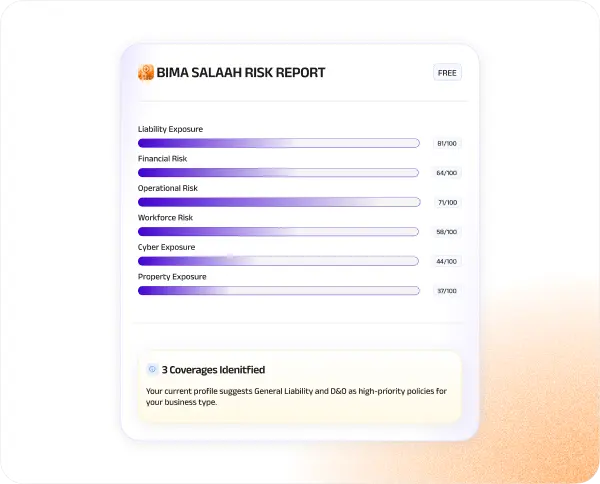
Every risk, read instantly.
Everything your business is exposed to, analysed before any cover is placed.
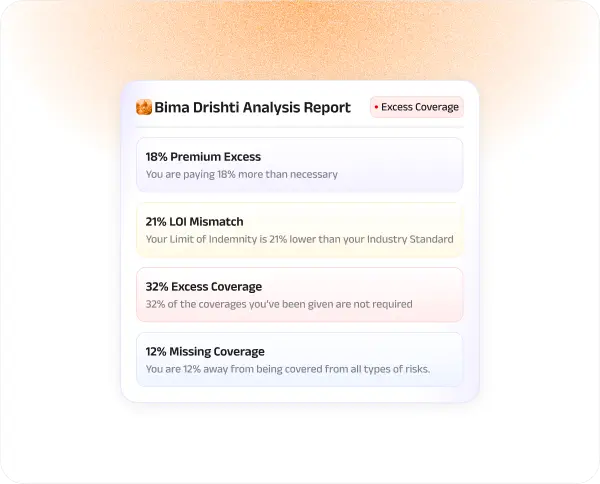
Every gap, caught early.
The gaps your current cover leaves open, surfaced before they turn into a claim.
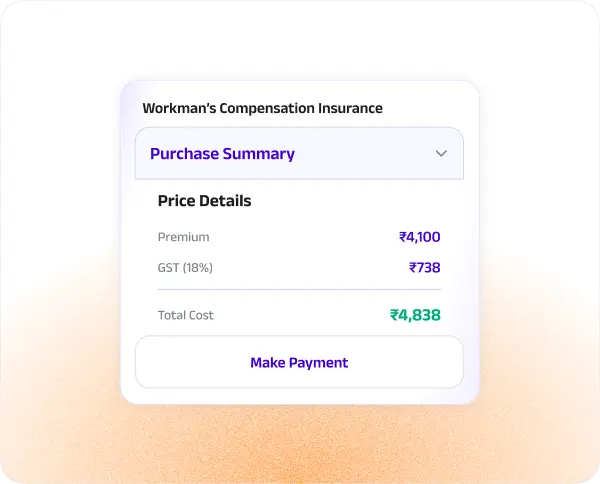
Right coverage, issued in minutes.
The right cover, priced and placed with India's top insurers, in minutes.



India's builders trust BimaKavach.

Learn More About
Fire Loss of Profit Insurance
Business Insurance, made Simple
The FLOP full form in insurance is Fire Loss of Profit.
Fire Loss of Profit (FLOP) insurance covers the financial losses a business experiences due to fire damage, such as loss of profits, increased costs, and standing charges. It essentially provides business interruption coverage by compensating for the financial impact of being unable to operate due to fire.
The indemnity period, which is the duration for which the policy provides coverage, is determined by the time it takes for the business to return to normal operations after the fire.
Fire Loss of Profit Insurance typically covers three key areas. First, it includes the loss of gross profit, which means the net profit you would have earned during the indemnity period, along with fixed costs like salaries and rent that continue during the downtime.
Second, it may cover increased costs of working, such as extra expenses needed to keep the business running or to restart operations—this could include temporary relocation or hiring alternative equipment.
Third, if some fixed costs, such as rent or utilities, stop during the interruption, the policy may also account for those savings.
Fire Insurance pays for physical damage to buildings, machinery, or stock. Fire Loss of Profit Insurance pays for lost income and ongoing expenses while your business is shut.
The premium for an FLOP Policy depends on the annual gross profit, the chosen indemnity period, and any selected extensions. Businesses should carefully consider the indemnity period needed to fully recover from a fire incident and the potential for increased costs of working.