

Event Liability Insurance
Protects event organisers when accidents or property damage occur during events


Policy Provided By














Event Liability Insurance
Protects event organisers when accidents or property damage occur during events
Get Quotes in a Few Steps


Currently Reading
1. What Is Event Liability Insurance?
2. Which Event Formats Carry the Highest Third-Party Risk?
3. How Does a Single Incident at an Event Become a Claim Against the Organiser?
4. What Does Event Liability Insurance Cover?
5. What Is Not Covered Under Event Liability Insurance?
6. How to Buy Event Liability Insurance From BimaKavach?
7. What Happens When a Stage Collapse Triggers Claims From Three Directions?
Event liability insurance pays the compensation, the legal defence costs, and the medical expenses your event management company or organising team owes when a third party is injured or their property is damaged during an event you are running. It sits under commercial general liability insurance and is scoped specifically to the risks that arise before, during, and after an event.
The misconception that trips up most organisers is the assumption that the venue's own insurance covers everything that happens inside it. It does not. The venue's policy responds to the venue owner's negligence: a faulty staircase railing, an electrical short in the building's wiring, a structural failure in the ceiling. The moment the incident traces back to your decisions as the organiser, the stage design you approved, the crowd barriers you chose, the caterer you hired, or the pyrotechnics you signed off on, the venue's insurer points the claim back at you. Municipal authorities in cities like Mumbai, Delhi, and Bengaluru now require proof of third-party liability cover before granting permission for public gatherings, which means this gap between venue cover and organiser liability is no longer just a contractual risk but a regulatory one.
Every event format creates a different combination of third-party risks. The same policy covers all of them, but the exposure profile, and therefore the sum insured you need, changes with the format.
Concerts and Live Performances
Crowd density is the primary driver. Stage collapse, speaker rigging failure, electrical shock from wet cabling, and crowd surges during entry or exit create bodily injury exposure that scales with attendance. Temporary structures (stages, lighting rigs, barricades) add property damage risk to the venue itself.
Corporate Events and Product Launches
Attendee counts are smaller, but the third parties are different: clients, investors, media, and vendor staff. A guest tripping over exposed cabling during a product demo, a fire triggered by a malfunctioning LED wall, or food poisoning from the catered lunch each creates a claim against the organiser, not the hotel.
Weddings and Private Celebrations
The organiser here is often the family or a hired wedding planner. Fireworks, temporary mandap structures, outdoor catering in monsoon conditions, and guest transport between venues all create exposure. NCDRC and state consumer commissions have awarded compensation in the range of 5 to 25 lakh per claimant for injuries at celebration venues.
Exhibitions and Trade Shows
Multiple exhibitors, each with their own equipment, create overlapping liability. If a display stand collapses on a visitor, the exhibition organiser faces the first claim, not the exhibitor, because the organiser controls the venue layout and safety standards. Fire incidents at exhibition halls with combustible booth materials are a recurring pattern.
Sporting Events and Marathons
Participant injury during the event itself is one layer, but third-party exposure extends further: bystanders along the route, property damage to vehicles parked near the course, and medical emergencies among spectators. Organisers of public sporting events in India face the same municipal permission requirements as concert organisers, including proof of liability cover.
Most event organisers think of liability as a remote possibility. The chain from incident to claim is shorter than it appears.
Step 1: The Incident
A guest slips on a wet floor near the food stall, a speaker rigging bracket breaks and strikes an attendee, or a child at a family event is burned by an unsecured catering flame. The incident itself takes seconds.
Step 2: Medical Attention and Documentation
The injured person visits a hospital. Medical bills, diagnostic reports, and a discharge summary create the paper trail. If the injury is serious, the treating doctor's notes become evidence of the severity.
Step 3: The Injured Party Identifies the Organiser
Under the Consumer Protection Act 2019, the claimant does not need an expensive lawyer. A complaint to the district consumer commission names the event organiser, the venue, and sometimes the caterer or contractor. The commission determines who was negligent.
Step 4: The Claim Arrives
The organiser receives a legal notice or a consumer commission summons. The claim typically covers medical expenses, loss of income during recovery, pain and suffering, and sometimes punitive damages. A single serious injury at a 500-person event can produce a claim of 10 to 50 lakh.
Step 5: Defence and Settlement
Without event liability insurance, the organiser pays legal fees out of pocket and negotiates a settlement or faces an order. With the policy, the insurer appoints defence counsel, covers the legal costs, and pays the compensation up to the policy limit.
Third-Party Bodily Injury:
Medical expenses, hospitalisation costs, and compensation for guests, vendors, bystanders, or venue staff injured during your event. This is the most frequent claim trigger for event organisers.
Property Damage to the Venue or Rented Equipment:
Repairs or replacement costs when your event operations damage the venue's flooring, walls, fixtures, or rented sound, lighting, and staging equipment. Venue rental contracts routinely require this cover.
Food Poisoning Liability:
Compensation and medical costs when catered food or beverages served at your event cause illness among attendees. The claim falls on the organiser who hired the caterer, not on the caterer alone.
Advertising Injury From Event Promotion:
Defence costs and damages if your event's promotional material, social media campaigns, or printed collateral is alleged to infringe another party's trademark, copyright, or reputation.
Legal Defence Costs:
Lawyer fees, court filing charges, and expert witness costs from the moment a claim is filed until it is resolved. The insurer provides defence counsel even if the claim is eventually found to be without merit.
Tenant's Legal Liability:
Covers damage to the rented premises caused by your event operations, separate from the general property damage cover. This responds when the venue's lease or rental agreement holds the organiser liable for premises damage.
- Intentional Injury or Damage: If the organiser or their staff deliberately causes injury or damage, the policy does not respond. This includes deliberate overcrowding beyond the venue's permitted capacity when the organiser was aware of the limit.
- Liquor Liability: Injuries or incidents arising from the service of alcohol at your event are excluded under the standard policy. If your event involves a bar or alcohol service, ask for a liquor liability endorsement before the event date. This is an add-on, not a default cover, and the endorsement must be in place before the event.
- Professional Services Errors: If your event management company also provides consulting, design, or advisory services and a client claims the advice was negligent, that falls under a professional liability policy, not CGL. The CGL policy covers physical injury and property damage, not professional service quality.
- Participant Injury During Hazardous Activities: Injuries during adventure activities, extreme sports demonstrations, or stunt performances may be excluded unless the activity was disclosed to the insurer and specifically covered under the policy.
Buying event liability insurance through BimaKavach takes less time than booking a venue. The process runs entirely online, and our team handles the insurer coordination so you can focus on the event itself. Once the policy is active, the claims process follows the same steps as any commercial general liability insurance claim, with the insurer appointing defence counsel and managing the settlement directly.
| 1. Get Instant Quotes: | 2. Choose Your Coverage and Insurer: | 3. Pay Online and Get Your Policy: |
|---|---|---|
| Share your event details, expected attendance, venue type, and event dates. Receive quotes from multiple insurers within minutes. | Compare coverage limits, premium amounts, and endorsement options (liquor liability, terrorism cover) side by side. Our experts help you pick the right fit. | Complete the payment online. Your policy document is delivered to your inbox before the event date. |
Get Event Liability Insurance from BimaKavach
1. Get Instant Quotes:
Share your event details, expected attendance, venue type, and event dates. Receive quotes from multiple insurers within minutes.
2. Choose Your Coverage and Insurer:
Compare coverage limits, premium amounts, and endorsement options (liquor liability, terrorism cover) side by side. Our experts help you pick the right fit.
3. Pay Online and Get Your Policy:
Complete the payment online. Your policy document is delivered to your inbox before the event date.
Documents You Will Need
- Event details: type, dates, venue address, expected attendance
- Organiser's business registration or partnership deed
- Venue rental or booking agreement
- Previous event insurance policy (if renewing)
- List of vendors and subcontractors involved in the event
A mid-size event management company in Pune organised a 1,200-person corporate awards night at a rented banquet hall. During the main ceremony, a section of the temporary stage, erected by a subcontracted staging vendor, collapsed under the weight of the lighting rig. Twelve attendees seated in the front rows suffered injuries ranging from bruises to a fractured wrist.
Three claims arrived within 45 days. The venue owner filed a property damage claim for the damaged flooring and wall panelling. Four injured attendees filed separate complaints at the district consumer commission seeking medical expenses and compensation. The corporate client that had hired the organiser sent a legal notice for breach of contract and reputational harm.
The organiser's event liability policy responded to all three directions. The insurer appointed defence counsel for the consumer commission complaints, settled the venue's property damage claim directly, and covered the legal costs of responding to the corporate client's notice. The total payout across all three claims was approximately 18 lakh. Without the policy, the organiser would have faced the same amount out of pocket, which exceeded the entire profit margin on the event contract.
Commercial General Liability Insurance, for Every Kind of Business
Commercial General Liability Insurance
Protects businesses when operations cause third-party injury or damage
Trusted by India's Top Businesses















A new experience.
Built on intelligence. Covered in minutes.


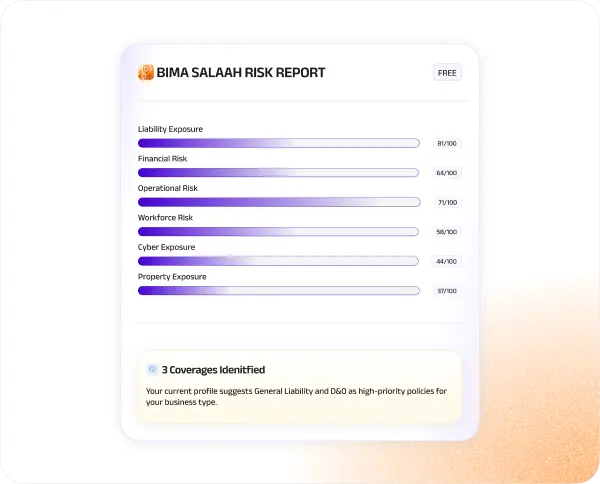
Every risk, read instantly.
Everything your business is exposed to, analysed before any cover is placed.
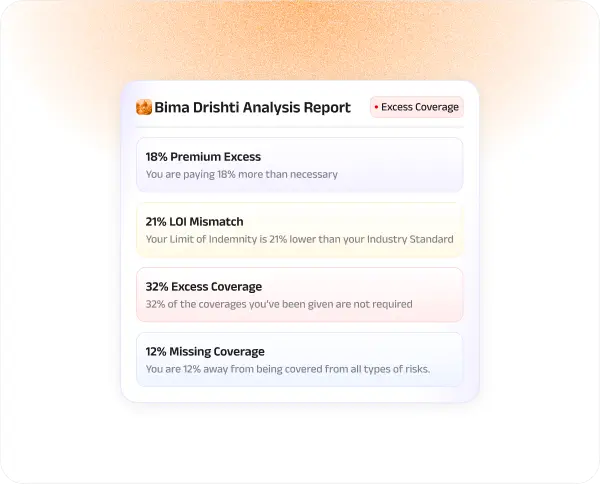
Every gap, caught early.
The gaps your current cover leaves open, surfaced before they turn into a claim.
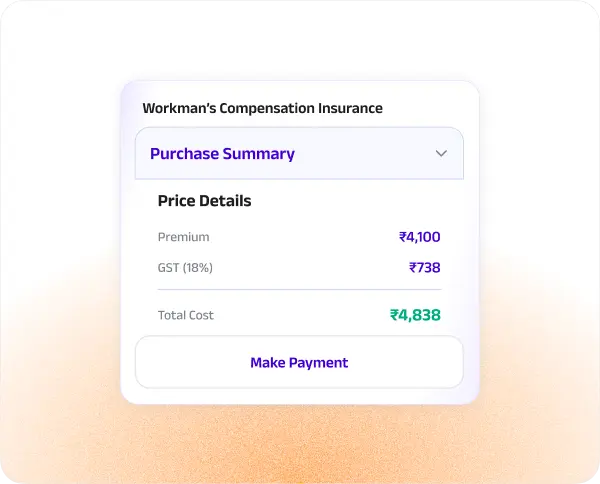
Right coverage, issued in minutes.
The right cover, priced and placed with India's top insurers, in minutes.



India's builders trust BimaKavach.

Learn More About
Event Liability Insurance
Event Liability Insurance, made Simple
The venue's insurance covers the venue owner's own negligence, such as a faulty staircase or an electrical fault in the building. Anything that traces back to the organiser's decisions, the stage setup, the crowd management plan, the catering, or the equipment brought into the venue, is the organiser's liability. The venue's insurer will not pay claims arising from the organiser's operations.
Event size is one factor among many. A stage collapse, an electrical shock, a fire, or food poisoning can trigger claims regardless of whether the event has 200 attendees or 2,000. State consumer commissions have awarded 10 to 50 lakh per claimant for serious event injuries. A 500-person event with one serious incident can create aggregate exposure that exceeds the entire event budget.
Waivers are frequently struck down by Indian courts, particularly for events involving children, elderly attendees, or inherent-risk activities. Under the Indian Contract Act Section 23 and the Consumer Protection Act 2019, waiver clauses in consumer-facing events have limited enforceability. Waivers also do not bind third parties such as bystanders, delivery staff, or vendor employees who were not signatories.
In cities like Mumbai, Delhi, Bengaluru, and Hyderabad, municipal authorities and police departments now require proof of third-party liability cover before granting permission for public gatherings above a certain attendance threshold. Without the insurance certificate, the permission itself may be denied, and the organiser cannot legally hold the event.
The standard event liability policy excludes injuries or incidents arising from the service of alcohol. If your event includes a bar, cocktail service, or alcohol-sponsored segment, you need the liquor liability endorsement added to your policy before the event date. This is a separate add-on that covers claims arising from alcohol-related incidents at the event.
Exclusive Cyber Risk Assessment
Bima Netra
 Instant Cyber Risk Report
- Actionable Posture Insights