

General Liability Insurance for Healthcare
Protects hospitals when visitor injuries occur on premises


Policy Provided By







General Liability Insurance for Healthcare
Protects hospitals when visitor injuries occur on premises
Get Quotes in a Few Steps


Currently Reading
1. What Is General Liability Insurance for Healthcare Providers?
2. Why Medical Indemnity Does Not Replace General Liability Insurance?
3. Where Do Non-Clinical Liability Claims Arise in a Hospital?
4. What Does Healthcare General Liability Insurance Cover?
5. Does a Trust or Charitable Hospital Still Need CGL Cover?
6. The Bio-Medical Waste Exposure That Most Hospitals Miss
7. What Is Not Covered Under Healthcare General Liability Insurance?
8. How a Corridor Slip-and-Fall Reaches the Consumer Commission
9. How to Buy General Liability Insurance for Healthcare From BimaKavach?
General liability insurance for healthcare providers is the commercial general liability cover built for hospitals, nursing homes, clinics, and diagnostic centres. It pays compensation, legal defence costs, and medical expenses when a third party files a claim because they were injured on your premises, their property was damaged during a visit, or your hospital's promotional material caused reputational harm to another party. A third party is anyone who is not employed by your hospital, such as a patient's family member, an independent visiting vendor, a pharmaceutical representative, an ambulance driver employed by an external service provider, or a canteen customer.
Most hospital administrators mistakenly assume medical indemnity or professional indemnity insurance covers everything that goes wrong inside a hospital. It does not. Medical indemnity responds to clinical negligence: a misdiagnosis, a surgical error, a wrong medication administered to a patient. When a patient's elderly parent slips on a freshly mopped corridor and fractures a hip, or a vendor's laptop is destroyed by a water leak from an overhead pipe, or a visitor is burned by a short circuit in the waiting area, medical indemnity does not respond. Those are premises liability incidents, and the Clinical Establishments Act 2010 requires every registered hospital to maintain safe infrastructure, which means the liability for premises safety sits independently of clinical practice.
This distinction is the one that costs hospitals the most money when they get it wrong. Both policies use the word "liability," but they respond to entirely different events with entirely different triggers.
1. What Medical Indemnity Covers:
Medical indemnity (also called professional indemnity for hospitals) responds when a patient alleges clinical negligence. The trigger is a medical act or omission: a wrong diagnosis, a delayed treatment, a surgical instrument left inside a patient, or a medication error. The claimant is always the patient or the patient's family, and the claim arises from the professional service the hospital provided.
2. What CGL Covers:
General liability insurance responds when any third party alleges bodily injury or property damage caused by the hospital's premises, operations, or promotional activities. The trigger is a non-clinical event: a slip-and-fall in a corridor, a fire injuring a visitor in the waiting area, a canteen serving contaminated food to a patient's attendant, or a parking barrier falling on a vendor's vehicle. The claimant can be anyone on the premises who is not an employee.
3. Where the Two Policies Meet and Do Not Overlap:
A patient who files for a surgical error triggers medical indemnity. The same patient's spouse who slips on a wet floor in the ICU corridor while visiting triggers CGL. Both incidents happen inside the same hospital on the same day, but they are two separate claims answered by two separate policies. Neither policy substitutes for the other.
Every hospital operates multiple zones where non-clinical third-party exposure exists. The same CGL policy responds across all of them, but the incident pattern and the claimant profile differ by zone.
Reception and Waiting Area:
Slip-and-fall on a wet floor, a ceiling fan or fixture falling on a visitor, electrical shock from faulty wiring. Claimants are typically patient attendants and visiting family members.
Corridors and Stairwells:
Tripping on uneven flooring, stretcher collision with a visitor, door malfunction causing a hand injury. Claimants include patient attendants, vendors, and delivery personnel.
Canteen and Food Court:
Food poisoning from hospital canteen food, allergic reaction to unlabelled ingredients, burns from a hot beverage spill. Claimants include patient attendants, staff visitors, and canteen vendor employees.
Parking Area and Entrance:
Boom barrier falling on a vehicle, pothole causing an ankle injury, signboard collapse onto a parked car. Claimants include patients, visitors, ambulance crew, and vendors.
Elevator and Escalator:
Entrapment, sudden stop causing a fall injury, door closing on a child's hand. Claimants include patient attendants, visitors, and vendors.
Hospital Garden and Open Areas:
Branch falling on a visitor, uneven walkway causing a fall, construction debris from renovation injuring a passerby. Claimants include visitors, vendors, and neighbouring property owners.
The policy covers the full range of non-clinical third-party exposure a hospital or clinic carries, from the entrance gate to the boundary wall.
Visitor Bodily Injury on Premises
Medical expenses, hospitalisation costs, and compensation for patient attendants, family members, vendors, delivery personnel, and other non-employees injured on the hospital premises due to non-clinical causes. This includes slip-and-fall incidents, burns, electrical injuries, elevator entrapment, and falling objects.
Damage to Visitor and Patient Property
Replacement or repair costs when a third party's personal property is damaged by the hospital's operations. A water leak from a burst pipe damaging a vendor's equipment, a patient's spectacles broken during a non-clinical transfer, or a visitor's vehicle damaged in the hospital car park all fall within this cover.
Canteen and Food Service Liability
Compensation and legal defence costs when a third party files a claim alleging food poisoning, allergic reaction, or illness caused by food or beverages served in the hospital canteen or cafeteria. Hospital canteens serve thousands of meals daily to attendants and visitors, making this a high-frequency exposure.
Advertising Injury From Hospital Promotions
Defence costs and damages if your hospital's marketing material, social media content, health camp promotions, or newspaper advertisements are alleged to defame a competitor hospital, infringe a trademark, or mislead patients.
Legal Defence Costs
Lawyer fees, consumer commission filing responses, expert witness charges, and court costs from the moment a claim is filed until resolution. The insurer provides defence counsel even if the claim is ultimately dismissed.
The assumption that a trust-run or charitable hospital faces less liability exposure is one of the most persistent misconceptions in healthcare administration. The Supreme Court addressed this directly.
The V.P. Shantha Ruling:
In Indian Medical Association v V.P. Shantha (1995), the Supreme Court held that medical services fall within the definition of "service" under the Consumer Protection Act, regardless of whether the hospital charges a fee, operates as a trust, or provides free treatment. This ruling did not distinguish between clinical and non-clinical liability. A trust hospital that provides free treatment to every patient carries the same premises liability exposure as a for-profit corporate hospital.
What This Means for CGL:
A patient's attendant who slips on a wet floor at a charitable hospital has the same right to file a consumer commission complaint as one who slips at a private hospital. The commission evaluates whether the hospital maintained safe premises, not whether it operates for profit. Charitable status does not reduce the compensation amount, the legal defence costs, or the financial exposure from a non-clinical incident.
Hospitals generate bio-medical waste that, if improperly handled, creates third-party claims beyond the hospital premises. The Bio-Medical Waste Management Rules 2016 mandate segregation, treatment, and disposal through authorised common bio-medical waste treatment facilities. Non-compliance is a regulatory offence enforced by the Central Pollution Control Board.
The CGL exposure arises when improper waste handling affects a neighbouring property. Contaminated sharps or infectious waste leaking into an adjacent residential colony's drainage, a waste storage area attracting rodents and insects to the neighbouring building, or a transport spill on the public road outside the hospital each generates a third-party property damage or bodily injury claim. The claimant is the neighbour, the local body, or the affected resident, not the CPCB. The CPCB penalty and the neighbour's civil claim are two separate proceedings, and the civil claim is where CGL with an environmental extension responds.
Medical Malpractice and Clinical Negligence:
Any claim arising from a medical act, diagnosis, treatment, surgery, or prescription falls under medical indemnity or professional indemnity insurance. CGL covers premises and operations liability only. A misdiagnosis, a botched surgery, or a medication error is excluded from the CGL policy entirely.
Intentional Acts by Hospital Staff:
If a hospital employee deliberately injures a visitor, intentionally damages property, or engages in assault on the premises, the policy does not respond. Deliberate acts are excluded across all liability insurance.
Pharmaceutical Product Liability:
If the hospital manufactures, compounds, or relabels a pharmaceutical product and that product causes harm, the claim falls under product liability, not CGL. Hospitals that operate in-house pharmacies compounding custom formulations carry this exposure separately.
Employee Injuries:
Injuries suffered by hospital employees during their shift, such as needle-stick injuries, patient-handling strains, or falls in the operating theatre, are covered under the Employees Compensation Act 1923. CGL covers everyone on the premises except the hospital's own employees.
Pollution Liability Beyond Sudden Events:
Gradual environmental contamination from long-term waste mishandling or effluent discharge is excluded under the standard policy. CGL's environmental extension covers sudden and accidental pollution events. Chronic contamination requires a separate environmental liability policy.
Non-clinical incidents in a hospital follow a claim path that hospital administrators rarely anticipate until it arrives. Understanding this chain clarifies why the financial exposure exists regardless of how well the clinical team performs.
- Step 1: A patient's elderly parent slips on a freshly mopped ICU corridor without a warning sign, fracturing their hip.
- Step 2: The family collects medical records, hospital bills, and photographs showing the missing wet-floor warning sign.
- Step 3: The family files a consumer complaint seeking medical expenses, rehabilitation costs, lost income, and compensation.
- Step 4: The hospital hires a lawyer and faces legal expenses as its medical indemnity insurer declines coverage.
- Step 5: Without CGL insurance, the hospital pays legal costs and compensation. With CGL, the insurer covers eligible defence costs and awarded compensation, subject to policy terms and limits.
Getting your hospital covered through BimaKavach takes less time than a fire safety audit renewal. The process runs entirely online, and our team handles the insurer coordination. Once the policy is active, the claims process follows the same steps as any commercial general liability insurance claim, with the insurer appointing defence counsel and managing the settlement directly.
| 1. Get Instant Quotes: | 2. Choose Your Coverage and Insurer: | 3. Pay Online and Get Your Policy |
|---|---|---|
| Share your hospital type, bed count, annual footfall, and premises area. Receive quotes from multiple insurers within minutes. | Compare coverage limits, food service sub-limits, and endorsement options (environmental extension, tenant's liability) side by side. Our experts help you pick the right fit. | Complete the payment online. Your policy document is delivered to your inbox and is effective from the date specified in the schedule. |
Step by step Process to Get CGL for Healthcare through BimaKavach
1. Get Instant Quotes:
Share your hospital type, bed count, annual footfall, and premises area. Receive quotes from multiple insurers within minutes.
2. Choose Your Coverage and Insurer:
Compare coverage limits, food service sub-limits, and endorsement options (environmental extension, tenant's liability) side by side. Our experts help you pick the right fit.
3. Pay Online and Get Your Policy
Complete the payment online. Your policy document is delivered to your inbox and is effective from the date specified in the schedule.
Documents You Will Need:
- Clinical Establishments Act registration certificate
- Hospital licence or Ayushman Bharat empanelment letter
- Annual revenue and employee headcount
- Premises address, bed count, and total built-up area
- Fire NOC (current)
- Previous CGL or hospital package policy (if renewing)
Commercial General Liability Insurance, for Every Kind of Business
Commercial General Liability Insurance
Protects businesses when operations cause third-party injury or damage
For Events
Protects event organisers when accidents or property damage occur during events
For Manufacturing
Protects manufacturing units when factory operations cause third-party injury or property damage
For Restaurants
Protects hospitality industry when guest injuries lead to claims
Trusted by India's Top Businesses















A new experience.
Built on intelligence. Covered in minutes.

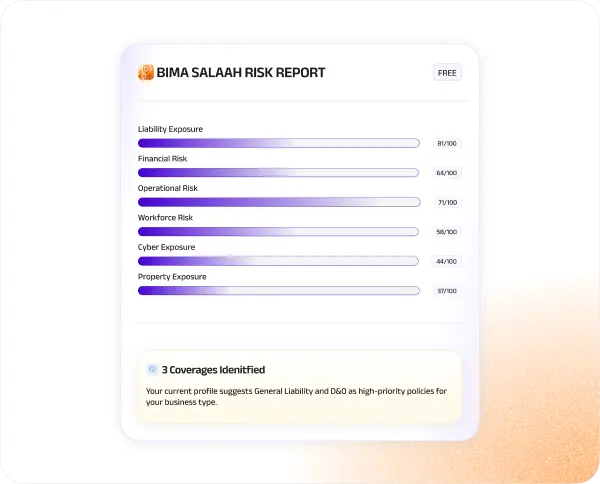
Every risk, read instantly.
Everything your business is exposed to, analysed before any cover is placed.
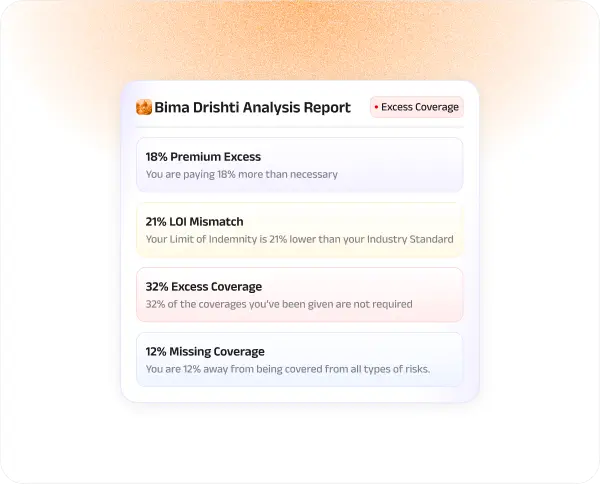
Every gap, caught early.
The gaps your current cover leaves open, surfaced before they turn into a claim.
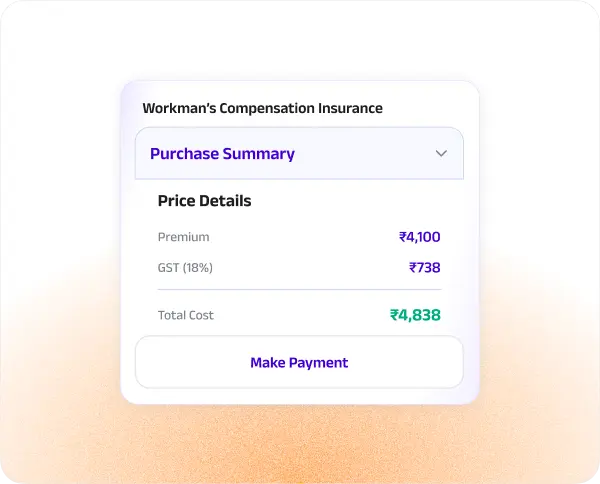
Right coverage, issued in minutes.
The right cover, priced and placed with India's top insurers, in minutes.



India's builders trust BimaKavach.

Learn More About
General Liability Insurance for Healthcare
General Liability Insurance for Healthcare, made Simple
No. Medical indemnity covers clinical negligence only. A visitor slip-and-fall is a non-clinical premises liability incident covered under CGL, not PI.
Premises liability does not depend on bed count. A patient's attendant slipping in your clinic's waiting room, a vendor injured by a faulty door, or a visitor burned by a short circuit all create claims regardless of the facility's size.
Yes. The Supreme Court in V.P. Shantha (1995) held that medical services fall within the Consumer Protection Act regardless of whether fees are charged. Trust or charitable status does not reduce non-clinical premises liability.
Yes. Improper waste disposal contaminating a neighbouring property creates a third-party claim separate from any CPCB regulatory penalty. CGL with an environmental extension covers sudden and accidental pollution events.
Fire NOC is a regulatory requirement for hospital licensing. It certifies compliance with fire safety rules at the time of inspection. It does not pay compensation when a fire injures a visitor or damages a vendor's equipment on your premises. CGL covers that financial exposure.
Exclusive Cyber Risk Assessment
Bima Netra
 Instant Cyber Risk Report
- Actionable Posture Insights