

CGL Insurance for Manufacturing Industry
Protects manufacturing units when factory operations cause third-party injury or property damage


Policy Provided By

CGL Insurance for Manufacturing Industry
Protects manufacturing units when factory operations cause third-party injury or property damage
Get Quotes in a Few Steps


Currently Reading
1. What Is Manufacturing Liability Insurance?
2. Where Does Third-Party Exposure Arise in a Manufacturing Unit?
3. How Does a Defective Product Become a Claim Against the Manufacturer?
4. What Does Manufacturing Liability Insurance Cover?
5. What Your Factory Package Policy Does Not Cover?
6. What Is Not Covered Under Manufacturing Liability Insurance?
7. How to Buy Manufacturing Liability Insurance From BimaKavach?
8. When a Fastener Batch Failure Triggers Claims From Two Directions
Every product that rolls off a production line carries the manufacturer's name, and under the Consumer Protection Act 2019, it also carries the manufacturer's liability. Manufacturing liability insurance is the commercial general liability cover built for units that make, assemble, or process physical goods. It pays the compensation, legal defence costs, and medical expenses when a third party files a claim because a product was defective, a visitor was injured inside the factory, or the unit's operations damaged a neighbouring property.
Most factory owners associate liability with what happens on the shop floor: a contractor slipping near the furnace, a vendor's truck dented by a forklift, a fire jumping to the next plot. Those are real exposures, but the larger one travels with the product. Chapter VI of the Consumer Protection Act 2019 (Sections 82 to 87) holds the manufacturer directly answerable for a defective product regardless of whether a distributor, wholesaler, or retailer sat between the factory and the consumer. The moment a product leaves the dispatch gate, the manufacturer's liability goes with it.
Every manufacturing unit carries third-party exposure in four distinct zones. The same CGL policy responds across all four, but the nature of the risk and the claim pattern it produces differ by zone.
Factory Premises and Visitor Access
Contractors, equipment vendors, inspection officials, client representatives, and delivery personnel enter the factory regularly. A loose overhead crane cable, an unmarked chemical spill in the gangway, or an unstable stacking arrangement in the warehouse creates bodily injury exposure to anyone who is not an employee of the insured.
Boundary Wall and Neighbouring Property
Manufacturing operations produce noise, vibration, emissions, and fire risk that does not stop at the compound wall. A chemical leak contaminating the adjoining plot's groundwater, a fire spreading to the neighbouring godown, or debris from a demolition activity damaging vehicles on the road outside are all third-party property damage claims against the manufacturer.
Loading Dock and Dispatch
The transition zone between factory and transport is where third-party injury and property damage overlap. A forklift operator damaging a transporter's truck during loading, shrink-wrapped pallets falling from a dock onto a waiting driver, or a chemical drum leaking onto a logistics company's flatbed each generates a claim against the manufacturing unit, not the transporter.
Post-Delivery and Completed Operations
Once the product leaves the factory, completed operations liability takes over. If a batch of industrial fasteners fails in a construction project six months after delivery, or a consumer-facing product causes injury after reaching the retail shelf, the claim traces back to the manufacturer. This is the zone where the Consumer Protection Act 2019 product liability provisions have the most direct impact.
Product liability under the Consumer Protection Act 2019 does not require the injured consumer to prove negligence. The Act creates a strict liability framework where the existence of a defect and the resulting harm are sufficient to hold the manufacturer answerable.
Manufacturing Defect:
A single unit or batch departs from the manufacturer's own design or specification. A steel beam with an air pocket, a food product with foreign matter, or an electrical component with a loose solder joint. The consumer files a complaint at the district consumer commission, names the manufacturer, and the burden shifts to the manufacturer to demonstrate the product was not defective when it left the factory.
Design Defect:
The entire product line carries a risk that a safer alternative design would have avoided. Under Section 84 of the Act, the manufacturer is liable if the product could have been designed more safely without fundamentally changing its function. Industrial equipment without an adequate guard on a rotating component, a cleaning chemical without a childproof cap, or packaging that creates a choking hazard all fall here.
Information Defect:
The product itself is sound, but the labelling, instructions, or warnings are inadequate. Missing safety instructions on a pressure vessel, absent allergen warnings on a food product, or incorrect load-bearing ratings on a structural component. The manufacturer is liable for the gap between what the consumer needed to know and what the label actually said.
The policy covers both premises-based and product-based third-party exposure in a single contract.
Third-Party Bodily Injury on Premises:
Medical expenses, hospitalisation costs, and compensation for visitors, contractors, vendor staff, and inspection officials injured on the factory premises during operations.
Product Liability for Defective Goods:
Compensation and legal defence costs when a consumer or downstream business files a claim alleging that your product caused injury or damage due to a manufacturing, design, or information defect under the Consumer Protection Act 2019.
Damage to Neighbouring Property:
Repair or replacement costs when your factory operations damage neighbouring buildings, vehicles, land, or infrastructure through fire, chemical leakage, vibration, or debris.
Completed Operations Liability:
Claims arising after the product has been delivered and installed, covering the gap between dispatch and end-use failure. This extension responds when a product fails months or years after leaving the factory.
Legal Defence Costs:
Lawyer fees, consumer commission filing responses, expert witness charges, and court costs from the moment a claim is filed until resolution. The insurer provides defence counsel even if the claim is ultimately dismissed.
Advertising Injury:
Defence and damages if your product packaging, marketing material, or trade show promotions are alleged to infringe another party's trademark or reputation.
Most manufacturing units carry a factory package policy with a third-party liability add-on. That add-on carries a low sub-limit and does not include product liability at all. If a batch of your output causes consumer harm after reaching the market, the factory package insurer will decline the claim because the loss did not occur on the factory premises and did not arise from a fire or special peril.
Fire and property insurance responds to your own loss: damage to your building, machinery, and stock. CGL responds to someone else's loss: injury to their body or damage to their property caused by your operations or your product. A standalone CGL policy offers dedicated capacity for product liability, premises liability, and completed operations that a factory package does not carry.
Employee Injuries:
Injuries to your own workers on the factory floor fall under the Employees Compensation Act 1923, not CGL. A machine operator losing a finger during a shift, a welder suffering burns from a flash, or a loader injuring their back while carrying raw material are all covered by a workmen compensation policy, not a general liability policy.
Intentional Product Adulteration:
If the manufacturer deliberately adulterates, mislabels, or tampers with a product knowing it will cause harm, the policy does not respond. Deliberate acts are excluded across all liability insurance.
Pollution Liability (Unless Endorsement Added):
Gradual pollution, effluent discharge, and long-term environmental contamination are excluded under the standard policy. If your factory handles hazardous substances listed in the Schedule to the Public Liability Insurance Act 1991, the PLI Act imposes a separate statutory obligation. CGL's pollution liability endorsement covers sudden and accidental pollution events, not gradual contamination.
Professional Services Errors:
If your manufacturing company also provides engineering consulting, design advisory, or technical support services and a client claims the advice was defective, that falls under professional indemnity, not CGL. The CGL policy covers physical harm and property damage, not the quality of advisory output.
Buying manufacturing liability insurance through BimaKavach takes less time than scheduling a factory safety audit. The process runs entirely online, and our team handles the insurer coordination so you can focus on production. Once the policy is active, the claims process follows the same steps as any commercial general liability insurance claim, with the insurer appointing defence counsel and managing the settlement directly.
| 1. Get Instant Quotes: | 2. Choose Your Coverage and Insurer: | 3. Pay Online and Get Your Policy: |
|---|---|---|
| Share your factory's product type, annual turnover, employee count, and premises area. Receive quotes from multiple insurers within minutes. | Compare coverage limits, product liability sub-limits, and endorsement options (pollution liability, completed operations extension) side by side. Our experts help you pick the right fit. | Complete the payment online. Your policy document is delivered to your inbox and is effective from the date specified in the schedule. |
Get Manufacturing Liability Insurance through BimaKavach
1. Get Instant Quotes:
Share your factory's product type, annual turnover, employee count, and premises area. Receive quotes from multiple insurers within minutes.
2. Choose Your Coverage and Insurer:
Compare coverage limits, product liability sub-limits, and endorsement options (pollution liability, completed operations extension) side by side. Our experts help you pick the right fit.
3. Pay Online and Get Your Policy:
Complete the payment online. Your policy document is delivered to your inbox and is effective from the date specified in the schedule.
Documents You Will Need:
- Factory licence or Udyam registration certificate
- Product catalogue or list of manufactured goods
- Annual turnover and employee headcount
- Premises address and factory area details
- Previous CGL or factory package policy (if renewing)
A mid-size fastener manufacturer in Rajkot supplied a batch of high-tensile bolts to a construction contractor in Ahmedabad. Four months after delivery, three bolts in a load-bearing joint failed during a structural load test. The contractor's site engineer reported micro-fractures in the bolt heads that did not match the specifications on the delivery certificate.
Two claims arrived within weeks. The construction contractor filed a consumer commission complaint seeking the cost of rework, the project delay penalty imposed by the developer, and the expense of sourcing replacement bolts at a premium. Separately, the developer's insurer filed a subrogation claim against the fastener manufacturer for the structural remediation costs, arguing the defective bolts were the root cause of the failure.
The manufacturer's CGL policy with product liability extension responded to both claims. The insurer appointed defence counsel for the consumer commission complaint and negotiated the subrogation claim directly with the developer's insurer. The combined payout across both directions exceeded the profit margin on the entire supply contract for that year. Without the policy, the manufacturer would have absorbed the full amount from its working capital.
Commercial General Liability Insurance, for Every Kind of Business
Commercial General Liability Insurance
Protects businesses when operations cause third-party injury or damage
For Events
Protects event organisers when accidents or property damage occur during events
Trusted by India's Top Businesses













A new experience.
Built on intelligence. Covered in minutes.

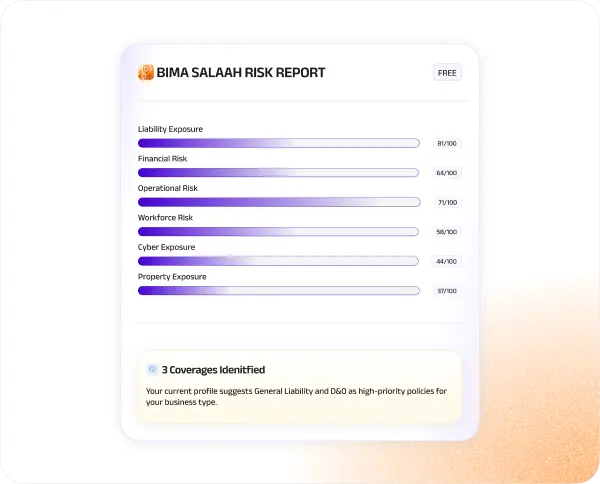
Every risk, read instantly.
Everything your business is exposed to, analysed before any cover is placed.
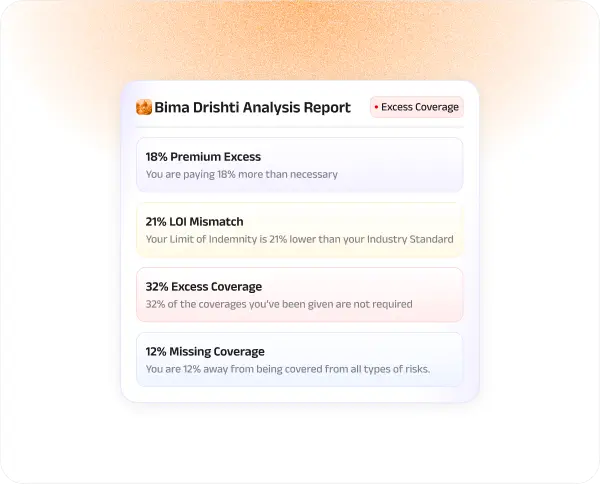
Every gap, caught early.
The gaps your current cover leaves open, surfaced before they turn into a claim.
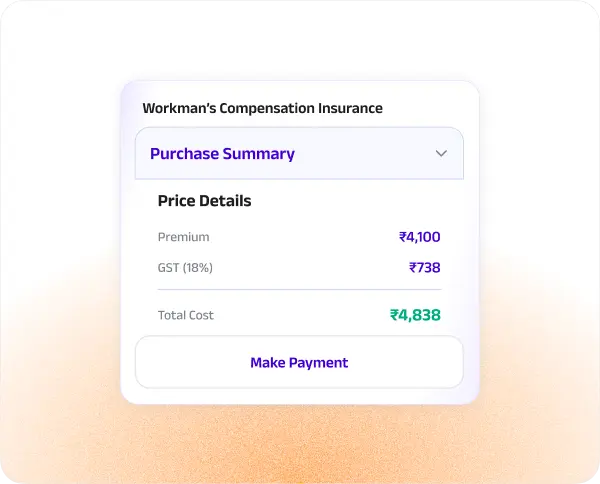
Right coverage, issued in minutes.
The right cover, priced and placed with India's top insurers, in minutes.


India's builders trust BimaKavach.

Learn More About
CGL Insurance for Manufacturing Industry
CGL Insurance for Manufacturing Industry, made Simple
BIS certification confirms that your product met the Bureau of Indian Standards quality specification at the time of testing. It does not transfer or eliminate liability. Under the Consumer Protection Act 2019, the manufacturer remains liable for a defective product regardless of certifications held. BIS compliance strengthens your defence in a claim proceeding, but it does not prevent the claim from being filed or the commission from awarding compensation.
Industrial areas contain other factories, warehouses, transport yards, and commercial establishments. A fire spreading to the neighbouring unit, vibration from heavy machinery cracking an adjacent building's wall, or a chemical leak reaching the industrial estate's storm drain all create third-party property damage claims. The claimant does not need to be a resident. Any business or property owner affected by your operations can file.
The PLI Act applies to any unit handling hazardous substances listed in the Schedule to the Act's Rules. Common substances that trigger applicability include acids, solvents, compressed gases, and LPG storage above specified thresholds. Many SME manufacturers discover they fall within the PLI Act's scope only after an incident. Non-compliance is a criminal offence under Section 14 of the Act. CGL is a separate, broader cover that sits alongside PLI Act compliance, not a substitute for it.
Under the Consumer Protection Act 2019, both the manufacturer and the product seller can be held liable. As a contract manufacturer, you are the entity that physically produced the goods, and the consumer commission can name you in the complaint regardless of whose brand appears on the packaging. Your manufacturing agreement with the brand owner may include an indemnity clause, but that is a contractual right you enforce separately. The consumer's claim comes directly to you.
Factory package policies typically include a third-party liability add-on with a low sub-limit. This add-on covers premises-based incidents only. Product liability, which covers claims arising from defective goods after they leave the factory, is not part of a standard factory package. It requires a standalone CGL policy with a product liability extension or a dedicated product liability policy.
Exclusive Cyber Risk Assessment
Bima Netra
 Instant Cyber Risk Report
- Actionable Posture Insights