

Commercial General Liability Insurance for Hospitality
Protects hospitality industry when guest injuries lead to claims


Policy Provided By












Commercial General Liability Insurance for Hospitality
Protects hospitality industry when guest injuries lead to claims
Get Quotes in a Few Steps


Currently Reading
1. What Is Restaurant Liability Insurance?
2. Where Liability Claims Hit Hotels and Restaurants
3. Why FSSAI Licensing Does Not Replace Liability Insurance
4. What Does Restaurant Liability Insurance Cover?
5. Where Your Hotel Package Policy Falls Short?
6. What Is Not Covered Under Restaurant Liability Insurance?
7. How a Food Poisoning Incident Reaches the Consumer Court?
8. How to Buy Restaurant Liability Insurance From BimaKavach?
Restaurant liability insurance is the commercial general liability cover designed for hotels, restaurants, resorts, and food service businesses. It pays the compensation, legal defence costs, and medical expenses when a third party, a guest, a visitor, a vendor, or a delivery person, files a claim because they were injured on your premises, fell sick after eating your food, or had their property damaged during their stay or visit.
Most hospitality owners believe that holding an FSSAI licence and following food safety protocols is enough to keep them protected. It is not. FSSAI licensing certifies that your establishment met food safety standards at the time of inspection. It does not pay a single rupee when a guest files a consumer court complaint for food poisoning, a visitor fractures their ankle on a wet lobby floor, or an entire wedding party claims compensation after a catered dinner goes wrong. The Consumer Protection Act 2019 allows any guest to file a complaint directly at the district consumer commission, and the commission does not ask whether your FSSAI licence was current. It asks whether the guest was harmed and who is responsible.
Hospitality businesses face third-party exposure from more directions than most owners expect. Each of the following generates a claim that lands on the business, not on the certification body or the food supplier.
Wedding or Banquet Food Poisoning:
Multiple guests fall ill after a hotel dinner; families file at the district consumer commission. Published NCDRC and state commission orders show significant per-claimant awards in hospitality food poisoning cases.
Lobby and Corridor Slip-and-Fall:
A guest fractures a wrist on a freshly mopped marble floor with no warning sign. The complaint seeks medical expenses, lost wages, and pain and suffering.
Swimming Pool and Recreational Area Injuries:
A child slips on wet pool-deck tiles and suffers a head injury. Claims involving minors and permanent injury are among the highest-severity hospitality incidents.
Kitchen and Dining Burns:
Hot oil, steam, or a malfunctioning buffet chafing dish injures a guest or a vendor's delivery person on premises.
Guest Property Damage or Loss:
A valuable watch goes missing from a room safe after housekeeping access; the guest files for the replacement value.
Elevator and Escalator Entrapment:
A guest is trapped in a malfunctioning lift; the resulting injury and distress claim names the hotel, not the elevator maintenance company.
Parking Area Incidents:
A falling signboard or a collapsing boom barrier damages a guest's vehicle in the hotel car park.
Advertising Injury From Promotions:
A restaurant's social media campaign compares its hygiene to a named competitor; the competitor sends a legal notice for defamation and unfair trade practice.
This distinction is the one that costs hospitality businesses the most money when they get it wrong. FSSAI and CGL operate in entirely different domains and respond to entirely different events.
FSSAI is a regulatory requirement. It certifies that your kitchen, storage, and preparation processes met the Food Safety and Standards Authority of India's hygiene and safety norms at the time of inspection. If you violate those norms, FSSAI can suspend your licence, impose fines, or shut down your operation. That is the regulatory consequence
CGL is a financial instrument. It responds when a guest suffers harm and files a civil claim for compensation. The guest does not file against FSSAI. They file against the restaurant or hotel. The consumer commission evaluates whether the establishment caused harm, not whether it held a valid licence. A restaurant with a current FSSAI licence can still lose a food poisoning claim if the commission finds that the food served was contaminated, regardless of when the last inspection occurred. FSSAI compliance strengthens your defence, but it does not absorb the financial exposure. That is what the CGL policy does.
The policy covers the full range of third-party exposure a hospitality business carries, from the kitchen to the car park
Guest Bodily Injury on Premises:
Medical expenses, hospitalisation costs, and compensation for guests, visitors, vendors, and delivery personnel injured on your premises. Covers slip-and-fall incidents, burns from hot surfaces or liquids, elevator and escalator entrapment, and recreational area injuries.
Food Contamination and Allergy Claims:
Compensation and legal defence costs when a guest files a claim alleging food poisoning, allergic reaction, or illness caused by food or beverages served at your establishment. This is the most frequent claim trigger for restaurants and catering operations.
Property Damage to Guest Belongings:
Replacement or repair costs when a guest's personal property is damaged or lost due to the hotel's operations. Covers items in rooms, luggage in storage, vehicles in the hotel car park, and belongings damaged by water leaks, fire, or staff negligence.
Advertising Injury From Promotions:
Defence costs and damages if your restaurant's marketing material, social media posts, or printed promotions are alleged to defame a competitor, infringe a trademark, or mislead consumers.
Legal Defence Costs:
Lawyer fees, consumer commission filing responses, expert witness charges, and court costs from the moment a claim is filed until resolution. The insurer provides defence counsel even if the claim is ultimately dismissed.
Tenant's Legal Liability:
If your restaurant operates in a leased premises and your operations damage the landlord's property, the policy covers the repair or replacement costs. This responds separately from the guest-facing cover.
Most hotels carry a package policy that bundles fire, burglary, electronic equipment, and a basic third-party liability add-on. That bundle is designed to protect the hotel's own assets. It is not designed to pay third-party claims at the limits hospitality businesses actually face.
The Sub-Limit Problem
The third-party liability add-on in a hotel package policy typically carries a low sub-limit. A single food poisoning incident with multiple affected guests can produce aggregate claims that are several times higher than that sub-limit. The package policy's cap is exhausted by the first few claimants, and the remaining claims fall on the hotel's own balance sheet.
The Coverage Scope Problem
Hotel package policies respond to fire, burglary, and equipment damage, which are first-party losses. They do not carry dedicated food contamination liability, guest property damage cover at adequate limits, or completed operations liability for catered events at external venues. A standalone CGL policy offers significantly higher dedicated third-party capacity with endorsements for food contamination, liquor liability, and off-premises catering.
The Catering Extension Gap
If your hotel or restaurant caters events at external venues, such as weddings, corporate events, or private parties, the hotel package policy does not follow your operations outside the premises. CGL with a completed operations extension covers claims arising from food served at a venue you do not own.
- Liquor Liability: Injuries or incidents arising from the service of alcohol at your hotel or restaurant are excluded under the standard policy. If your establishment serves liquor, ask for the liquor liability endorsement before the policy incepts. This covers claims where a guest's intoxication, facilitated by your bar service, leads to injury to themselves or a third party.
- Intentional Food Adulteration: If the establishment deliberately adulterates food, uses expired ingredients with knowledge, or serves items known to be contaminated, the policy does not respond. Deliberate acts are excluded across all liability insurance.
- Professional Services Errors: If your hotel also provides event management consulting, interior design advisory, or tourism consultancy and a client claims the advice was defective, that falls under professional indemnity, not CGL. The CGL policy covers physical harm and property damage, not the quality of advisory services.
- Employee Injuries: Kitchen burns, knife cuts, slips on greasy floors, and lifting injuries suffered by your own staff fall under the Employees Compensation Act 1923, not CGL. A workmen compensation policy covers your employees. CGL covers everyone else.
The path from a guest falling ill to a payout order against the restaurant is shorter than most hospitality owners expect. Understanding this chain explains why the financial exposure exists regardless of certifications held.
- Step 1: A guest eats at your restaurant or attends a catered function at your hotel. Within hours, they develop symptoms: nausea, vomiting, diarrhoea, or fever. They visit a hospital. The treating doctor's notes and diagnostic reports create the medical record.
- Step 2: The guest, or their family, identifies your establishment as the source. Under the Consumer Protection Act 2019, the guest does not need an expensive lawyer. They file a complaint at the district consumer commission naming your restaurant or hotel as the respondent.
- Step 3: The commission issues a notice. Your establishment must file a written response, engage a lawyer, and attend hearings. If multiple guests file separately, each complaint runs as an independent proceeding. A single banquet incident with multiple affected guests can produce several separate complaints.
- Step 4: The commission evaluates whether the food served caused the illness and whether the establishment was negligent. FSSAI compliance is one factor in your defence, but it does not determine the outcome. If the commission finds negligence, it awards compensation for medical expenses, loss of income, pain and suffering, and sometimes punitive damages.
- Step 5: Without restaurant liability insurance, the establishment pays the awarded amount, the legal costs of defending all complaints, and absorbs the reputational damage. With the policy, the insurer appoints defence counsel from step 3, manages the hearings, and pays the compensation up to the policy limit.
Getting covered through BimaKavach takes less time than a kitchen deep-clean. The process runs entirely online, and our team handles the insurer coordination. Once the policy is active, the claims process follows the same steps as any commercial general liability insurance claim, with the insurer appointing defence counsel and managing the settlement directly.
| 1. Get Instant Quotes: | 2. Choose Your Coverage and Insurer: | 3. Pay Online and Get Your Policy: |
|---|---|---|
| Share your establishment type, annual turnover, seating capacity, and premises area. Receive quotes from multiple insurers within minutes | Compare coverage limits, food contamination sub-limits, and endorsement options (liquor liability, off-premises catering) side by side. Our experts help you pick the right fit. | Complete the payment online. Your policy document is delivered to your inbox and is effective from the date specified in the schedule |
Get Restaurant Liability Insurance through BimaKavach
1. Get Instant Quotes:
Share your establishment type, annual turnover, seating capacity, and premises area. Receive quotes from multiple insurers within minutes
2. Choose Your Coverage and Insurer:
Compare coverage limits, food contamination sub-limits, and endorsement options (liquor liability, off-premises catering) side by side. Our experts help you pick the right fit.
3. Pay Online and Get Your Policy:
Complete the payment online. Your policy document is delivered to your inbox and is effective from the date specified in the schedule
Documents You Will Need
- FSSAI licence or registration certificate
- Business registration or partnership deed
- Annual turnover and employee headcount
- Premises address, seating capacity, and area details
- Previous CGL or hotel package policy (if renewing)
Commercial General Liability Insurance, for Every Kind of Business
Commercial General Liability Insurance
Protects businesses when operations cause third-party injury or damage
For Events
Protects event organisers when accidents or property damage occur during events
For Manufacturing
Protects manufacturing units when factory operations cause third-party injury or property damage
For Healthcare
Protects hospitals when visitor injuries occur on premises
Trusted by India's Top Businesses















A new experience.
Built on intelligence. Covered in minutes.


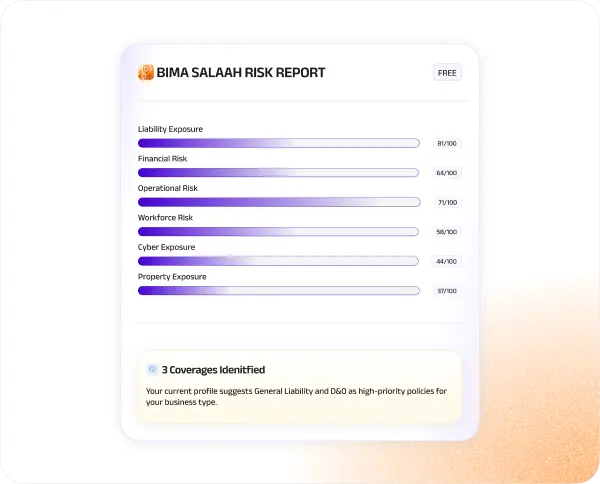
Every risk, read instantly.
Everything your business is exposed to, analysed before any cover is placed.
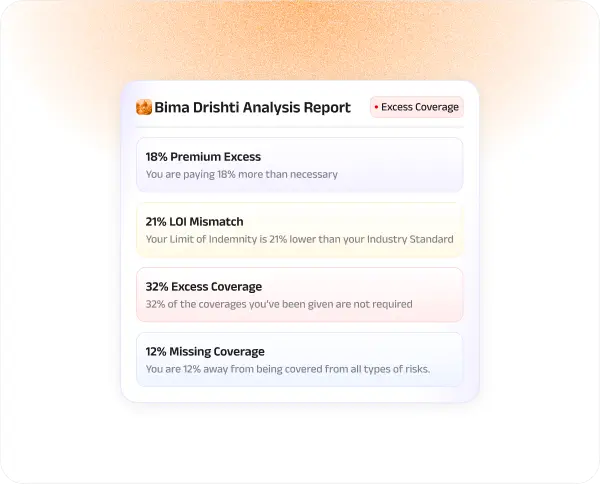
Every gap, caught early.
The gaps your current cover leaves open, surfaced before they turn into a claim.
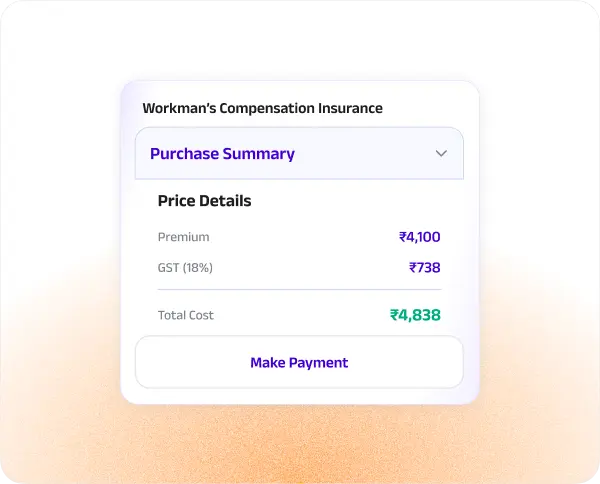
Right coverage, issued in minutes.
The right cover, priced and placed with India's top insurers, in minutes.



India's builders trust BimaKavach.

Learn More About
Commercial General Liability Insurance for Hospitality
Commercial General Liability Insurance for Hospitality, made Simple
No. FSSAI certifies food safety compliance, not financial liability. Guests can file consumer court claims regardless of your certification status.
Past claim-free operations do not predict future exposure. One multi-guest incident can exceed years of premium payments.
Hotel package policies carry a low third-party sub-limit and exclude dedicated food contamination and off-premises catering cover.
Yes. The standard CGL policy excludes alcohol-related incidents. Add the liquor liability endorsement before the policy incepts.
Yes. Consumer Protection Act 2019 treats hotels as service providers. Guests can file at the district consumer commission for premises negligence.
Exclusive Cyber Risk Assessment
Bima Netra
 Instant Cyber Risk Report
- Actionable Posture Insights