

Marine Open Policy
Protects goods from transport damage or loss for one year
Get ₹50 Lakh Cover
Starting At ₹7,000/Year


Policy Provided By


















Marine Open Policy
Protects goods from transport damage or loss for one year
Get Quotes in a Few Steps


Currently Reading
1. What Is a Marine Open Policy?
2. Why Do You Need an Open Marine Insurance Policy?
3. Features of a Marine Declaration Policy
4. Who Should Buy Annual Marine Open Policy?
5. How To Buy Marine Open Policy?
6. What Are the 3 Clauses in Single Transit Insurance?
7. What Is Covered Under Open Marine Insurance?
8. What Is Not Covered Under Open Marine Insurance?
9. Marine Open Policy Claims Process
10. Marine Open Policy Claim Examples
A Marine Open Policy, also known as an open marine insurance policy, provides continuous coverage for all shipments made within a specified period, typically a year, under a single policy. It is designed for businesses that frequently ship goods by road, rail, air, or sea. It streamlines the process by automatically covering all declared shipments within the policy's terms.
This policy is also called Open Marine Insurance, Annual Marine Open Policy, Annual Open Policy, Open Marine policy, Marine Export-Import Insurance, Marine Declaration Policy and Marine Open Declaration Policy. It is helpful for traders, manufacturers, and exporters who move goods often and want a simple way to protect every shipment.
The cover starts from the time the goods leave the warehouse or storage location and continues until they are delivered. It protects against risks such as fire, theft, water damage, collision, and accidental handling during transit.
The policy usually includes two main parts:–
- Cover for physical loss or damage to the goods while in transit
- Optional cover for loading/unloading, temporary storage, or third-party liability
Here is an example of how Open Marine Insurance helped a business in Maharashtra: A textile exporter in Solapur sends fabric shipments every week. Instead of taking separate policies for each shipment, the company chose an Open Marine Insurance Policy.
– ₹24 Lakhs Paid for Fire Damage: One shipment caught fire during unloading at the port due to nearby welding work. The insurer paid for the damaged goods and related transport costs.
– No Delay in Shipments: Since the policy was already active, the business continued operations without interruption.
Marine Open Insurance gives peace of mind to businesses with regular shipments. It saves time, reduces paperwork, and protects the business from large financial losses during transit.
An Open Marine Insurance Policy is important for businesses that transport goods regularly. It protects against risks during transit and makes the process of insuring each shipment much simpler. Instead of buying a separate policy for every trip, the business gets one policy that covers all declared shipments during the policy period.
This type of cover helps reduce manual work, avoid delays, and ensure that every shipment is protected from start to finish. It is especially useful for traders, manufacturers, exporters, and logistics companies that move goods often.
Without this policy, a single delay in buying insurance for one shipment could lead to uncovered losses. With it, every declared shipment is automatically protected under the same policy terms.
Saves Time
No need to apply for a new policy every time goods are shipped
Reduces Risk
Protects goods from fire, theft, accidents, and other damage
Easy Tracking
All shipments are recorded under one policy for easy reference
Fewer Gaps
The chances of missing cover for any shipment are low
Peace of Mind
The business can focus on operations while the cover stays active
For example, a company in Ahmedabad that exports spare parts to different cities every week saved nearly 50 hours a month on paperwork after switching to an Open Marine Insurance Policy. It also avoided a major loss when goods worth ₹10 lakhs were damaged during a monsoon shipment. The insurer covered the full amount.
Having an Open Marine Insurance Policy means your business stays protected, shipment after shipment. It is a smart step for any business that deals with regular transport of goods.
Marine Open Insurance offers practical benefits for businesses that send goods regularly. It is built to make the shipping process easier and more secure, while saving time and effort.
Continuous Coverage
The policy provides automatic cover for all shipments made during the policy period. There is no need to declare or insure each shipment separately, which reduces the chances of missing cover.
Streamlined Process
Businesses do not need to apply for individual policies for every shipment. The process is simple and allows for faster dispatch of goods without delay.
Flexibility
The policy can be adjusted based on the value of the goods or the type of cargo being moved. This flexibility helps businesses stay protected as their shipping needs change.
Renewal
The policy is usually valid for one year and can be renewed as per the terms agreed with the insurer. This ensures continuous cover without breaks.
Floating Basis
The cover applies on a floating basis, meaning it includes all eligible goods under the policy terms. The business declares each shipment as it happens, and the sum insured reduces as per each declaration.
These features make Marine Open Insurance a reliable and efficient choice for businesses that move goods frequently. It removes the burden of repeating the insurance process and keeps every shipment covered without extra effort.
An Annual Marine Open Policy is the right choice for businesses that ship goods regularly. It helps manage risk, saves time, and ensures every shipment stays covered without needing separate policies.
D2C Businesses
If you sell directly to customers and send goods regularly, this policy protects every shipment from damage or loss during delivery.
Export-Oriented Businesses
Exporters who send products across borders face higher risks. An Open Marine Policy ensures goods are covered from factory to port and beyond.
Manufacturing Firms
Manufacturers that move raw materials or finished goods often need ongoing transit protection. This policy ensures continuous cover throughout the supply chain.
Logistics Service Providers with Contractual Liability
If your logistics company is responsible for client shipments, this policy protects you from financial loss in case goods are damaged in transit.
Wholesalers and Distributors
Bulk shipments are valuable and frequent. This policy gives you the comfort of knowing every consignment is covered, no matter how often you dispatch.
E-Commerce Platforms
Online sellers who ship orders daily or weekly benefit from automated cover under this policy, especially for intercity or inter-state deliveries.
If your business depends on regular shipping, an Annual Marine Open Policy is not just useful—it is necessary. It keeps your goods safe and your operations running smoothly.
Buying Marine Open Insurance is easy, especially with BimaKavach. We help you protect all your shipments under one active cover, without repeating the process every time you send goods.
1. Share Your Shipping Details with BimaKavach
Tell us how often you ship goods, the type of goods you handle, and the usual routes—road, rail, air, or sea. This helps us understand your risk and suggest the right coverage.
2. Submit Basic Business Information
We will ask for a few details like your business name, contact person, nature of cargo, and shipping frequency. If available, you can also share past claim or shipment records.
3. Get a Suitable Policy Plan
Based on your inputs, BimaKavach experts will suggest the most suitable Annual Open Policy options. You can choose cover types like fire, theft, collision, and storage during transit.
4. Approve the Quote and Pay the Premium
Once you review the premium and terms, we will help you complete the payment safely and securely. You can also ask for add-ons or special conditions if needed.
5. Start Declaring Shipments
After the policy is active, you will only need to declare each shipment to us as it is dispatched. This is quick and can be done online or through email.
6. Receive the Policy Document
We will send you the Annual Open Policy document with all terms and instructions. If you ever need help, our team will support you through claims or policy updates.
With BimaKavach, the entire process is smooth and clear. We make sure you get the right cover without wasting time or dealing with confusing paperwork.
Marine Open Insurance policies are based on standard terms called Institute Cargo Clauses (ICC). These clauses define what risks are covered. You can choose from three options—ICC (A), ICC (B), and ICC (C)—based on your cargo type and risk level.
ICC (A) – “All Risks” Cover
This gives the broadest cover. It protects goods from almost all accidental losses during transit unless specifically excluded, such as delay, poor packing, or natural spoilage.
Covers: fire, theft, breakage, water damage, overturning, piracy, and more.
Best for: high-value, fragile, or urgent cargo.
ICC (B) – “Named Perils with Water Risks”
This covers specific risks including fire, collision, overturning, earthquakes, and water entering the container.
Ideal for: durable cargo that still faces water-related risks like rain or seawater.
ICC (C) – “Basic Accident Cover”
This offers limited cover for major accidents like fire, collision, sinking, or derailment.
It does not cover theft, rough handling, or water damage.
Used for: low-value or very strong cargo where minor damage is not a concern.
Choosing the right clause helps you balance premium cost with the level of protection your goods need under an Annual Open Policy.
An Annual Open Policy protects your goods from a wide range of risks during transit. The exact coverage depends on the clause you choose—ICC (A), ICC (B), or ICC (C). Each clause comes with its own list of covered events.
Coverage Under ICC (A) – All Risks Clause
This is the most complete cover. It includes almost all accidental damage or loss during transit, unless excluded.
Fire and Explosions
Theft and Pilferage
Overturning or Derailment of Vehicle
Collision or Capsizing
Earthquake, Lightning, or Volcanic Eruption
Stranding or Grounding
Handling Damage (Loading/Unloading Damage)
Jettison (When Goods Are Thrown Overboard to Save the Vessel)
General Average (Shared Emergency Cost Across All Cargo Owners)
Non-Delivery of Cargo Due to Damage
Package Loss or Accidental Drops
Any Accidental Damage to Cargo
Coverage Under ICC (B) – Limited Risks Clause
Fire and Explosions
Overturning or Derailment
Collision or Capsizing
Stranding or Grounding
Earthquake, Lightning, or Volcanic Eruption
Discharge of Cargo at a Port of Distress
Coverage Under ICC (C) – Basic Cover Clause
Fire and Explosions
Overturning or Derailment
Collision or Capsizing
Stranding or Grounding
Discharge of Cargo at a Port of Distress
The clause you choose under your Annual Open Policy will decide how much protection your goods receive. Most exporters, manufacturers, and e-commerce businesses prefer ICC (A) for peace of mind, while ICC (B) and ICC (C) are used for simpler or low-value cargo.
An Annual Open Policy gives wide cover, but there are some standard exclusions. These are events or situations where the insurer will not pay for the loss. Knowing these exclusions helps avoid claim rejections and plan better.
Wilful Misconduct
If damage is caused on purpose or due to careless behaviour by you or your team, the claim will be rejected. Insurance only covers unexpected losses—not intentional ones.
Normal Leakage or Wear and Tear
Minor losses like evaporation, scuffing, or drying are considered natural. These are not insured because they happen during regular transport.
Inherent Vice or Natural Decay
If goods spoil or get damaged due to their own nature—like rusting metal, fresh produce, or self-heating items—the policy will not cover it. You may need extra cover for such cargo.
Poor or Weak Packing
If the goods were not packed properly and got damaged, the insurer can deny the claim. The packing must be good enough to handle normal transport stress. Taking photos during loading helps in case of any issues later.
Delays or Missed Deadlines
If you lose a customer or face penalties because the goods arrived late, it is not covered. Even if the delay was due to an insured event, the policy does not cover loss of market or profit.
Unfit Vehicle or Vessel
If you knowingly use a damaged or unfit truck, ship, or container and goods get damaged, the insurer will not pay. The policy does not support careless transport decisions.
Notify Us
As soon as the loss or damage happens, contact us within 2 days. Share all relevant details and documents, such as photos or reports. We will make sure the process starts without any delays.
Surveyor Visit
Once notified, a surveyor will visit your site within 1–2 days to assess the damage. Please avoid moving any damaged items until the surveyor arrives. After that, we will take care of the next steps.
Submit Required Documents
We will guide you through submitting the necessary documents, including the claim form, incident notes, and financial records. Our team will ensure everything is submitted correctly and on time.
Claim Assessment & Approval
Once the documents are submitted, the surveyor will evaluate the claim and provide a settlement amount based on your policy terms. After approval, the insurer will finalise the settlement.
Payment Processing & Claim Closure
Once the settlement is approved, payment will be processed and issued to you or your beneficiary. After payment, the claim will be closed. If any further issues arise, we will be here to support you until they are fully resolved.
Fire During Warehouse Transit
In 2022, an electronics wholesaler in Delhi was sending LED display units to a retailer in Jaipur. The goods were temporarily stored in a warehouse near Gurugram during a route stop. A fire broke out due to a short circuit, damaging several packed units. The business raised a Marine Open Insurance claim. The insurer approved ₹9.5 lakhs for damaged goods and handling charges. The payout helped the business replace the stock without affecting customer delivery timelines.
Goods Damaged by Water Ingress During Monsoon
In 2021, a textile exporter in Surat was shipping fabric rolls to Chennai. During transit, heavy rains caused water to seep into the container, soaking multiple rolls. On inspection at the delivery point, the buyer refused to accept the damaged goods. The exporter filed a claim under the Annual Open Policy. The insurer paid ₹4.6 lakhs for the damaged inventory and ₹12,000 towards unloading and survey costs. The claim helped the exporter send a fresh consignment quickly.
Overturning of Delivery Vehicle
In 2024, a D2C brand in Bengaluru was sending kitchen appliances to multiple cities in Tamil Nadu under a bulk shipment. Near Salem, the delivery vehicle overturned on a slope, damaging a large portion of the shipment. The business raised a claim under its Annual Open Policy. The insurer covered ₹7.2 lakhs for the loss, including repackaging and retransport charges. The timely payout helped the brand maintain customer commitments and avoid penalties.
Trusted by India's Top Businesses















A new experience.
Built on intelligence. Covered in minutes.


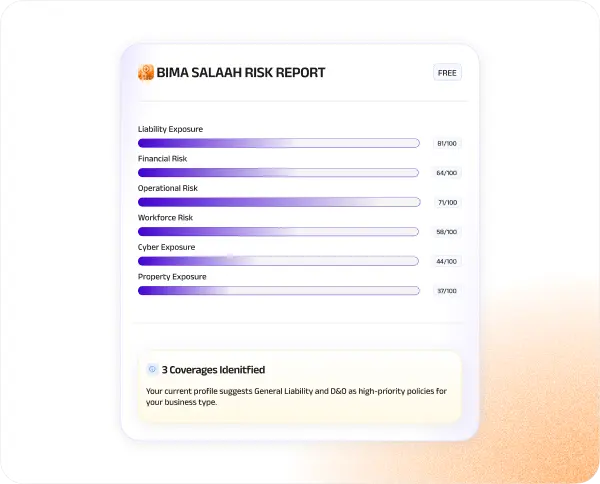
Every risk, read instantly.
Everything your business is exposed to, analysed before any cover is placed.
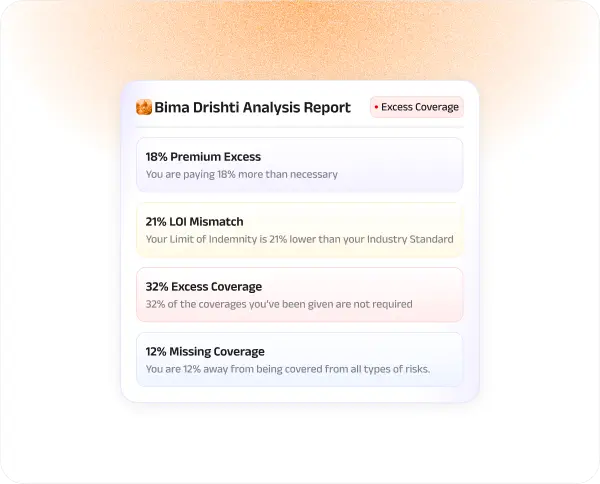
Every gap, caught early.
The gaps your current cover leaves open, surfaced before they turn into a claim.
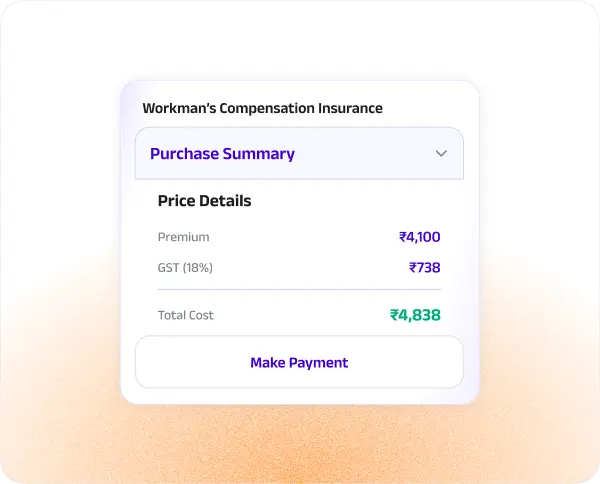
Right coverage, issued in minutes.
The right cover, priced and placed with India's top insurers, in minutes.



India's builders trust BimaKavach.
