

Professional Indemnity Insurance for Architects
Protects architects when design errors cause project disputes


Policy Provided By






















Professional Indemnity Insurance for Architects
Protects architects when design errors cause project disputes
Get Quotes in a Few Steps


Currently Reading
1. What Is Professional Indemnity Insurance for Architects?
2. Which Architects and Design Professionals Need This Cover?
3. What Does PI Insurance Cover for an Architect?
4. What the Policy Does Not Cover?
5. The Claims-Made Basis: Why Continuous Cover Is Non-Negotiable for Architects
6. What Drives the Premium for Architects?
7. How PI Insurance Works in Practice?
8. How to Buy Professional Indemnity Insurance for Architects From BimaKavach?
Professional indemnity insurance for architects pays the legal fees and compensation your practice owes when a client, developer, or third party claims that your design, specification, or site supervision caused them a financial loss.
What makes architecture different from most other professions is the length of exposure. A structural defect can surface five, ten, or thirty years after the building is occupied. Under RERA, the promoter carries a five-year defect liability that routinely lands on the architect through contractual indemnity. Under local building bye-laws, the architect of record can remain liable for the design life of the structure. Architect indemnity insurance in India is what stands between those claims and your practice's balance sheet.
This page covers PI insurance as it applies to architects and interior designers. For the full coverage structure and claims process across all professions, see our Professional Indemnity Insurance page.
The urgency and sizing of PI cover for design professionals depend on the type of projects you take on. Four categories carry the highest exposure.
1. Architects on RERA-Registered Residential Projects:
Any residential project registered under RERA brings a five-year structural defect liability on the promoter. When the defect traces to the design, the promoter's contractual indemnity clause lands on the architect. A single project can also draw a COA disciplinary inquiry and a consumer forum complaint at the same time, each needing its own legal representation.
2. Architects on Commercial and Institutional Projects:
Hospitals, airports, metro stations, and corporate campuses carry higher single-project exposure. A single design error on a hospital wing can produce a claim that dwarfs the architect's annual fee income. Clients can file complaints for "deficiency in service" under the Consumer Protection Act, 2019, with consumer commissions handling claims up to Rs 10 crore.
3. Interior Designers and Fit-Out Specialists:
Professional indemnity for interior designers covers the same core risk: a specification that causes a client's loss. A false ceiling that collapses, a fire-rated partition that does not meet code, or a load-bearing wall altered without structural review can all produce a claim.
4. Heritage and Conservation Architects:
Work on heritage structures carries additional scrutiny from the Archaeological Survey of India or the state heritage committee. A conservation specification that damages a protected element can trigger both regulatory action and a civil claim.
The policy funds the cost of defending the claim and the compensation owed if your practice is found liable.
Design Errors and Specification Failures
- Structural Design Defects: Errors in structural drawings, load calculations, or material specifications that lead to cracking, settlement, or failure.
- NBC and Bye-Law Non-Compliance: Design that does not meet the National Building Code or local bye-laws, leading to remediation costs or regulatory penalties.
- Specification and Detailing Errors: Wrong material selection, incorrect waterproofing detailing, or inadequate fire-rating specifications.
Supervision and Site Review Failures
- Failure to Flag Contractor Deviations: The architect was retained for site supervision and did not identify a departure from approved drawings.
- Certification Errors: Signing off on a stage completion certificate when the work does not match the approved design.
Third-Party and Post-Completion Claims
- Third-Party Reliance Claims: A bank, investor, or subsequent owner who relied on the architect's design certification and suffered a loss.
- Intellectual Property Claims: Unintentional infringement of another architect's design or a patented building system.
- Loss of Client Documents: Cost of reconstructing drawings, models, or project records lost while in the practice's custody.
- Employee Dishonesty: An employee's misconduct in the course of work leads to a client's loss, where the policy carries this extension.
Legal Defence Costs
- Advocate Fees and Court Expenses: Covered whether the claim succeeds or not, from the first legal notice to final disposal.
- Court Attendance Costs: Compensation for time spent attending hearings as a witness in a covered matter.
Cost Estimate Overruns and Delays:
Claims that the project cost more or took longer than estimated are not covered. These are commercial risks. However, if a design defect caused the overrun, the defect claim itself may still be covered.
Construction Workmanship and Material Guarantees:
Defects in the contractor's workmanship or materials are excluded unless the architect specified the material and the specification was wrong.
Asbestos, Pollution, and Environmental Contamination:
Claims from asbestos or environmental pollution are excluded. Projects involving demolition or renovation of older buildings should check whether a separate environmental liability policy is needed.
Deliberate and Fraudulent Acts:
Wilful fraud, intentional non-compliance with building codes, or criminal misconduct is excluded once established.
Known Claims and Prior Circumstances:
Any matter the practice knew about when buying the policy is excluded. Disclose everything on the proposal form.
PI policies work on a claims-made basis. The policy that responds is the one in force when the claim is first reported to the insurer, not the one that was active when the drawings were issued or when the building was completed.
The retroactive date sets how far back the policy looks. Work completed before that date is outside the cover. On a first-time policy, the retroactive date is usually the inception date, so past projects are not covered on day one. If an architect designed a building in 2024 but bought PI cover in 2025 with a retroactive date of 1 January 2025, a claim surfacing in 2029 for that 2024 design would be declined.
For architects, the gap between finishing a design and a defect surfacing can run decades. Three protections belong in the policy from the start:
- Run-Off Cover: Protects the practice for past work after retirement or dissolution.
- Extended Reporting Period (ERP): A window after the policy ends to notify claims about work done during the policy term.
- Wider Retroactive Date: Pushed back to when the practice started, available after several continuous years with a clean claims record.
Never let the policy lapse. A single day's gap resets the retroactive date and strips cover for every past project. For the step-by-step claims process, see our Professional Indemnity Insurance page.
- Annual Fee Income: The starting point for every quote.
- Project Types and Sectors: Institutional and high-rise residential work attract higher rates than interior fit-outs.
- Single-Project Exposure: One or two large projects carry concentrated risk compared to many smaller commissions.
- Years of Practice and Claims History: A longer track record with no claims earns a lower rate.
- Team Size: More architects issuing drawings means a larger surface for professional error.
- Sum Insured and Deductible: A higher limit raises the premium; a higher deductible lowers it.
Check Your Premium to see how these factors apply to your practice.
An architecture firm in Mumbai designs a 12-storey residential tower and specifies the waterproofing system for the basement and terrace. Three monsoon seasons after handover, persistent leaks appear in the basement car park and several top-floor flats. The developer traces the problem to the architect's specification, which was inadequate for the local water table conditions. The promoter files a RERA complaint and issues a contractual indemnity notice for Rs 1.4 crore. The architect's PI policy paid the legal defence through 10 months of proceedings and covered the negotiated settlement of Rs 85 lakh, keeping the firm's own reserves intact.
BimaKavach is an IRDAI-registered platform. The buying process runs online and takes minutes.
| 1. Get Instant Quotes: | 2. Choose Your Coverage and Insurer: | 3. Pay Online and Get Your Policy: |
|---|---|---|
| Enter your project types, annual fee income, and team size. Quotes from multiple insurers appear within seconds. | Our experts walk you through the retroactive date, run-off options, and limits so the policy matches your portfolio. | Complete payment digitally and receive policy documents within minutes. |
Step by Step Process to Get PI Policy Through BimaKavach:
1. Get Instant Quotes:
Enter your project types, annual fee income, and team size. Quotes from multiple insurers appear within seconds.
2. Choose Your Coverage and Insurer:
Our experts walk you through the retroactive date, run-off options, and limits so the policy matches your portfolio.
3. Pay Online and Get Your Policy:
Complete payment digitally and receive policy documents within minutes.
Documents You Will Need:
- Completed proposal form
- Practice KYC (partnership deed, LLP agreement, or sole proprietorship PAN and GST details)
- Council of Architecture registration number for each principal architect
- Annual fee income for the most recent financial year
- Claims history, if any
Get a Quote to see the options for your practice.
Professional Indemnity Insurance, for Every Kind of Business
Professional Indemnity Insurance
Protects professionals if their work causes loss or damage to clients
For Chartered Accountants
Protects CAs when audit or filing errors cause claims
For Lawyers
Protects lawyers when legal errors cause client losses
For IT Companies
Protects IT firms when software failures or breaches cause damage
For Engineers
Protects engineers when technical errors cause project failures
Trusted by India's Top Businesses















A new experience.
Built on intelligence. Covered in minutes.


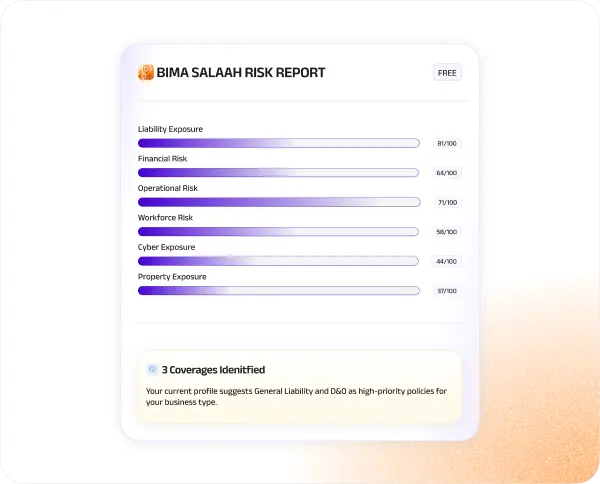
Every risk, read instantly.
Everything your business is exposed to, analysed before any cover is placed.
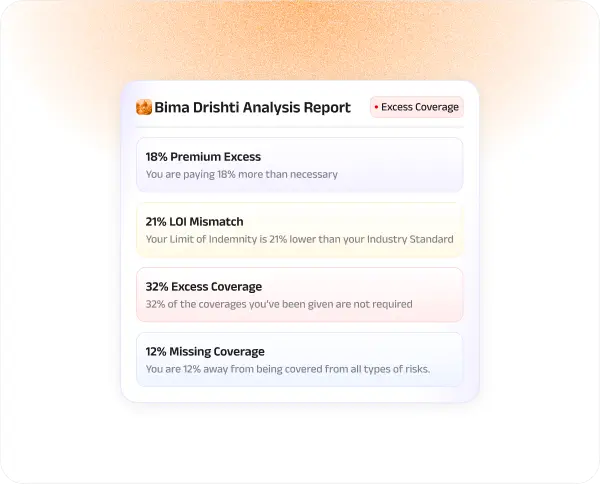
Every gap, caught early.
The gaps your current cover leaves open, surfaced before they turn into a claim.
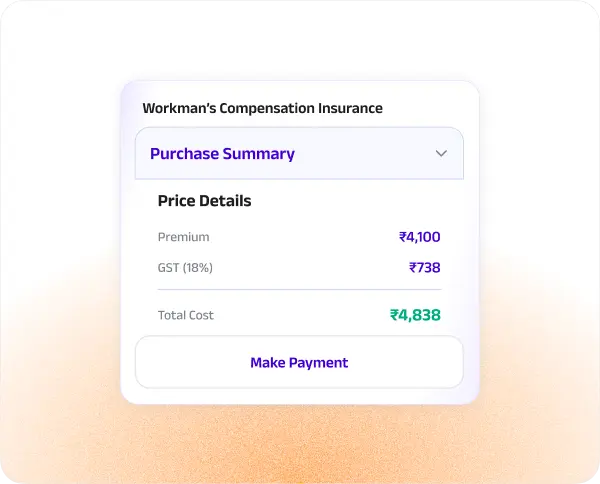
Right coverage, issued in minutes.
The right cover, priced and placed with India's top insurers, in minutes.



India's builders trust BimaKavach.

Learn More About
Professional Indemnity Insurance for Architects
Professional Indemnity Insurance for Architects, made Simple
No Indian statute makes it legally compulsory. However, COA's Professional Conduct Regulations (paragraph 6.1) say architects must indemnify clients for defects attributable to their design, and increasingly government tenders and developer contracts require proof of PI cover before engagement. The requirement is professional and contractual, but the practical consequence is the same: personal exposure to claims.
Interior designers and fit-out specialists can purchase PI insurance in their own right. The policy covers claims from material specifications that fail, fire-rating errors, and structural modifications that cause a loss. Registration with COA is not a prerequisite; what matters is that the work constitutes a professional service.
Most engagement contracts include an indemnity clause that lets the promoter recover from the architect when the defect traces to the design. The architect faces a recovery claim from the promoter, often alongside a consumer complaint from the buyer. PI insurance covers both.
Only if the retroactive date has been pushed back to when you started. On a first-time policy, it is usually the inception date, so past projects are not covered. After several continuous years with a clean claims record, the insurer can push it back. Ask at renewal each year.
Potentially yes. Under local building bye-laws, the architect of record can remain liable for the design life of the building, which can run 50 to 60 years. The Limitation Act gives claimants three years from discovery, not from completion. This is why run-off cover and an unbroken retroactive date are essential, even after retirement.
Exclusive Cyber Risk Assessment
Bima Netra
 Instant Cyber Risk Report
- Actionable Posture Insights