

Professional Indemnity Insurance for Chartered Accountants
Protects CAs when audit or filing errors cause claims


Policy Provided By























Professional Indemnity Insurance for Chartered Accountants
Protects CAs when audit or filing errors cause claims
Get Quotes in a Few Steps


Currently Reading
1. What Is Professional Indemnity Insurance for Chartered Accountants?
2. Which Chartered Accountants Need This Cover?
3. How the Claims-Made Basis and the Retroactive Date Work?
4. What Does Professional Indemnity Insurance Cover for a CA?
5. Who Is Covered Under a CA Firm's Policy?
6. Add-Ons and Extensions Worth Considering
7. What Is Not Covered Under a CA Professional Indemnity Policy?
8. How to Choose the Sum Insured?
9. What Affects the Premium for Chartered Accountants?
10. How to Buy PI Insurance for Chartered Accountants from BimaKavach?
Professional indemnity (PI) insurance for chartered accountants pays the legal fees and the compensation a practice becomes liable for when a client or a third party claims that its professional service was negligent, wrong, or incomplete. These claims can arise from statutory audit, tax audit, GST work, certification, bookkeeping, and advisory services. You may also see the cover called PI insurance for accountants, accountants' professional liability insurance, or, in other markets, malpractice insurance for accountants.
Consider a common situation. A CA firm signs off a company's audited accounts, and a bank lends against them. The company defaults, and the bank blames the audit for missing a clear overstatement of receivables. The firm faces a claim far greater than its yearly fee from that client, and a professional indemnity policy would pay the legal expenses and any settlement, up to the sum insured.
This page covers how the cover helps practising chartered accountants. For the coverage structure and the full exclusions list across all professions, visit our Professional Indemnity Insurance page.
Chartered accountant indemnity insurance matters most where a signed report or certificate is relied on by a lender, an investor, or an authority. It weighs heaviest in the five kinds of practice below.
Practices Doing Statutory and Tax Audit
Audit work carries the highest exposure because lenders, investors, and regulators depend on signed accounts. Auditors are therefore the primary group that should seek cover.
Firms Issuing Certificates
Tender authorities and banks rely heavily on net worth, turnover, and utilisation certificates. A mistake in any of them can invite a large claim, often from a third party who relied on the document rather than from the client who paid for it.
GST and Tax Advisory Practices
Wrong advice, a return not filed on time, or an erroneous filing may lead to penalties and interest. The client may then seek to recover these costs from the practising firm.
Firms with Peer Review or NFRA-Regulated Clients
Auditing listed companies or large unlisted companies brings closer scrutiny and a higher claim risk. Larger balance sheets and more stakeholders raise the size of any claim.
Sole Practitioners
A single wrong certification can exceed a sole practitioner's ability to pay. Many client contracts and empanelments now require proof of cover.
This is the single most important feature to understand before buying. A professional indemnity policy works on a claims-made basis, so it responds only to claims first made against the firm and notified to the insurer while the policy is live. The date the audit or the advice was given does not decide cover; the date the claim arrives does.
The retroactive date sets how far back the policy will look. Work done before that date is not covered, even if the claim arrives during the policy period. On a first policy, the retroactive date is usually the start date, so past work stays uncovered until enough continuous years have passed.
Suppose a firm signs an audit report in March and buys its first policy in April of the same year, with the retroactive date set at the April start date. Two years later, a bank claims the audit missed an error. The policy is live when the claim arrives, but the audit predates the retroactive date, so the claim is not covered. Had the retroactive date been set before that March, the same claim would have been covered.
Three rules follow from this:
- Never let the Policy Lapse: A one-day gap can reset the retroactive date and wipe out cover for years of past work
- Buy Run-off Cover: When you retire or wind up the practice, claims related to your audits can come up years after you stop signing them
- Notify Early: Tell us as soon as a claim, a legal notice, or a circumstance that could lead to a claim appears. Late notice is a common reason claims are denied on a claims-made policy. For the step-by-step process, see the claims process on our Professional Indemnity Insurance page
A CA policy funds the cost of defending and settling a civil claim for breach of professional duty. This is the core of PI cover for accountants, and it typically includes:
- Damages and Settlements: The amounts the firm is legally liable to pay a client or a third party, within the sum insured
- Legal Defence Costs: Including advocate fees and court expenses, whether the claim succeeds or not
- Claims by Third Parties: Such as a bank, an investor, or a tax authority that relied on the firm's work, not only claims by the paying client
- Loss of Client Documents and Data: Including the cost of reconstructing records the firm was holding
- Defamation: Committed unintentionally in the course of professional work, for example in an audit report or a due diligence note
- Unintentional Breach of Confidentiality or intellectual property: While providing a service
- Dishonesty of Employees: Where it leads to a client loss and the policy carries that extension
- Costs of Attending Court: Including a regulatory hearing, as a witness in connection with a covered matter
Professional liability insurance for accounting firms covers the practice and the professionals in it, not just the person who signs. The two groups below are covered:
The Firm and Its Partners
If the name of the proprietorship, partnership, or LLP is included in the policy, its partners are also covered for any claim arising out of the firm's professional services. Check that the firm's name and type are stated correctly on the proposal form.
Qualified and Articled Staff
Audit assistants and other clerks employed by the practice are covered if they are sued for something they did for the practice. Their coverage applies only to work done for the practice.
A base policy can be widened to match how a practice actually works. Four options are worth considering.
- Run-off cover: Keeps the practice and its partners covered for past work after retirement or dissolution, commonly for 6 or 7 years
- Extended Reporting Period: A shorter version of run-off that lets the firm notify claims for a set window after the policy ends
- Wider Retroactive Cover: Pushing the retroactive date back to when the practice started, once the firm has a clean claims record
- Higher Any One Year (AOY) limit: Raising the annual aggregate above the per-claim limit when the practice has many clients
Knowing the exclusions up front avoids a surprise at claim time. Standard policy-wide exclusions such as war and terrorism also apply, so read the policy wording alongside this list.
1. Dishonest, Fraudulent, or Criminal Acts
If a partner commits wilful fraud or engages in a criminal act, the cover is excluded once it is established. However, a severability clause protects innocent partners.
2. Fines and Penalties
Regulatory fines and tax penalties on the firm are excluded. The policy responds to civil claims for compensation, not to penalties imposed by a regulator or a tax authority.
3. Known Claims and Circumstances
Anything the firm already knew about at the start, and any matter notified under a previous policy, is excluded. You must therefore disclose all known issues on the proposal form.
4. Work Done Without a Valid Certificate of Practice
A member who is not entitled to practise cannot provide professional services. Work done in that period is excluded from the cover.
5. Fee Disputes and Refunds
A claim that only seeks the return of fees, with no allegation of financial loss, is excluded. Such a dispute is a commercial matter between you and the client.
6. Liabilities Assumed by Contract
Any liability imposed by a clause in an agreement, beyond what the law would have imposed anyway, is excluded. Read engagement letters and tender terms before you sign them.
7. Bodily Injury and Property Damage
Claims arising from physical injury and property damage are excluded. Professional indemnity cover responds to financial loss from professional error, not to physical harm.
The sum insured is expressed as two limits, and each answers a different question. Choosing PI cover for accountants means sizing both.
| Limit | What it means |
|---|---|
| AOA (Any One Accident) | The most the policy pays for a single claim |
How AOA Limit Works:
Limit
AOA (Any One Accident)
What it means
The most the policy pays for a single claim
How AOY Limit Works:
Limit
AOY (Any One Year)
What it means
The most the policy pays for all claims combined in the policy year, typically 1 to 3 times the AOA
Practices commonly set the AOA against their largest single client engagement or 2 to 3 times annual fee income, whichever is higher. Treat any figure as a starting point and adjust it to your actual client exposure. The insurer pays a covered settlement or court award within the sum insured, net of the deductible, which is the amount you bear first. Our advisors help you set both limits against your practice profile.
Premiums vary widely, so treat any figure you see as indicative until underwriting is done. These factors move the price the most.
- Annual Fee Income: The base rating factor, since higher fees usually mean more client work and more exposure
- Service Mix: Audit and certification weigh more than pure bookkeeping
- Partners and Qualified Staff: More signatories mean more chances of an error
- Type of Clients and Industries Served: A few large clients, or clients in sensitive sectors, raise the exposure
- Claims History: Prior claims or disclosed circumstances raise the rate
- Sum Insured and Deductible: A higher limit raises the premium, and a higher deductible lowers it.
- Regulated Audit Work: Listed-company or NFRA-scope audits attract higher rates.
Getting covered is simple when you buy professional indemnity insurance online through BimaKavach, an IRDAI-registered platform. Here is a brief explanation of how the system works:
| 1. Get Instant Quotes: | 2. Choose Your Coverage & Insurer: | 3. Pay Online & Get Your Policy: |
|---|---|---|
| Depending on your practice size, service mix, and fee income, compare Professional Indemnity Insurance quotes across insurers within seconds. | Our experts help you compare AOA and AOY limits, retroactive date terms, and run-off options so you find the right fit for your practice. | Pay digitally at your convenience and receive your policy documents within minutes, with no paperwork. |
Step-by-Step Process to get a PI Policy through BimaKavach
1. Get Instant Quotes:
Depending on your practice size, service mix, and fee income, compare Professional Indemnity Insurance quotes across insurers within seconds.
2. Choose Your Coverage & Insurer:
Our experts help you compare AOA and AOY limits, retroactive date terms, and run-off options so you find the right fit for your practice.
3. Pay Online & Get Your Policy:
Pay digitally at your convenience and receive your policy documents within minutes, with no paperwork.
Documents You Will Need:
- Completed proposal form
- Firm KYC (partnership deed or LLP agreement, PAN, and GST details)
- ICAI membership number and Certificate of Practice details for each partner
- Annual fee income details
- Claims record, if any
With instant quotes and coverage in minutes, buying PI insurance for accountants on our platform is built for speed, so you stay covered without stepping away from client work. Get a Quote to see the options for your firm.
Professional Indemnity Insurance, for Every Kind of Business
Professional Indemnity Insurance
Protects professionals if their work causes loss or damage to clients
Trusted by India's Top Businesses















A new experience.
Built on intelligence. Covered in minutes.


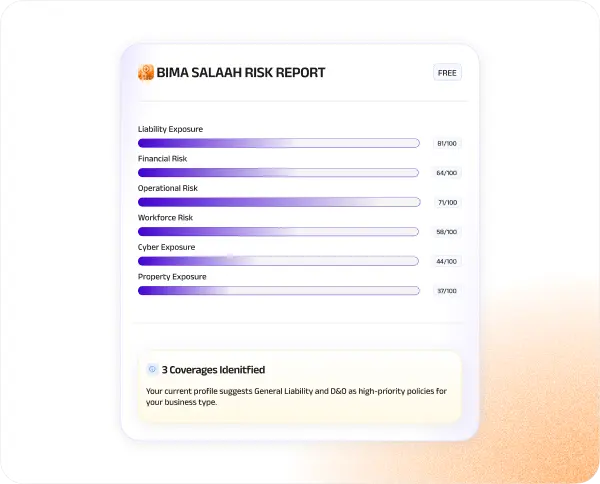
Every risk, read instantly.
Everything your business is exposed to, analysed before any cover is placed.
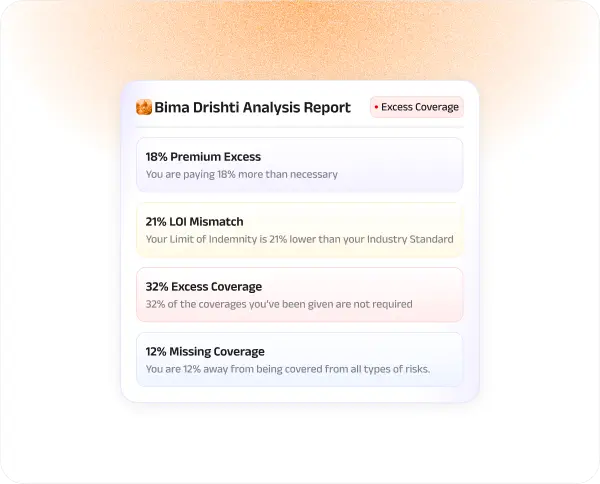
Every gap, caught early.
The gaps your current cover leaves open, surfaced before they turn into a claim.
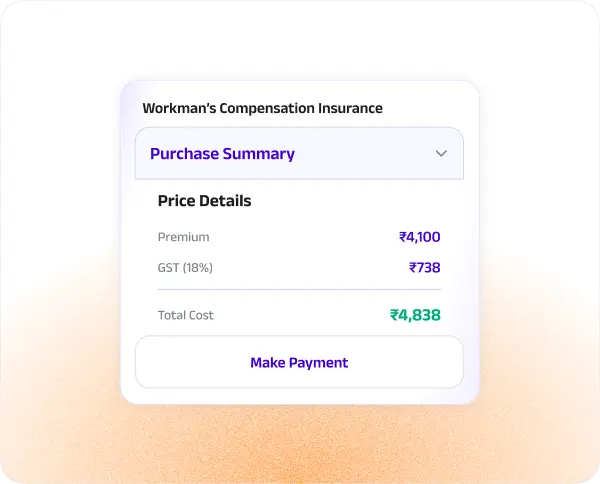
Right coverage, issued in minutes.
The right cover, priced and placed with India's top insurers, in minutes.



India's builders trust BimaKavach.

Learn More About
Professional Indemnity Insurance for Chartered Accountants
Professional Indemnity Insurance for Chartered Accountants, made Simple
Professional indemnity insurance for chartered accountants is not mandatory by law, but it is increasingly demanded in practice. Many client engagement contracts, bank empanelments, and government tenders ask for proof of cover, and the Institute of Chartered Accountants of India (ICAI) recommends that members carry it.
Yes, they serve the same purpose. PI insurance, professional liability insurance, and errors and omissions (E&O) cover all protect a professional against claims of negligence in their work. Malpractice insurance is the term used in some other countries, while Indian policies are usually titled professional indemnity.
Yes, it is worth having from the first engagement. A claim can arise from any client's work, and cover builds a continuous history only once the policy begins. Work done before the retroactive date stays uncovered, so an early start shortens that gap.
Often yes. Claims are not limited to audit work: wrong advice, a late or erroneous GST or tax filing, or an error in a certificate can all lead a client to seek compensation. Lighter service mixes usually carry lower exposure, and our advisors can size cover accordingly.
Most policies run for 12 months and renew annually. Cancellation rights and refund scales differ by insurer, so check the wording. If you switch insurers, start the new policy the day the old one ends, because a gap can reset your retroactive date.
Exclusive Cyber Risk Assessment
Bima Netra
 Instant Cyber Risk Report
- Actionable Posture Insights