

Professional Indemnity Insurance for Freelancers
Protects freelancers when project errors lead to client claims


Policy Provided By
















Professional Indemnity Insurance for Freelancers
Protects freelancers when project errors lead to client claims
Get Quotes in a Few Steps


Currently Reading
1. What Is Professional Indemnity Insurance for Freelancers?
2. Why Platform Terms Do Not Protect You?
3. Which Freelancers Need This Cover?
4. What Does PI Insurance Cover for a Freelancer?
5. What the Freelancer Policy Does Not Cover?
6. When a Past Project Comes Back as a Claim?
7. What Affects the Premium for Freelancers?
8. How to Size the Cover as a Solo Freelancer?
9. How to Buy Professional Indemnity Insurance for Freelancers From BimaKavach?
Professional indemnity insurance for freelancers pays the legal fees and the compensation you owe when a client claims that your work, your advice, or a deliverable you produced caused them a financial loss.
What separates a freelancer from every other professional on this list is the absence of a company between you and the claim. A consultant working through an LLP has the limited liability partnership absorbing the first impact. A CA practising through a firm has the firm's assets on the line before personal ones. As a freelancer, there is no corporate veil, no partnership deed, and no registered entity standing between the client's claim and your personal savings, your fixed deposits, and your property. Under Section 73 of the Indian Contract Act, the client can recover the full loss naturally arising from the breach, and that amount is not capped by what you charged for the project.
Clients can also file a complaint for deficiency in service under the Consumer Protection Act, 2019, with consumer commissions handling claims up to Rs 10 crore. No professional body shields freelancers from this route. The complaint lands directly on you.
Freelancers who work through Upwork, Fiverr, Toptal, or similar platforms often assume the platform's terms of service offer some protection against client claims. They do not. The platform's terms protect the platform from being sued, not the freelancer.
Read the Freelancer Agreement on any major platform. The indemnity clause runs against you: you agree to indemnify the platform against third-party claims arising from your work. If a client suffers a loss because of your deliverable, the platform's dispute resolution handles the payment dispute (whether you get paid or not). It does not handle a negligence claim for the loss the deliverable caused. That claim lands on you directly, outside the platform, under the Indian Contract Act or the consumer protection framework of the client's jurisdiction.
Enterprise and international clients have made this gap explicit. US and UK contractor agreements now routinely require Indian freelancers to carry PI cover before onboarding. Without a policy certificate, the contract does not start. What was once a nice-to-have has become a market access requirement for any freelancer working with clients outside India or with large domestic enterprises.
The risk profile and the sizing of PI cover depend on what kind of freelance work you do and who your clients are. Four categories carry the highest exposure.
Design and Creative Professionals
A logo that infringes an existing trademark, a UI design that leads to accessibility complaints, or a brand identity that a client says damaged their market position all trace back to the freelancer's creative output. Copyright and IP infringement claims are the most common trigger for design freelancers. The claim is not for the cost of the logo; it is for the brand damage or the legal costs the client incurred to resolve the infringement.
Developers and IT Freelancers
A software module that breaks in production, a data migration that corrupts client records, or a security vulnerability in code you delivered can each produce a claim that runs into multiples of the project fee. Developers who handle client data face additional exposure. Under the DPDP Act, 2023, anyone processing personal data is directly accountable, including a freelance developer working on a client's database. Freelancers serving EU clients face GDPR Article 82 liability: data subjects can sue the data processor directly for material and non-material damage, regardless of whether the freelancer was a sub-processor.
Writers and Content Strategists
Plagiarism in a ghostwritten article, factual errors in published content that cause reputational harm, or a content strategy that a client claims led to a regulatory violation all create professional liability. The claim often surfaces months after delivery, when the content has been published and the damage has compounded. Freelance writers working in regulated industries (finance, healthcare, legal) face higher exposure because the content carries compliance implications the writer may not have anticipated.
Marketing and SEO Consultants
A paid advertising campaign that burns the client's budget with no agreed performance, an SEO strategy that triggers a Google penalty, or a social media campaign that inadvertently infringes a third party's IP all produce claims. Marketing freelancers face a particular challenge: the client's expected outcome is often financial (more revenue, more leads), and when that outcome does not materialise, the dispute can escalate from "the campaign did not work" to "your advice caused me a loss."
The policy funds the cost of defending the claim and the compensation owed if you are found liable.
Project Errors, Bugs and Deficiencies:
The deliverable you produced had a defect, a bug, or a material shortcoming that caused the client a financial loss. Whether it was a broken feature, an inaccurate report, or a design that did not meet the agreed specification, the policy covers the claim.
Missed Client Deadlines Due to Negligence:
You missed a project deadline through professional negligence (not wilful delay) and the client suffered a consequential loss. The claim is for the loss the delay caused, not for the fee adjustment.
Unintentional Copyright and IP Infringement:
Your deliverable inadvertently used copyrighted material, infringed a trademark, or incorporated a patented method without authorisation. The policy covers the legal defence and any damages awarded.
Contractual Scope Disputes and Legal Defence:
The client claims you delivered outside the agreed scope or that the work fell short of the contractual standard, and files a legal claim. The policy covers the legal fees from the first notice through to final disposal, whether the claim succeeds or not.
Wilful Breach of Contract
You knowingly failed to deliver what the contract required, abandoned the project, or deliberately delivered substandard work. The policy covers negligence and professional error, not intentional non-performance. However, the policy still covers the legal defence costs until a court or tribunal establishes that the breach was wilful.
Subcontractor Actions Without Client Consent
You outsourced part of the project to another freelancer without the client's knowledge or consent, and their work caused the client a loss. Most PI policies exclude claims arising from unauthorised subcontracting. If you regularly subcontract, disclose it on the proposal form and check whether the policy extends to cover approved subcontractors.
Defamation and Intentional Libel
Content you deliberately published to damage a third party's reputation is excluded. Unintentional factual errors in published content that cause harm are a different matter and are typically covered under the professional negligence trigger.
PI policies work on a claims-made basis. The policy that responds is the one in force when the claim is first reported to the insurer, not the one that was active when you delivered the project.
The retroactive date sets how far back the policy reaches. Work completed before that date falls outside the cover. On a first-time policy, the retroactive date is usually the inception date, so past projects are not covered on day one.
Here is a scenario that catches freelancers. You deliver a website to a client in January. You buy your first PI policy in April with the retroactive date set to 1 April. Eight months later, the client discovers that the site has a security vulnerability you introduced, and their customer data was exposed. The policy is live, you notify in time, but the project finished before the retroactive date. The insurer declines the claim.
Three protections belong in the policy from the start:
- Run-Off Cover: Protects you for past work after you stop freelancing or shift to permanent employment.
- Extended Reporting Period (ERP): A window after the policy ends to notify claims about work done during the policy term.
- Wider Retroactive Date: Pushed back to when you started freelancing, available after several continuous years with a clean claims record.
- Annual Professional Receipts: The starting point for every quote. Higher receipts mean more client work at risk.
- Type of Freelance Work: Software development and IT consulting attract higher rates than content writing or graphic design because the single-claim severity is larger (a production bug vs a factual error in an article).
- Client Geography: Serving US, UK, or EU clients raises the premium because those jurisdictions have higher litigation frequency and larger damage awards. GDPR exposure adds a further loading for developers handling EU personal data.
- Project Concentration: A freelancer with one or two large clients carries more concentrated risk than one with many smaller projects.
- Claims History: Any prior claim or disclosed circumstance increases the rate. A clean record over several years earns a discount.
- Sum Insured and Deductible: A higher limit raises the premium; a higher deductible lowers it.
Freelancers often assume the sum insured should match their annual income. It should not. The claim is sized by the client's loss, not by your fee. A Rs 2 lakh website project that introduces a security vulnerability leading to a data breach can produce a claim of Rs 20 lakh or more in damages and legal costs.
For most solo freelancers with annual receipts below Rs 30 lakh, a sum insured of Rs 20 to 25 lakh is a practical starting point. Premiums for this range start at Rs 6,000 to 10,000 per year. Freelancers who file under the regular ITR (not the Section 44ADA presumptive scheme) can deduct the premium as a business expense under Section 37(1) of the Income Tax Act, which brings the after-tax cost down by 25 to 30 percent at the higher slab rates.
BimaKavach is an IRDAI-registered platform. The buying process runs online and takes minutes.
| 1. Get Instant Quotes: | 2. Choose Your Coverage and Insurer: | 3. Pay Online and Get Your Policy: |
|---|---|---|
| Enter your freelance domain, annual professional receipts, and client geography. Quotes from multiple insurers appear within seconds. | Our experts walk you through the retroactive date, run-off options, and limits so the policy matches your project portfolio. | Complete payment digitally and receive policy documents within minutes. |
Step by Step Process to Get PI Policy Through BimaKavach
1. Get Instant Quotes:
Enter your freelance domain, annual professional receipts, and client geography. Quotes from multiple insurers appear within seconds.
2. Choose Your Coverage and Insurer:
Our experts walk you through the retroactive date, run-off options, and limits so the policy matches your project portfolio.
3. Pay Online and Get Your Policy:
Complete payment digitally and receive policy documents within minutes.
Documents You Will Need:
- Completed proposal form
- Individual KYC (PAN card and Aadhaar or passport)
- GST registration, if applicable
- Annual professional receipts for the most recent financial year
- Description of freelance services offered and client geographies served
- Claims history, if any
Professional Indemnity Insurance, for Every Kind of Business
Professional Indemnity Insurance
Protects professionals if their work causes loss or damage to clients
For Chartered Accountants
Protects CAs when audit or filing errors cause claims
For Lawyers
Protects lawyers when legal errors cause client losses
For IT Companies
Protects IT firms when software failures or breaches cause damage
For Architects
Protects architects when design errors cause project disputes
For Engineers
Protects engineers when technical errors cause project failures
For Consultants
Protects consultants when flawed advice causes client losses
Trusted by India's Top Businesses















A new experience.
Built on intelligence. Covered in minutes.


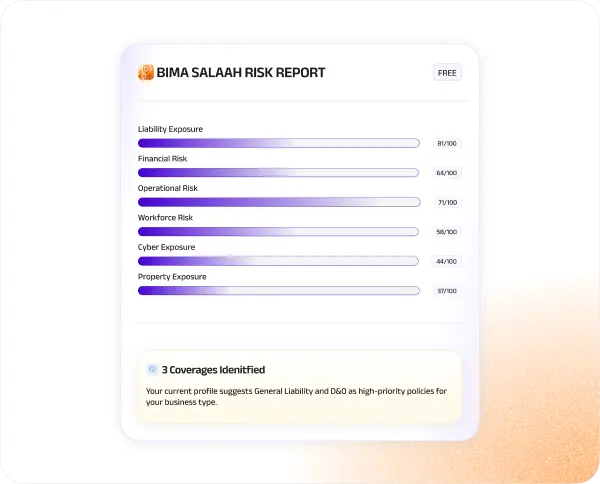
Every risk, read instantly.
Everything your business is exposed to, analysed before any cover is placed.
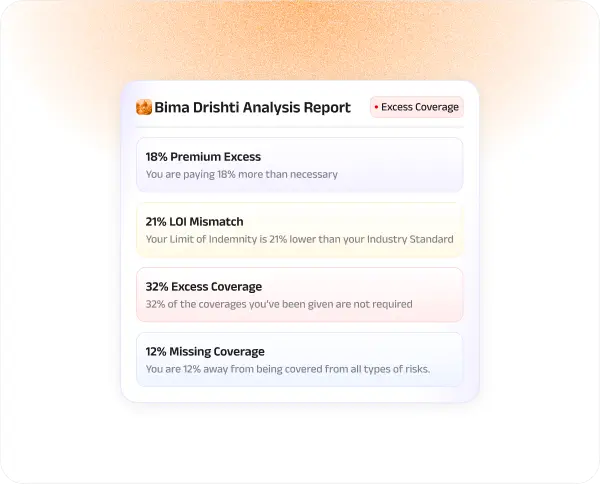
Every gap, caught early.
The gaps your current cover leaves open, surfaced before they turn into a claim.
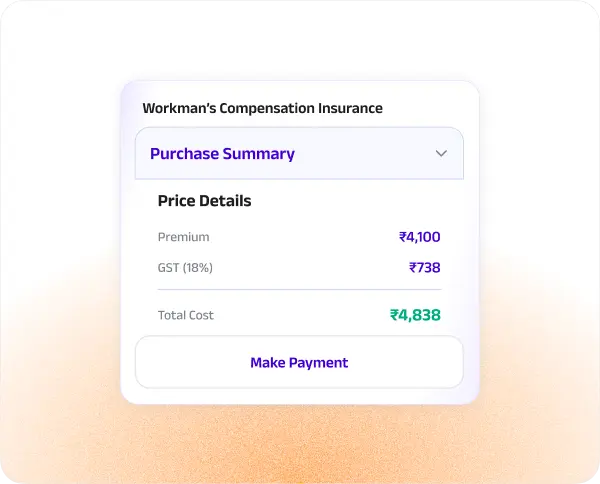
Right coverage, issued in minutes.
The right cover, priced and placed with India's top insurers, in minutes.



India's builders trust BimaKavach.

Learn More About
Professional Indemnity Insurance for Freelancers
Professional Indemnity Insurance for Freelancers, made Simple
Yes. Standard PI products in India are issued to individual professionals, not only to firms or companies. Sum insured starts at Rs 10 lakh and scales to Rs 5 crore based on the nature of work and annual professional receipts. New India Assurance, ICICI Lombard, and Tata AIG all issue individual PI policies.
No. Platform dispute resolution handles payment disputes (whether you get paid). It does not handle a negligence claim for the loss your deliverable caused. That claim is filed directly against you under the Indian Contract Act or the consumer protection framework of the client's jurisdiction. The platform's indemnity clause protects the platform, not the freelancer.
Yes. Under GDPR Article 82, data processors can be sued directly by data subjects for material and non-material damage. An Indian freelance developer processing EU personal data (building a SaaS feature, running analytics, handling support data) is within scope. EU client contracts routinely require PI or Cyber cover before onboarding for this reason.
If you file your ITR under the regular business income heads (not the Section 44ADA presumptive scheme), the PI premium is deductible as business expenditure under Section 37(1) of the Income Tax Act. Under the 44ADA presumptive scheme, you already get a 50% blanket deduction on gross receipts, so the premium is not separately deductible but is absorbed within the presumptive margin.
The absence of a written contract does not remove your professional liability. Under the Indian Contract Act, an oral or implied contract is enforceable. The PI policy covers negligence claims regardless of whether the engagement was formalised in writing. In fact, working without a written contract increases your exposure because there are no agreed terms to limit scope or liability.
Exclusive Cyber Risk Assessment
Bima Netra
 Instant Cyber Risk Report
- Actionable Posture Insights