

Professional Indemnity Insurance for Hospitals
Protects hospitals against malpractice and medical negligence claims


Policy Provided By
















Professional Indemnity Insurance for Hospitals
Protects hospitals against malpractice and medical negligence claims
Get Quotes in a Few Steps


Currently Reading
1. What Is Professional Indemnity Insurance for Hospitals?
2. Why Individual Doctor Cover Does Not Protect the Hospital?
3. When One Patient Complaint Triggers Four Proceedings?
4. Which Hospitals Need This Cover?
5. What Does PI Insurance Cover for a Hospital?
6. What the Policy Does Not Cover?
Professional indemnity insurance for hospitals pays the legal fees and the compensation your medical establishment owes when a patient or their family claims that a diagnosis, a surgical procedure, or a course of treatment at your hospital caused them physical harm or financial loss. The policy protects the institution, not the individual doctor.
Consumer commissions are no longer awarding token amounts. In a 2024, a district consumer commission directed a corporate hospital chain to pay Rs 99 lakh for medical negligence during childbirth. The Supreme Court has separately criticised the NCDRC for awarding amounts that are too low in serious medical negligence matters, signalling that future awards will trend higher. Under the Consumer Protection Act, 2019, hospitals are classified as service providers and patients can file negligence complaints directly, with district commissions handling claims up to Rs 1 crore, state commissions up to Rs 10 crore, and the NCDRC above that.
This page covers PI insurance as it applies to the hospital as an institution: multi-specialty hospitals, single-specialty centres, nursing homes, and diagnostic labs.
Most hospital administrators assume that if every doctor on staff carries an individual PI policy, the hospital itself is covered. That assumption is wrong, and the Supreme Court has settled the question.
The hospital is vicariously liable for the negligence of its doctors. The patient does not need to sue the doctor and the hospital separately. The hospital, as the entity that provided the service, is answerable for the outcome. The doctor's individual PI policy responds to claims against the doctor personally. It does not respond to claims against the hospital as an institution. These are two separate exposures, and they require two separate policies.
A single allegation of medical negligence at a hospital can open proceedings on four separate tracks, each with its own forum, timeline, and financial exposure.
1. Consumer Commission (CPA 2019):
The patient or family files a complaint for deficiency in service. This is the most common route. The hospital is named as the opposite party. Awards can include compensation, litigation costs, and directions for corrective action. Mediation is mandatory at the first stage under the 2019 Act.
2. NMC or State Medical Council Disciplinary Action:
The complaint is filed against the individual doctor for professional misconduct under the National Medical Commission Act, 2019. The State Medical Council investigates. This track runs in parallel with the consumer complaint, not instead of it. The hospital itself is not the subject, but suspension or debarment of a key surgeon or specialist directly affects the hospital's operations and reputation.
3. Civil Suit for Damages:
The patient files a civil claim for tortious negligence under Section 73 of the Indian Contract Act or general tort law. There is no upper cap on the claim amount. The civil suit can run alongside the consumer complaint without one barring the other.
4. Criminal Prosecution Under IPC Section 304A:
In cases involving patient death, the police can register an FIR for causing death by negligence. The Jacob Mathew v State of Punjab guidelines require a competent independent medical opinion before prosecution, but FIR filing is routine in serious cases before that opinion is obtained. PI insurance does not cover criminal fines, penalties, or imprisonment. However, it may cover legal defence costs for criminal proceedings arising from the same incident, subject to the policy's terms and exclusions. The institutional PI policy covers the hospital's exposure on tracks 1 and 3 (consumer and civil). Track 2 (NMC disciplinary) is an individual doctor matter. Track 4 (criminal) requires a separate medico-legal defence budget. Understanding which proceedings the PI policy covers, and which it does not, is essential for sizing the hospital's total risk management budget.
The exposure and the sizing of PI cover depend on the type of hospital and the procedures it performs. Four categories carry distinct risk profiles.
Multi-Specialty Hospitals
Corporate and multi-specialty hospitals face the highest single-claim exposure because they perform complex surgeries, run ICUs, and manage high-dependency patients. Hospital malpractice insurance is not optional at this scale. A single surgical error or anaesthesia mishap can produce a claim that runs into crores. These hospitals also face mass-incident exposure: a contaminated blood bank batch, a central oxygen supply failure, or an ICU infection outbreak can generate multiple simultaneous claims against the institution.
Single-Specialty Centres
Orthopaedic, ophthalmology, cardiac, and maternity centres face concentrated risk in one clinical domain. The advantage is a narrower claims profile. The disadvantage is that every claim falls in the same high-severity band. Maternity hospitals carry particularly acute exposure because obstetric negligence claims consistently produce the highest consumer commission awards in India.
Nursing Homes and Small Clinics
The Clinical Establishments (Registration and Regulation) Act, 2010, adopted by 12 states and 7 union territories, prescribes minimum standards for registration regardless of size. A 10-bed nursing home faces the same Consumer Protection Act route as a 500-bed hospital. The common assumption that small establishments are too small to be sued is contradicted by the filing data: a significant share of medical negligence complaints at district consumer commissions involve nursing homes and smaller clinics.
Diagnostic Centres and Pathology Labs
A wrong diagnostic report that leads to unnecessary surgery, a missed malignancy on a scan, or an incorrect blood group report that causes a transfusion reaction all create professional liability for the diagnostic centre. The claim is not against the referring doctor who acted on the report; it is against the institution that issued it. Diagnostic centres that operate under NABL accreditation still face full liability for reporting errors.
The policy funds the cost of defending the claim and the compensation owed if the hospital is found liable.
1. Clinical Negligence Claims
- Wrong Diagnosis and Delayed Diagnosis: The hospital's clinical team diagnosed the patient incorrectly, or a correct diagnosis was delayed to the point where the patient's condition worsened and the outcome was materially different from what timely diagnosis would have produced.
- Surgical Errors: An error during surgery, including wrong-site surgery, retained instruments, or post-operative complications arising from a departure from the standard of care.
- Medication and Treatment Errors: Wrong drug administration, incorrect dosage, failure to check for known drug interactions, or a treatment protocol that fell below the accepted clinical standard.
- Failure to Obtain Informed Consent: The hospital did not obtain or adequately document informed consent before a procedure, and the patient claims they would not have consented had they been fully informed of the risks.
2. Institutional Administration Claims
- Breach of Patient Confidentiality: Patient records, test results, or treatment history were disclosed to an unauthorised party, whether through staff negligence, an unsecured system, or a process failure.
- Loss of Patient Records: Medical records, diagnostic images, or pathology reports were lost or destroyed while in the hospital's custody, and the patient suffered a consequential loss (inability to pursue a claim elsewhere, delayed follow-up treatment).
- Legal Defence Costs: Advocate fees, court attendance costs, and investigation expenses from the first legal notice through final disposal, whether the claim succeeds or not.
Criminal Malpractice or Unauthorised Procedures:
Performing a procedure the hospital is not licensed for, or a doctor practising without valid registration under the NMC Act, is excluded once established. The policy still covers the civil and consumer-track defence costs until a court or tribunal makes that finding.
Wilful Neglect or Practising Under Influence:
A doctor or staff member treating patients while under the influence of alcohol or drugs, or a deliberate refusal to treat a patient in an emergency, is excluded.
Unapproved Experimental Drugs and Clinical Trials:
Claims arising from the use of unapproved drugs or from clinical trials that did not follow CDSCO and ethics committee protocols are excluded. This does not affect standard off-label prescribing within accepted clinical guidelines.
General Commercial or Premises Liability:
A visitor slipping in the hospital corridor, a patient's belongings being stolen from a ward, or food poisoning in the hospital canteen are not clinical negligence claims and are not covered under PI. These fall under General Liability Insurance for Healthcare, which is a separate policy.
Professional Indemnity Insurance, for Every Kind of Business
Professional Indemnity Insurance
Protects professionals if their work causes loss or damage to clients
For Chartered Accountants
Protects CAs when audit or filing errors cause claims
For Lawyers
Protects lawyers when legal errors cause client losses
For IT Companies
Protects IT firms when software failures or breaches cause damage
For Architects
Protects architects when design errors cause project disputes
For Engineers
Protects engineers when technical errors cause project failures
For Consultants
Protects consultants when flawed advice causes client losses
For freelancers
Protects freelancers when project errors lead to client claims
Trusted by India's Top Businesses















A new experience.
Built on intelligence. Covered in minutes.


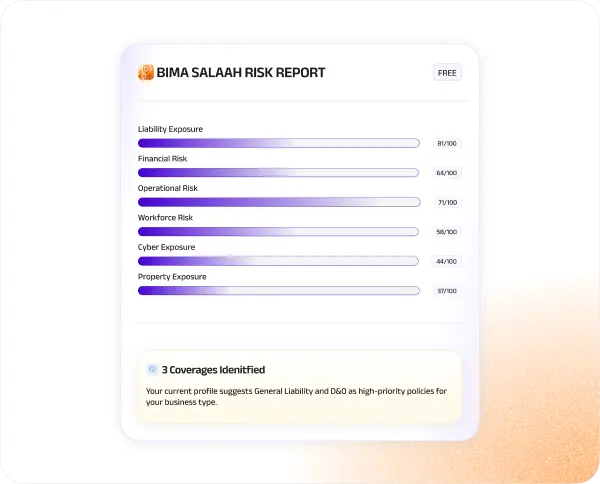
Every risk, read instantly.
Everything your business is exposed to, analysed before any cover is placed.
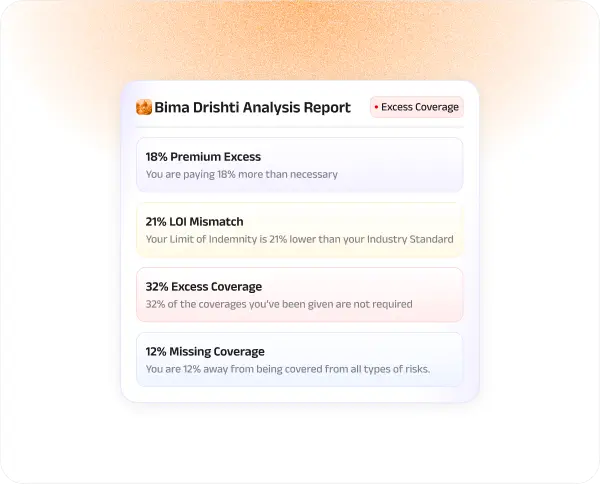
Every gap, caught early.
The gaps your current cover leaves open, surfaced before they turn into a claim.
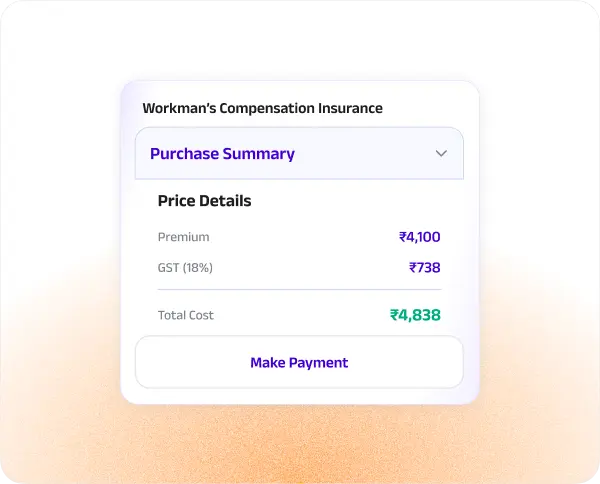
Right coverage, issued in minutes.
The right cover, priced and placed with India's top insurers, in minutes.



India's builders trust BimaKavach.

Learn More About
Professional Indemnity Insurance for Hospitals
Exclusive Cyber Risk Assessment
Bima Netra
 Instant Cyber Risk Report
- Actionable Posture Insights