

Professional Indemnity Insurance for IT Companies
Protects IT firms when software failures or breaches cause damage


Policy Provided By


















Professional Indemnity Insurance for IT Companies
Protects IT firms when software failures or breaches cause damage
Get Quotes in a Few Steps


Currently Reading
1. What Is Professional Indemnity Insurance for IT Companies?
2. Which IT Companies Need This Cover?
3. What Does PI Insurance Cover for an IT Company?
4. What the Policy Does Not Cover
5. The Claims-Made Basis: Why Continuous Cover Matters
6. What Drives the Premium?
7. Regulatory Exposure That Connects to Professional Indemnity Insurance
8. How to Buy PI Insurance for IT Companies from BimaKavach?
9. How PI Insurance Works in Practice: Two IT Claim Scenarios
Professional indemnity insurance for IT companies pays the legal fees and the compensation your firm becomes liable for when a client claims that your software, your services, or your technical advice caused them a financial loss. You may also see it called errors and omissions insurance for IT companies, tech E&O insurance, or PI cover for SaaS companies. The product is the same under each name.
Consider how quickly a routine project can turn into a liability event. Your team deploys an ERP integration for a mid-size manufacturer. A data mapping error causes the client's inventory system to miscalculate stock levels for six weeks. The client overprocures raw material, ties up working capital, and claims the loss runs into crores. Your contract has a liability cap equal to the project fee, but as companies like Infosys have disclosed in their own regulatory filings, contractual limitation clauses may not hold up in court. The client's claim is not capped by your contract language; it is capped by what a court decides. A professional indemnity policy would pay the legal defence and any settlement or award up to the sum insured, keeping the firm's own balance sheet intact.
This page covers PI insurance as it applies to IT and software services firms. For the full coverage structure, exclusions, and claims process across all professions, see our Professional Indemnity Insurance page.
Almost every IT firm that delivers work to a client under a contract carries professional liability exposure. But the urgency and the sizing differ by what you do, who you serve, and what your contracts require.
IT Services and Outsourcing Firms:
Companies delivering application development, testing, infrastructure management, or BPO services under SOWs face claims when a deliverable fails to perform or a deadline slips. The larger the client, the larger the claim. Enterprise clients routinely require PI cover as a condition in the MSA before the first SOW is signed.
SaaS and Product Companies:
A SaaS platform serving hundreds of customers carries a different risk profile. A single outage or a data handling error can trigger claims from multiple customers simultaneously. The aggregate exposure across all affected accounts can exceed what a services firm faces on any one project.
Global Capability Centres (GCCs):
India-based GCCs building software for a US or European parent are typically covered under the parent's global PI programme. But if the GCC operates as a separate legal entity and signs its own vendor contracts with Indian clients, it needs standalone cover.
IT Consulting and Advisory Firms:
Firms that advise on technology strategy, architecture selection, or vendor evaluation face claims when the advice turns out to be wrong. A recommendation to migrate to a platform that later fails can produce a claim larger than the advisory fee.
Cybersecurity and Managed Security Providers:
If your service is to protect a client's systems and those systems get breached, the client's first question is whether your work was negligent. Cybersecurity firms carry a heightened duty of care, and the claims tend to be large.
Freelance IT Consultants and Small Teams:
A freelancer or a two-person team has no corporate shield between the claim and personal assets. One failed project with a litigious client can wipe out years of savings. Many B2B platforms and staffing companies now require proof of PI cover before onboarding independent consultants.
E-commerce and Fintech Technology Providers:
Companies building payment gateways, lending platforms, or e-commerce backends handle high-value transactions and sensitive financial data. A transaction processing error or a regulatory compliance gap in the software can produce a claim that dwarfs the project fee.
The policy funds two things: the cost of defending the claim, and the compensation owed if the firm is found liable. Coverage falls into three broad categories.
Delivery Failures and Performance Claims:
- Faulty Software Delivery: The client claims the application you built does not work as specified, and they suffered a loss because of it.
- Integration and Deployment Errors: A migration, an API integration, or a cloud deployment goes wrong, causing downtime or data loss on the client's side.
- Missed contractual Deadlines: Where the delay is caused by professional negligence (not by a commercial decision to deprioritise), and the client claims consequential losses.
Data Handling and Confidentiality Claims:
- Breach of client confidentiality: Where sensitive business information the client shared with you during the engagement is disclosed to a third party, accidentally or through employee negligence.
- Employee dishonesty: Where an employee misuses client data or systems, and the resulting loss falls on your firm.
- Loss of client documents and data: The cost of reconstructing records, code, or datasets that were in your custody and were lost, corrupted, or destroyed.
Intellectual Property Claims:
- Unintentional Copyright Infringement: Your code inadvertently uses a copyrighted library, a design pattern, or a UI element that belongs to someone else.
- Unintentional Trademark Infringement: A product name, logo, or branding element you designed for a client conflicts with an existing mark
- Defamation: An unintentional misstatement in a report, a presentation, or a deliverable document that damages a third party's reputation.
Standard exclusions apply across most PI policies for IT firms. Read the full policy wording alongside this summary, since insurers vary on the fine print.
Common Exclusions for IT Companies
1. Deliberate or Fraudulent Acts:
If a developer intentionally sabotages code or a manager knowingly misrepresents project status, the policy will not respond. A severability clause typically protects innocent directors and employees who had no knowledge.
2. Patent Infringement:
Copyright and trademark infringement are usually covered, but patent claims are excluded. If a client alleges your software infringes a method patent, that claim falls outside the policy. Separate IP indemnity cover may be needed.
3. Hardware Failure and Physical Wear:
If the client's loss resulted from a server crash, a power failure, or physical equipment degradation, those are not professional errors.
4. Contractual Penalties and Liquidated Damages:
Amounts the client deducts under a penalty clause in the contract (e.g. per-day delay penalties) are excluded. The policy responds to compensation for actual loss, not to pre-agreed contractual penalties.
5. Known Claims and Prior Circumstances:
Anything you were aware of when you bought the policy, and any matter already notified under a prior policy, is excluded. Disclose everything on the proposal form.
6. Fines and Regulatory Penalties
DPDP Act fines, IT Act penalties, and CERT-In enforcement actions are excluded from PI. Regulatory defence costs may be covered under a specific regulatory-defence extension
PI policies for IT companies work on a claims-made basis. The policy that responds is the one that is active when the claim is first reported to the insurer, not the one that was running when the code was written or the advice was given.
The retroactive date sets how far back the policy looks. Work completed before that date is not covered, even if the claim arrives during the policy period. On a first-time policy, the retroactive date is usually the inception date, which means none of your past projects are protected on day one.
Here is a scenario that catches IT firms. Your team completes a data warehouse project in January. You buy your first PI policy in April with the retroactive date set at 1 April. Eighteen months later, the client discovers that a data transformation rule was wrong from the start, and the reports they built on top of it led to bad business decisions. They file a claim. The policy is live, you notify in time, but the project finished before the retroactive date. The insurer declines the claim.
Three protections to build in from the start:
1. Never Let the Policy Lapse:
A gap of even one day can reset the retroactive date and strip out cover for every project completed before the gap. Renew before expiry every year.
2. Buy Run-off Cover when Winding Down a Service Line:
If you exit a business vertical or shut down operations, claims from past clients can still arrive for years. Run-off cover keeps the firm protected for a period agreed with the insurer.
3. Notify Early:
Report any claim, legal notice, or circumstance that could lead to a claim as soon as it surfaces. Late notification is among the most common reasons PI claims are denied. For the full notification and claims process, see our Professional Indemnity Insurance page.
An Extended Reporting Period (ERP) gives you a short window after the policy ends to notify claims about work done during the policy term. A wider retroactive date, pushed back to when the company started, is available once you build a clean claims history over several consecutive years.
Every insurer weights these factors differently. Treat any estimate as indicative until underwriting is complete.
- Annual Revenue and Project Billing: The base rating factor, since higher revenue means more client work at risk.
- Service mix: Custom software development and system integration attract higher rates than staff augmentation or testing services, because the professional liability exposure is greater.
- Client Geography: Serving US or EU clients raises the premium because those jurisdictions have higher litigation frequency and larger damage awards.
- Number of Employees and Subcontractors: More people writing code or giving advice means a larger surface for error.
- Claims History: Any prior claim or disclosed circumstance increases the rate. A clean history over several years can earn a discount.
- Security Certifications: SOC 2, ISO 27001, and CMMI appraisals signal lower risk and can reduce the premium.
- Sum Insured and Deductible: A higher limit raises the premium; a higher deductible (the amount your firm bears first on each claim) lowers it.
- Subcontracting Arrangements: If your team includes freelancers or subcontracted developers, the insurer may load the premium or require that subcontractors carry their own cover.
Check Your Premium to see how these factors apply to your company.
IT companies in India now operate under three overlapping regulatory regimes that create professional liability exposure.
DPDP Act, 2023 (enforcement from May 2027):
The Digital Personal Data Protection Act makes every data fiduciary and data processor liable for mishandling personal data. Penalties for Significant Data Fiduciaries can reach Rs 250 crore. IT firms processing client data, especially those serving banks, insurers, or healthcare companies, face contractual indemnity obligations that trace back to these penalties. While PI insurance does not pay the fine itself, it covers the client's claim for the loss that the data mishandling caused.
IT Act, 2000 (Sections 43A and 72A):
Section 43A imposes compensation liability on any company that fails to implement reasonable security practices and suffers a data breach. Section 72A carries criminal penalties for disclosing information in breach of a contract. Both provisions remain in force alongside the DPDP Act during the transition period, creating dual-track exposure that insurers are beginning to price into PI policies.
IT firms serving regulated industries (banking under RBI, insurance under IRDAI, healthcare under the Clinical Establishments Act) face additional sectoral scrutiny on data handling. The regulatory layer does not replace PI insurance; it strengthens the argument for carrying it
Getting covered is simple when you buy professional indemnity insurance online through BimaKavach, an IRDAI-registered platform. Here is a brief explanation of how the system works:
| 1. Get Instant Quotes: | 2. Choose Your Coverage and Insurer: | 3. Pay Online and Get Your Policy: |
|---|---|---|
| Enter your company's service mix, annual revenue, and team size. Quotes from multiple insurers appear within seconds. | Our experts walk you through coverage limits, the retroactive date, and add-on options so the policy matches your requirements. | Complete payment digitally and receive policy documents within minutes. |
Step-by-step process to get a PI Policy through BimaKavach
1. Get Instant Quotes:
Enter your company's service mix, annual revenue, and team size. Quotes from multiple insurers appear within seconds.
2. Choose Your Coverage and Insurer:
Our experts walk you through coverage limits, the retroactive date, and add-on options so the policy matches your requirements.
3. Pay Online and Get Your Policy:
Complete payment digitally and receive policy documents within minutes.
Documents You Will Need
- Completed proposal form
- Company KYC: certificate of incorporation, PAN, and GST details
- Annual revenue and project billing details for the most recent financial year
- Details of services offered and client geographies served
- SOC 2, ISO 27001, or other security certification copies (if available)
- Claims history, if any
Get a Quote to see the options for your company.
A Data Mapping Error That Cascaded into a Revenue Loss
A 200-person IT services firm in Pune completes an ERP migration for a retail chain. Three months after go-live, the client discovers that a mapping rule in the inventory module has been systematically understating stock levels. The client over-ordered from suppliers to compensate for what appeared to be low inventory, tying up Rs 4 crore in excess stock. The client files a claim for the carrying cost, the margin lost on markdowns, and the cost of re-auditing six months of inventory data. The IT firm's contract had a liability cap of Rs 80 lakh (equal to the project fee), but the client's lawyers argued the cap should not apply because the error constituted gross negligence. The PI policy paid the legal defence costs through 14 months of arbitration and covered the negotiated settlement of Rs 1.8 crore, well above the contractual cap.
An Integration Error That Exposed Client Data
A mid-size IT firm in Bengaluru is migrating a financial services client's customer records to a new cloud environment. During the migration, an unsecured staging server exposes 50,000 customer records for 72 hours before the team notices. The financial services client faces a regulatory inquiry and notifies its own customers. The client then turns to the IT firm with a claim for the cost of the customer notification, the reputational damage, and a Rs 1.2 crore regulatory penalty the client expects to face. The IT firm's PI policy covered the legal defence costs and the client's compensation claim for the financial loss caused by the migration error, up to the sum insured. The settlement was reached within eight months.
Professional Indemnity Insurance, for Every Kind of Business
Professional Indemnity Insurance
Protects professionals if their work causes loss or damage to clients
For Chartered Accountants
Protects CAs when audit or filing errors cause claims
For Lawyers
Protects lawyers when legal errors cause client losses
Trusted by India's Top Businesses















A new experience.
Built on intelligence. Covered in minutes.


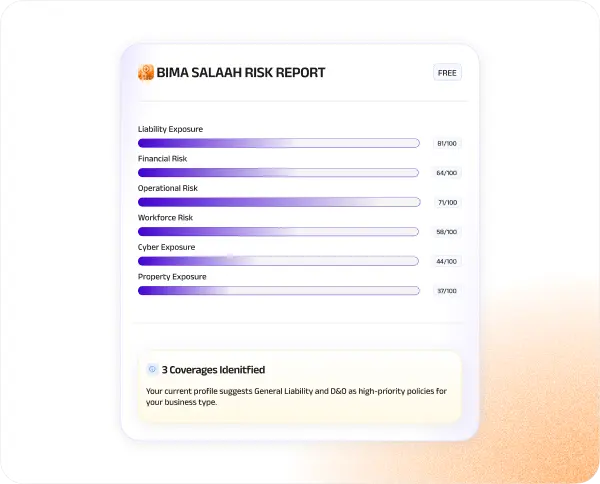
Every risk, read instantly.
Everything your business is exposed to, analysed before any cover is placed.
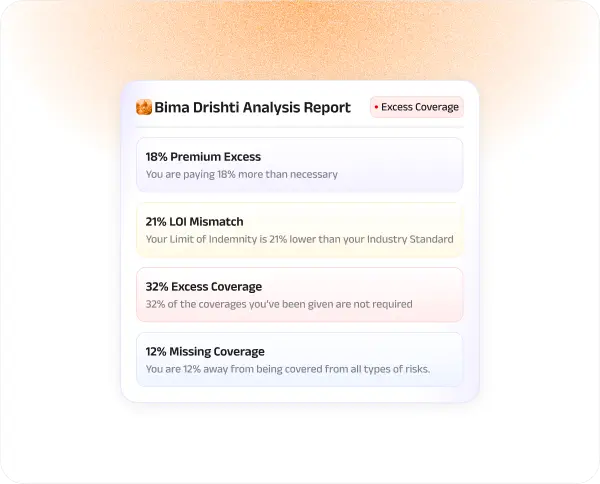
Every gap, caught early.
The gaps your current cover leaves open, surfaced before they turn into a claim.
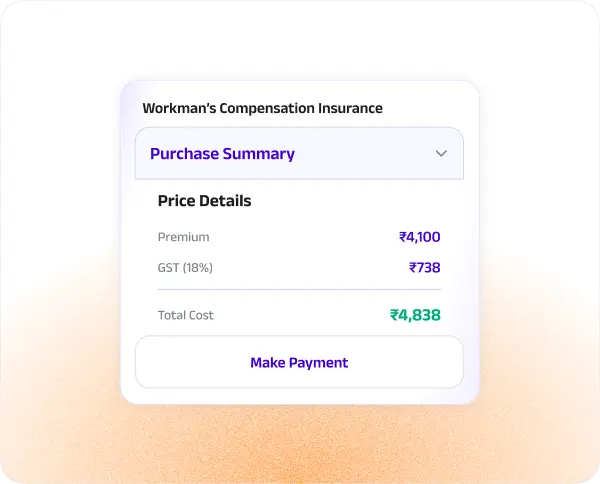
Right coverage, issued in minutes.
The right cover, priced and placed with India's top insurers, in minutes.



India's builders trust BimaKavach.

Learn More About
Professional Indemnity Insurance for IT Companies
Professional Indemnity Insurance for IT Companies, made Simple
No statute currently mandates it. However, most enterprise clients, especially US and European buyers, require PI cover as a condition in the MSA before the first SOW is signed. Government tenders increasingly ask for proof of cover. The requirement is contractual rather than statutory, but losing a contract because you lack cover is a real business cost.
PI is relevant for SaaS companies too. A platform outage, a data handling error, or a software bug can trigger claims from multiple customers at the same time. The aggregate exposure across all affected accounts can be larger than what a services firm faces on any single project. The policy structure is the same; the sizing is different because you need a sum insured that absorbs concurrent claims
Unintentional copyright infringement is typically covered. If your code inadvertently includes a GPL-licenced library in a proprietary product and the licence holder brings a claim, the PI policy would generally respond. Wilful infringement, where your team knowingly violated the licence terms, is excluded. Patent infringement claims are also excluded under most standard PI wordings.
A claims-made policy responds only when a claim is first made against you and reported to the insurer during the policy period, subject to the policy terms. The work must have been performed on or after the policy’s retroactive date to be eligible for cover. If you let the policy lapse and a client files a claim later for earlier work, you may have no cover. This makes continuous, unbroken renewal essential for IT firms with past projects still in use by clients.
No. The IT Act's Section 43A compensation liability is already in force today. CERT-In's 6-hour reporting rule is already in force today. Client contracts already require PI cover today. The DPDP Act adds a new layer of exposure, but the existing regulatory and contractual requirements already create enough professional liability risk to justify cover now. Waiting means every project you complete between now and 2027 sits outside the retroactive date of a future policy.
Exclusive Cyber Risk Assessment
Bima Netra
 Instant Cyber Risk Report
- Actionable Posture Insights