

Professional Indemnity Insurance for Lawyers
Protects lawyers when legal errors cause client losses


Policy Provided By























Professional Indemnity Insurance for Lawyers
Protects lawyers when legal errors cause client losses
Get Quotes in a Few Steps


Currently Reading
1. What Is Professional Indemnity Insurance for Lawyers?
2. Three Ways a Claim Reaches Your Firm
3. What the Lawyer Indemnity Policy Pays For?
4. What the PI Policy for Lawyers Does Not Cover?
5. The Claims-Made Basis: Why a Gap in Cover Wipes Out Past Work
6. How Does Your Law Firm Structure Affect Exposure?
7. What Drives the Premium For Lawyers and Law Firms?
8. How to Buy PI Insurance for Lawyers from BimaKavach?
A client who believes your legal work cost them money has three routes to come after you. They can file a civil suit for negligence or breach of contract. They can lodge a complaint with the State Bar Council under Section 35 of the Advocates Act, seeking disciplinary action. And until recently, they could file a consumer complaint too, but the Supreme Court closed that door in Bar of Indian Lawyers v. D.K. Gandhi (2024), holding that advocate services fall outside the Consumer Protection Act.
The consumer-forum route may be shut, but civil courts and Bar Council proceedings remain wide open. A single piece of negligent advice, a missed limitation deadline, or a title opinion that turns out to be wrong can produce a claim that runs well beyond what the firm earns from that client in a year.
Professional indemnity insurance for lawyers is what stands between that claim and the firm's own money. It pays the advocate's fees and court costs to defend the matter, and compensates the client or third party up to the sum insured if the firm is found liable. You may see it called professional liability insurance for lawyers, errors and omissions insurance for law firms, or PI cover for advocates. The product is the same under each name.
For the parent product's full coverage structure and claims process across all professions, see our Professional Indemnity Insurance page.
Claims against law firms in India fall into three broad patterns. Each one looks different, but the financial exposure works the same way, the firm pays to defend itself and pays again if found liable.
Negligent advice that a client acts on:
A firm advises a company that a non-compete clause in a key employee's contract is enforceable. The company relies on that opinion and does not take other precautions. The employee leaves, joins a competitor, and takes a client book with them. The company turns around and claims the firm's advice was wrong. The damages sought are the lost revenue, not the legal fee. One opinion, one claim, and the firm is defending a number far larger than what it billed for the work.
A missed deadline that cannot be undone:
A litigator lets a limitation period expire on a client's appeal. The right to appeal is gone permanently. The client's loss is the value of the claim they can no longer pursue. There is no fixing this after the fact; the firm either has cover or it absorbs the hit.
A document that a third party relied on:
A firm issues a title opinion on a commercial property. A bank lends against that title. Years later, a prior encumbrance surfaces and the bank's security turns out to be defective. The bank sues the firm, not the borrower. The firm never had a retainer with the bank, but the opinion was addressed to it. Third-party reliance claims like these are common in conveyancing and transactional work, and they arrive long after the original engagement ended.
Professional indemnity insurance for lawyers funds two things: the cost of defending the claim and the compensation owed if the firm loses.
On the Defence Side:
- Advocate Fees and Court Expenses: Covered whether the claim succeeds or not, from the first legal notice through to final disposal.
- Court Attendance Costs: Compensation for the time partners or associates spend attending hearings as witnesses in a covered matter.
- Bar Council disciplinary defence: Some policies extend to cover the legal costs of defending a Section 35 complaint before the State or Central Bar Council, where the complaint arises from the same facts as a covered civil claim.
On the Compensation Side:
- Damages and Settlements: The amounts the firm becomes legally liable to pay, within the sum insured, whether by court order or negotiated settlement.
- Third-party Claims: A lender, an investor, or a counterparty who relied on the firm's work can claim against it, not only the paying client.
- Loss of Client Documents: The cost of reconstructing files, records, or data that the firm was holding and that were lost, damaged, or destroyed.
- Unintentional Breach of Confidentiality: Where client information is disclosed accidentally in the course of professional work.
- Defamation: Committed without intent, for example in a legal opinion, a due diligence report, or a representation letter.
Seven standard exclusions apply to a lawyer's PI policy. Read the full policy wording for the complete list, including standard carve-outs for war and sanctions.
Dishonest, Fraudulent, or Criminal Acts:
Excluded once established by a court or tribunal. A severability clause typically protects innocent partners who had no knowledge of the misconduct.
Fines, Penalties, and Contempt Orders:
The policy responds to civil compensation claims, not to amounts imposed by a court or regulator as punishment.
Known Claims and Circumstances:
Anything the firm was aware of when it bought the policy, and anything already notified under a prior policy, is excluded from the outset.
Fee Disputes with no Underlying Loss:
A claim that seeks only a refund of fees, with no allegation that the client suffered a financial loss beyond what they paid, is a commercial dispute, not a professional liability matter.
Conflict of Interest:
If a claim arises because the firm acted for parties with opposing interests without proper disclosure, the policy may not respond. Running conflict checks before every engagement is not just an ethical practice; it is a coverage safeguard.
Liabilities Assumed by Contract:
Any obligation the firm took on through a clause in an engagement letter or a tender, beyond what the law would have imposed anyway, falls outside the policy.
Bodily Injury and Property Damage:
Professional indemnity responds to financial loss from professional error. Physical harm claims fall under a general liability policy.
Professional indemnity policies do not work like motor or fire insurance. They operate on a claims-made basis, which means the policy that responds is the one that is live when the claim is first reported to the insurer. Not the policy that was active when you gave the advice. Not the policy that was running when the document was drafted. The one in force when the demand letter or the court summons arrives, and you pick up the phone to notify.
The second piece is the retroactive date. It is a calendar line in your policy schedule. Work done before that date is not covered regardless of when the claim comes in. On a first-time policy, the retroactive date is usually the inception date, so none of your past work is protected on day one.
Here is how the two work together. A firm drafts a share purchase agreement in January. It buys its first PI policy in March with a retroactive date of 1 March. Two years later, the buyer discovers a material liability the agreement failed to address and files a claim. The policy is live, the claim is notified in time, but the drafting happened before the retroactive date. The insurer declines the claim. Had the retroactive date been set before that January, the outcome would have been different.
The Limitation Act gives clients three years from the date they discover a loss to file suit. For transactional and advisory work, that discovery can happen long after the engagement ended. This makes continuous, unbroken cover essential for any law firm.
Three protections to build into your policy from the start:
- Run-off cover: keeps the firm and its partners protected for past work after retirement or dissolution, for a period agreed with the insurer. A partner who stops practising still faces claims for advice given years earlier.
- Extended Reporting Period (ERP): a shorter window after the policy expires, during which the firm can still notify claims about work done during the policy term.
- Wider retroactive date: pushes the retroactive date back to when the practice started. Insurers offer this once the firm demonstrates a clean claims history over several continuous years.
Never let the policy lapse. A single day's gap can reset the retroactive date and strip out years of built-up protection.
The legal structure of your practice changes what a claimant can reach and what the PI policy needs to protect.
Traditional Partnership:
Under the Indian Partnership Act, 1932, every partner carries unlimited joint and several liability for the firm's obligations. A negligence claim against the firm is a claim against each partner's personal assets. The PI policy must therefore cover the firm and name each partner; a gap leaves personal property, savings, and investments exposed.
Limited Liability Partnership:
Converting to an LLP under the LLP Act, 2008 protects personal assets from the firm's liabilities. But the firm's own working capital and reserves remain fully at risk. A judgment of Rs 2 crore against a small LLP can eliminate the practice even though no partner's house is on the line. The policy protects the firm's balance sheet in this structure.
Sole Practice:
There is no separation between the practitioner and the practice. Every rupee of personal wealth is reachable by a claimant. Sole practitioners with even a modest client book should treat PI cover as foundational, not optional.
Regardless of structure, every practising advocate in the firm whose advice or drafting could trigger a claim should be named or covered under the policy schedule. Associates and counsel on retainer are typically included for work done within the scope of their engagement with the firm.
Every insurer weights these factors differently, so treat any figure as indicative until underwriting is done.
- Annual Fee Income: The starting point for every quote, since it reflects the volume of professional work at risk.
- Practice Areas and Their Weighting: Litigation, M&A, and capital markets work attract higher rates than routine documentation or compliance advisory.
- Client-money handling: Firms that hold funds in escrow or trust accounts carry an additional exposure that raises the premium.
- Number of Partners and Qualified Staff: More professionals issuing opinions or appearing on matters means a larger surface for error.
- Claims History: Any prior claim or disclosed circumstance increases the rate.
- Cross-Border Work: Serving clients or counterparties in jurisdictions with higher litigation frequency adds to the risk.
- Sum Insured and Deductible: A higher limit raises the premium; a higher deductible (the amount the firm bears first on each claim) lowers it.
Check Your Premium to see how these factors apply to your firm.
BimaKavach is an IRDAI-registered platform. The buying process runs online and takes minutes.
| 1. Get Instant Quotes: | 2. Choose Your Coverage and Insurer: | 3. Pay Online and Get Your Policy: |
|---|---|---|
| Enter your firm's practice areas, fee income, and partner count. Quotes from multiple insurers appear within seconds. | Our experts walk you through AOA and AOY limits, the retroactive date, and run-off options so the policy matches your practice. | Complete payment digitally and receive policy documents within minutes. |
Step-by-step process to get a PI Policy through BimaKavach
1. Get Instant Quotes:
Enter your firm's practice areas, fee income, and partner count. Quotes from multiple insurers appear within seconds.
2. Choose Your Coverage and Insurer:
Our experts walk you through AOA and AOY limits, the retroactive date, and run-off options so the policy matches your practice.
3. Pay Online and Get Your Policy:
Complete payment digitally and receive policy documents within minutes.
Documents You Will Need:
- Completed proposal form
- Firm KYC: partnership deed, LLP agreement, or sole proprietorship PAN and GST details
- Bar Council enrolment certificate numbers for each partner
- Annual fee income details for the most recent financial year
- Details of practice areas and the types of matters handled
- Claims history, if any
Get a Quote to see the options for your firm.
Professional Indemnity Insurance, for Every Kind of Business
Professional Indemnity Insurance
Protects professionals if their work causes loss or damage to clients
For Chartered Accountants
Protects CAs when audit or filing errors cause claims
Trusted by India's Top Businesses















A new experience.
Built on intelligence. Covered in minutes.


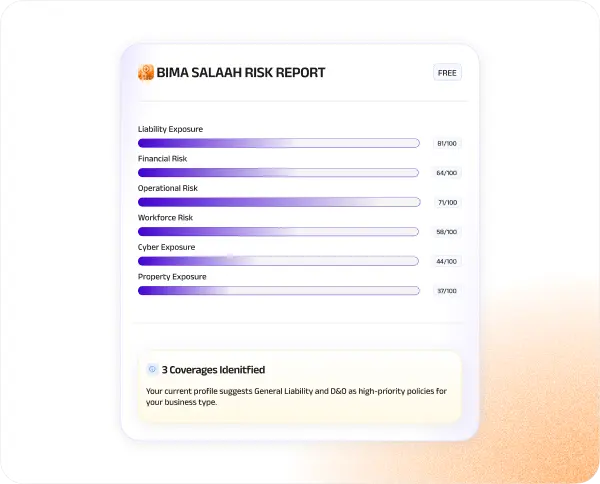
Every risk, read instantly.
Everything your business is exposed to, analysed before any cover is placed.
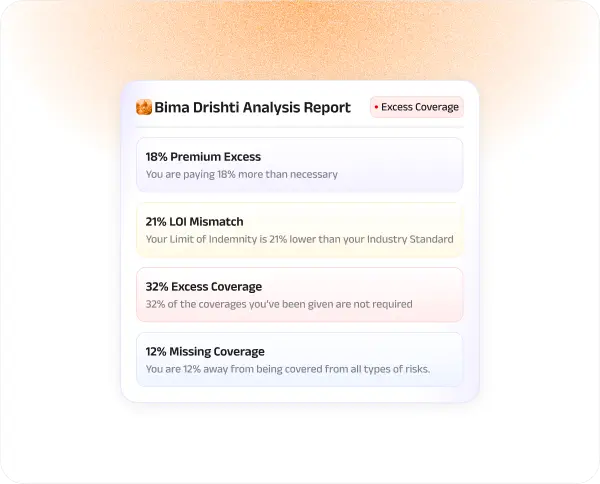
Every gap, caught early.
The gaps your current cover leaves open, surfaced before they turn into a claim.
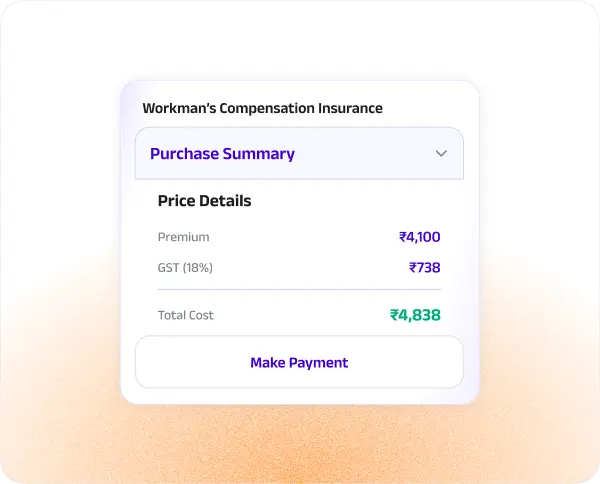
Right coverage, issued in minutes.
The right cover, priced and placed with India's top insurers, in minutes.



India's builders trust BimaKavach.

Learn More About
Professional Indemnity Insurance for Lawyers
Professional Indemnity Insurance for Lawyers, made Simple
Yes, through a civil suit for negligence or breach of contract. The Supreme Court held in 2024 that advocate services fall outside the Consumer Protection Act, closing the consumer-forum route. But civil courts remain fully open, and a disciplinary complaint to the Bar Council can run in parallel on the same facts.
Yes. A partnership deed may require the firm to indemnify a partner for liabilities arising from business activities. However, the firm must bear the cost of defence and indemnification. Professional Indemnity (PI) insurance helps protect the firm's balance sheet by covering eligible defence costs and claims, subject to the policy terms, reducing the financial burden on the firm and protecting its capital.
No statute or Bar Council rule requires it. However, corporate clients, banks, and international arbitration panels increasingly ask for proof of PI cover before the engagement begins. The IBA International Principles also recommend it for all law firms.
Past work can still produce claims years after you stop practising. Run-off cover, purchased at the time of retirement or dissolution, keeps the firm and its former partners protected for a period agreed with the insurer. Without it, a lapse resets the retroactive date and leaves all past matters uninsured.
Yes. Third-party reliance claims are covered. A bank that lent against your title opinion, an investor who relied on your due diligence, or a counterparty who acted on a representation letter can all bring a claim against you, even without a direct retainer.
Exclusive Cyber Risk Assessment
Bima Netra
 Instant Cyber Risk Report
- Actionable Posture Insights