

Workmen Compensation Insurance for Manufacturing Industry
Protects manufacturing units when factory floor accidents cause worker injury or death


Policy Provided By













Workmen Compensation Insurance for Manufacturing Industry
Protects manufacturing units when factory floor accidents cause worker injury or death
Get Quotes in a Few Steps


Currently Reading
1. What Is Workmen Compensation Insurance for Manufacturing?
2. The ESIC Gap That Leaves Some Factory Workers Without Cover
3. Five Factory Floor Injuries That Can Lead to a Compensation Claim
4. What Does Workmen Compensation Insurance for Manufacturing Cover?
5. Occupational Diseases in Manufacturing
6. Who on Your Factory Payroll Needs Cover?
7. What the Policy Does Not Cover?
8. Safety Equipment, Waivers, and Zero-Accident Records Do Not Replace Insurance
9. How to Buy Workmen Compensation Insurance for Manufacturing from BimaKavach?
Workmen compensation insurance for manufacturing companies covers the employer’s financial liability when a factory worker suffers an injury, disability, or death during employment. The policy helps manufacturing businesses manage workplace compensation costs without paying the entire amount from their operating reserves.
A mid-size pharmaceutical manufacturing unit runs three production shifts. During a night shift, a chemical operator suffers second-degree burns when a reactor valve fails and releases hot solvent. The worker needs hospitalisation, skin grafts, and four months of recovery. The employer may face medical expenses and disability compensation based on the worker’s wages, age, and assessed disability. Without WC insurance, the factory owner bears these costs directly. With suitable coverage, the insurer pays eligible compensation according to the policy terms
Many factory owners assume ESIC covers their entire workforce. However, eligibility depends on salary limits, location, and registration. Workers outside ESIC coverage can leave the employer directly responsible for workplace injury compensation.
- Helpers and Machine Operators Within ESIC Eligibility: Eligible workers may receive medical benefits and injury-related support through ESIC
- Technicians, Supervisors, and Quality Controllers Above the Salary Limit: These workers may fall outside ESIC coverage. If a CNC operator earning Rs 30,000 per month loses a finger in a press machine, the employer may face significant compensation costs
- Contract and Daily-Wage Workers: Workers supplied by manpower agencies may not be registered under the factory’s ESIC arrangements. The factory may face financial liability if the contractor cannot compensate an injured worker
- Workers in Areas Without ESIC Coverage: Employees working in areas where ESIC does not apply may leave the employer exposed to workplace injury costs
A factory relying solely on ESIC may leave some experienced workers, including those operating dangerous machinery, without adequate protection against compensation liabilities.
Manufacturing businesses face injury risks throughout the production process.
Machine-Related Injuries and Amputations
A press operator’s hand gets caught in a stamping machine during a die change. A lathe operator’s clothing becomes entangled in a rotating spindle. Machine accidents can cause severe injuries, including permanent partial or total disability.
Chemical Exposure and Burns
A worker handling solvents on a paint manufacturing line suffers chemical burns when a container seal fails. Acid splashes, solvent vapour inhalation, and contact with corrosive materials can cause serious workplace injuries.
Repetitive Strain and Musculoskeletal Injuries
Assembly-line workers performing the same movements thousands of times per shift may develop carpal tunnel syndrome, tendonitis, or chronic back injuries. Prolonged exposure to repetitive movements and physically demanding work can lead to lasting health problems.
Fatal Accidents on the Factory Floor
A boiler explosion, confined-space gas leak, or overhead crane failure can cause multiple fatalities in a single incident. The employer may face substantial compensation costs for the dependents of workers who die in workplace accidents.
Electrical Faults and Fire Injuries
A maintenance electrician suffers burns from an arc flash while working on an electrical distribution panel. Fire accidents during welding, grinding, or furnace operations can also cause severe injuries.
- Machine-Related Injuries and Amputations: Covers eligible treatment, surgery, hospitalisation, prosthetics, and rehabilitation for factory machinery injuries, from crushed fingers to severed limbs.
- Chemical Exposure and Burns: Covers eligible medical expenses and compensation for chemical burns, solvent inhalation injuries, and contact with corrosive materials during manufacturing
- Temporary Disability Compensation: Helps cover eligible compensation when a worker cannot return to duty because of a workplace injury. Payments depend on wages, the duration of disability, and policy terms
- Permanent Disability Compensation: Provides eligible compensation for permanent partial or total disability. The amount depends on the worker’s wages, age, assessed disability, and applicable compensation requirements
- Death Compensation to Dependents: Provides eligible compensation to the dependents of a worker who dies from a covered workplace incident. The amount depends on the worker’s wages, age, and applicable compensation requirements
- Occupational Disease Coverage: May cover eligible illnesses caused by prolonged industrial exposure, including silicosis, noise-induced hearing loss, and certain chemical-related illnesses. Coverage depends on the employment circumstances and policy terms
Manufacturing workers can develop occupational diseases after months or years of exposure. Employers may face compensation claims even after a worker leaves the factory.
Silicosis can affect workers in foundries, stone-crushing units, and ceramic manufacturing facilities where silica dust is present. Noise-induced hearing loss can develop among workers exposed to sustained industrial noise, including in metal stamping, forging, and heavy fabrication.
Chemical exposure can cause illnesses associated with substances such as lead, mercury, benzene, or phosphorus in battery manufacturing, paint production, and chemical processing. Respiratory conditions can also develop among workers exposed to cotton, jute, or grain dust in textile and food-processing factories.
A worker who leaves a chemical manufacturing unit and is later diagnosed with a chronic respiratory illness may seek compensation linked to workplace exposure. Whether the insurer covers the claim depends on the policy terms, the worker’s declared status, and the circumstances of the illness.
Manufacturing businesses should assess workplace injury risks across their entire workforce, not just employees who operate machinery.
Production Floor Workers:
Machine operators, assembly-line workers, welders, fitters, and helpers performing manual or semi-skilled work. These roles can involve frequent exposure to machinery and physical hazards.
Maintenance and Electrical Staff:
Electricians, mechanics, and boiler operators who service equipment during and between production shifts. Maintenance work can cause injuries even when machinery is switched off.
Quality Control and Supervisory Staff:
Inspectors, shift supervisors, and plant managers who may have different ESIC eligibility depending on their salary and employment arrangements.
Contract and Temporary Workers:
Workers supplied by manpower agencies for loading, cleaning, or seasonal production. Businesses should declare eligible workers when purchasing insurance.
Warehouse and Dispatch Staff:
Forklift operators, packers, and loading-dock workers handling finished goods. Common risks include crush injuries, falls, and forklift accidents.
WC policies have exclusions that define when the insurer will not pay a claim. Businesses should review the policy wording before purchasing coverage.
Injuries Caused by Deliberate Misconduct
A claim may be excluded if a worker deliberately bypasses a machine guard or removes a safety interlock and the resulting injury falls within the policy’s exclusions. Ordinary negligence or carelessness does not automatically mean a claim is excluded.
Injuries Involving Alcohol or Drugs
A claim may be excluded when a worker’s intoxication contributes to an injury and the policy exclusion applies. The circumstances of the incident and the connection between intoxication and the injury may affect the claim outcome.
Occupational Diseases Outside the Policy’s Scope
Not every illness caused by workplace exposure is necessarily covered. Coverage depends on the disease, employment circumstances, and policy wording. Businesses may still face financial or legal claims even when an insurer declines coverage.
Injuries Outside Work or Working Hours
Injuries occurring outside factory premises or working hours may be excluded unless the employee was performing authorised work duties. A factory guard injured during a shift on the premises presents a different situation from the same guard injured during a personal errand on a day off.
Manufacturing businesses often raise three concerns when considering WC insurance.
“We Invest Heavily in Safety Equipment, So Risk Is Minimal”
Safety equipment reduces the frequency and severity of accidents but cannot eliminate every risk. Even with machine guards, helmets, and ventilation systems, an accident may still occur and leave the employer facing compensation costs. Safety procedures and insurance serve different purposes. Businesses should maintain safety measures while arranging suitable insurance to help manage the financial impact of covered workplace injuries.
“Our Workers Signed Waivers Acknowledging Accident Risk”
An employment contract or joining form should not be treated as a guarantee that the business will avoid compensation liability. A signed waiver may not remove an employer’s obligations towards an injured worker. Businesses should not rely on waivers as a substitute for insurance.
“Our Factory Has Zero Accidents, So We Do Not Need Insurance”
A clean safety record reflects past performance but cannot guarantee future safety. A boiler failure, chemical spill, or crane collapse could cause several serious injuries or fatalities in one incident. The resulting compensation costs can be substantial, particularly when several workers are affected. Some insurers may offer no-claim bonuses to eligible businesses, depending on the policy and claims history.
| 1. Get Instant Quotes: | 2. Choose Your Coverage and Insurer: | 3. Pay Online and Get Your Policy: |
|---|---|---|
| Share your factory type, employee count by role, wage structure, and ESIC registration details. Compare quotes from insurers. | Our experts help you compare policy limits, exclusions, and pricing based on your manufacturing risks and workforce. | Complete payment online and receive your policy documents digitally, subject to insurer processing. |
Step-by-Step Process to Get a WC Policy Through BimaKavach
1. Get Instant Quotes:
Share your factory type, employee count by role, wage structure, and ESIC registration details. Compare quotes from insurers.
2. Choose Your Coverage and Insurer:
Our experts help you compare policy limits, exclusions, and pricing based on your manufacturing risks and workforce.
3. Pay Online and Get Your Policy:
Complete payment online and receive your policy documents digitally, subject to insurer processing.
Documents You Will Need
- Factory licence or relevant business registration documents
- Business registration certificate or GST registration
- Employee headcount with job roles, shift patterns, and monthly wage details
- ESIC registration details, if applicable, and information about workers outside its coverage
- Details of hazardous manufacturing processes, if applicable
- Previous WC policy copy, if renewing or switching insurers
- Claims history for the last three years, if available
Workmen's Compensation Insurance, for Every Kind of Business
Workmen's Compensation Insurance
Protects workers when workplace accidents cause injury or death
For Small Businesses
Protects small businesses when workplace accidents cause employee injury or disability
For Transportation Workers
Protects transporting firms when road accidents cause worker injury
For Restaurant Staff
Protects restaurants against financial liabilities when staff or cleaners suffer injuries from burns or other workplace accidents.
Trusted by India's Top Businesses















A new experience.
Built on intelligence. Covered in minutes.


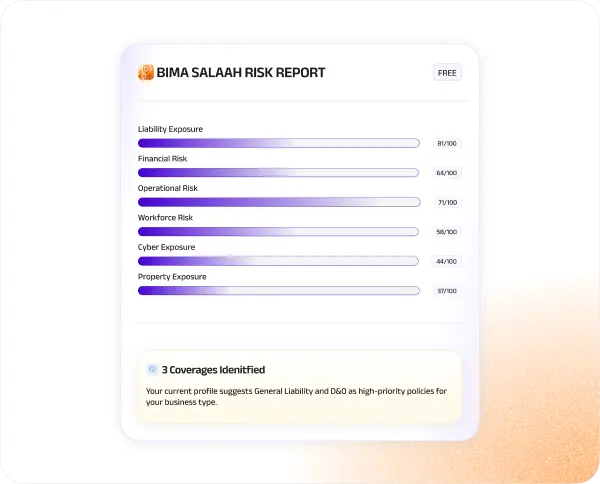
Every risk, read instantly.
Everything your business is exposed to, analysed before any cover is placed.
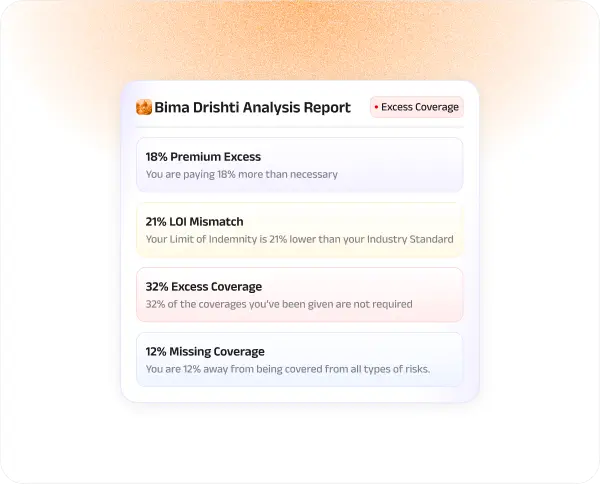
Every gap, caught early.
The gaps your current cover leaves open, surfaced before they turn into a claim.
Right coverage, issued in minutes.
The right cover, priced and placed with India's top insurers, in minutes.



India's builders trust BimaKavach.

Learn More About
Workmen Compensation Insurance for Manufacturing Industry
Workmen Compensation Insurance for Manufacturing Industry, made Simple
Manufacturing businesses should maintain appropriate machine guards, personal protective equipment, ventilation, electrical safety measures, and procedures for handling hazardous materials. Regular training and equipment inspections can help reduce workplace accidents. Insurance helps manage the financial impact of eligible compensation claims but does not replace safety measures.
A former worker may be eligible to claim compensation for an occupational disease linked to previous workplace exposure. Eligibility depends on the nature of the illness, employment history, evidence of exposure, and applicable requirements. The insurer’s response also depends on the policy terms and the circumstances of the claim.
Contract workers may be covered depending on the policy terms and employment arrangements. Businesses should declare eligible contract workers to the insurer when purchasing the policy. The factory may still face financial liability if the contractor cannot compensate an injured worker.
Safety equipment can reduce the frequency and severity of accidents, but it does not eliminate every workplace risk or compensation liability. WC insurance helps manage eligible compensation costs when an accident occurs despite preventive measures.
The premium depends on the number of employees, their job roles, the industry risk category, wage structure, and claims history. Manufacturing units involving hazardous processes may pay more than businesses engaged in light assembly. Indicative starting prices may be available for selected coverage levels, but the final premium depends on the insurer’s assessment.
Exclusive Cyber Risk Assessment
Bima Netra
 Instant Cyber Risk Report
- Actionable Posture Insights