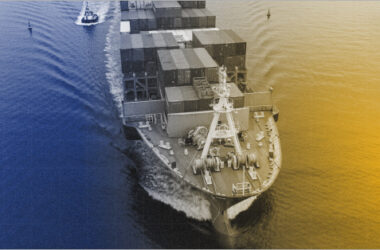



Marine Insurance is a key component of the constantly growing trade and logistics environment in India. As companies move products across states, countries and oceans, the possibility of their loss or damage during transit becomes inevitable. Cargo owners need to remain financially secure whether it is damage as a result of rough weather or damage as a result of an accident or theft. This is where Marine Insurance policies (particularly Marine Open Cover and Marine Open Policy) come in.
On the face of it, the two terms may seem the same. Both are, after all, designed to protect multiple shipments in the long run. However, in reality, they vary to a great extent, in terms of nomenclature, coverage, and points of application. In this blog, we will unravel the important differences between Marine Open Cover and Marine Open Policy , that would guide businesses to select the one which would best suit their operational rhythm.
Marine Insurance: A Brief Overview
Marine Insurance is regulated in India by the Marine Insurance Act, 1963 and is aimed at covering the losses or damages of goods, cargo, and freight during transportation via sea, air, rail, or road. It is not restricted to oceanic journeys–the word ‘marine’ embraces all the forms of transport which are related to trade.
Marine Insurance can be broadly divided into:
- Marine Cargo Insurance – covers goods in transit.
- Marine Hull Insurance – covers the vessel or ship itself.
For companies that transport goods on a regular basis, i.e. exporters, importers and logistics companies, the procedure of purchasing individual Marine Insurance per order may be cumbersome. That is where Marine Open Covers or Marine Open Policies provide a convenient solution. They provide uninterrupted, continuous protection without repetition of paperwork.
What Is a Marine Open Cover?
Marine Open Cover is a contract between the insurer and the insured whereby all the shipments made within a particular period are automatically covered, subject to a maximum limit. Imagine this insurance coverage as a continuous umbrella contract which continues to insure your shipments as they go out of your premises, on the condition that you declare them periodically.
Here’s how a Marine Open Cover typically works:
In a case where a business is likely to make multiple shipments in one year, the insurer provides a Marine Open Cover indicating terms, conditions, premium rates, and a limit on the maximum liability. Every shipment should then be declared under this cover and a different certificate of insurance is issued on that consignment.
Salient Features of Marine Open Cover:
- Automatic coverage: Every declared shipment is covered automatically.
- Flexible declarations: The insured must declare shipments regularly, usually monthly or quarterly.
- Predefined limit: The insurer’s liability is capped at a certain agreed value.
- Ease of renewal: Generally issued for a fixed period, often 12 months, after which it can be renewed or revised.
A Marine Open Cover is Ideal for: Exporters, importers or traders whose shipment volumes are predictable and require flexibility and control over an individual shipment declaration. Essentially, a Marine Open Cover is a master contract, on the basis of which a wide variety of marine policies can be issued within the period of validity.
What Is a Marine Open Policy?
A Marine Open Policy goes one step further with the concept of continuous coverage. An Open Policy is an independent insurance policy as opposed to an Open Cover which is just an agreement that requires a separate policy to be issued on a case by case basis. It is an automatic cover on all shipments to be made in the agreed terms – there is no necessity to take out individual policies each time.
The insured still needs to provide information about every shipment (such as nature of goods, value, and destination) but there is no break of coverage and the policy is active until either party cancels the policy or the total sum insured is exhausted.
Important Features of a Marine Open Policy:
- Automatic attachment of risk: Every shipment that falls within policy terms is automatically insured.
- Continuous validity: Typically remains in force indefinitely until cancelled or revised.
- Flexible premium adjustment: Premiums are charged based on the actual value of shipments declared.
- Simplified documentation: No need for separate policy issuance for each shipment.
Ideal for: Businesses with regular and high-frequency shipments who prefer uninterrupted coverage without repetitive documentation.
To put it simply, a Marine Open Policy acts as a live, ongoing insurance cover — always ready to protect the next consignment.
Marine Open Cover and Marine Open Policy : Key Differences
While both options provide coverage for multiple shipments, their operation and structure differ considerably. The table below summarizes the key differences:
| Basis of Difference | Marine Open Cover | Marine Open Policy |
| Nature of Contract | It is an agreement to issue marine policies for future shipments. | It is an actual insurance policy covering all shipments automatically. |
| Coverage Start | The insurance coverage starts when individual policies are issued for declared shipments. | The coverage starts automatically for all shipments within the agreed scope. |
| Documentation | This type of coverage requires separate certificates/policies for each shipment. | No separate policy issuance required for each shipment. |
| Duration | Typically valid for a specific period (e.g., 12 months). | Continuous until cancelled or the coverage limit is exhausted. |
| Premium Payment | Based on declarations and insurance policy issuance. | Premium adjusted periodically on total declared shipments. |
| Risk Attachment | Risk attaches only after each declaration is accepted. | In this type of coverage, the risk attaches automatically as soon as shipment occurs. |
| Administrative Effort | Slightly higher due to frequent declarations and certificates. | Lower, as one master policy covers all shipments. |
| Ideal Users | This type of coverage is ideal for occasional exporters or importers. | Businesses with regular, frequent transits. |
Understanding these nuances helps businesses avoid underinsurance or gaps in protection — two issues that can prove costly in the event of a loss.
How Marine Open Cover and Marine Open Policy Work: Practical Examples
Let’s simplify with an example.
Case 1: Marine Open Cover
A Mumbai based electronics exporter is anticipating to export 20 packages abroad within six months. The company takes out a Marine Open Cover with an insurer, fixing the maximum liability at ₹10 crore. Whenever a shipment is made, the exporter should declare it to the insurer who will provide a certificate to that particular consignment. Also, in this type of coverage , every declaration will be considered to be an independent policy within the primary cover.
Case 2: Marine Open Policy
A textile company in Surat exports products nearly on a daily basis and hence, dealing with dozens of shipment declarations would be clumsy for this company. Therefore, it chooses to use a Marine Open Policy, on which all shipments are automatically insured. The company needs to confirm the total value shipped at the end of every month, and the insurer increases or decreases the premium accordingly.
The difference?
In the former, the protection is subject to every such declaration and issuance of a certificate. In the latter, the insurance coverage is automatic and continuous. Both are safe, though the latter is more convenient in case of high-volume businesses.
Marine Open Cover and Marine Open Policy: Benefits & Limitations
A. Marine Open Cover:
Benefits:
- Offers flexibility to manage specific shipment declarations.
- Suitable for businesses with seasonal or moderate trade volume.
- Enables risk assessment for each shipment individually.
Limitations:
- Requires more administrative coordination.
- Coverage does not automatically attach until a declaration is made.
- Possible delays in policy issuance for urgent shipments.
B. Marine Open Policy
Benefits:
- Automatic and continuous insurance coverage for all shipments..
- Saves on administrative workload — no need for multiple certificates.
- Simplified premium administration through periodic settlements.
Limitations:
- May involve higher upfront commitment.
- Not suitable in cases where a business has irregular shipment schedules or where shipments are unpredictable.
- Needs a careful record-keeping to make sure that all the shipments are declared properly.
Essentially, the operational rhythm and frequency of shipment are the major determinant while choosing between these two types of coverage.
How to Choose Between Marine Open Cover and Marine Open Policy
Selecting the right marine insurance structure is more than a formality — it’s a strategic decision. Here’s what businesses should consider:
- Shipment Frequency:
- Occasional or seasonal shipments? Opt for Marine Open Cover
- Continuous shipments? Choose a Marine Open Policy for automatic protection.
- Administrative Capacity:
- If your team can handle declaration paperwork, an Open Cover works fine.
- If you prefer minimal admin work, go for an Open Policy.
- Trade Volume and Value:
- High-volume exporters benefit from the seamless nature of an Open Policy.
- Smaller traders gain flexibility with an Open Cover.
- Insurer’s Terms and Expertise:
- Not all insurers offer identical terms — evaluate their credibility, claim handling, and experience in marine insurance.
- Not all insurers offer identical terms — evaluate their credibility, claim handling, and experience in marine insurance.
- Risk Management Approach:
- For businesses seeking tighter control over each consignment’s risk, Open Cover provides better oversight.
- For those focusing on operational efficiency, Open Policy offers simplicity.
The selection can be narrowed down as per the trade pattern and financial exposure of a company , after a conversation with an insurance broker or risk advisor.
Regulatory and Compliance Considerations in India
The Insurance Regulatory and Development Authority of India (IRDAI) regulates marine insurance in India. The Insurers are obliged under the Marine Insurance Act, 1963, which spells out the rights, duties, and obligations of the insurer and that of the insured.
Some of the major compliance pointers include:
- Correct Declarations: To prevent any possible disputes, all the shipments have to be declared accurately and honestly.
- Proper Documentation: Keep bills of lading, invoices, and insurance certificates for claim purposes.
- Premium Payments: Have to match the stated values and delivery schedules.
- Claims Procedure: Smooth settlement requires immediate intimation and comprehensive documentation.
Any violation of the norms of declarations or hiding of facts may lead to the refusal of claims or cancellation of the insurance policy.
The Bottomline:
Both the Marine Open Policy and the Marine Open Cover are an inseparable part of Indian marine insurance scene. The mechanisms of the two are different, though they serve the same purpose, namely to protect goods in transit.
A Marine Open Cover is a customized cover that is used when the frequency of shipment is moderate and the business needs specific cover on a consignment-by-consignment basis. Conversely, a Marine Open Policy is created to suit businesses that have high shipment volume and frequent usage but require uninterrupted and automatic coverage with a minimum administrative burden.
The selection of the correct one is based on the frequency of the movement of your goods, the way in which you organize the insurance papers, and the extent to which you wish to control separate shipments.
In a world where global supply chains are intricate and unforeseeable, a suitable Marine Insurance option might be the difference between business survival and costly interruption. Check your shipment,consult with your insurer, and make sure your cargo sails well – no matter where the tide carries it.