


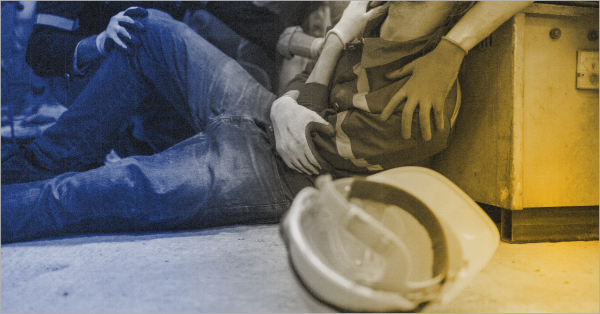

Every year, thousands of workers in Indian factories get injured at the workplace. And for a lot of manufacturing businesses, the financial and legal consequences can come as a big surprise. The statutory liabilities keep adding up, the operations get delayed, and the disputes over compensation continue for a long time. If there is no proper protection in place, one serious accident alone can push a business to the brink of a major financial crisis.
Here comes Workmen Compensation Insurance for manufacturing companies as a true life-saver. It narrows down the gap between an employer’s legal duty and financial ability to fulfill it. And, more importantly, does that quickly and smoothly without causing any operational disruption.
In this guide, we discuss everything that matters to manufacturing companies: what workmen’s compensation insurance for manufacturing businesses is, what it covers & excludes, and the need of this insurance for manufacturing businesses. We will also show its application to manufacturing companies, in comparison to ESIC.
Read on!
________________________________________________________________________________________________
Key Takeaways
- Workmen’s Compensation Insurance covers manufacturing employees for workplace injuries, occupational diseases, disability, and death. It fulfills the employer’s legal duty under the Employees’ Compensation Act, 1923.
- Indian law mandates employer compensation for all work-related injuries; an uninsured accident can trigger severe financial and legal consequences.
- Coverage extends to permanent/temporary disability, occupational diseases (Schedule III), and legal defence costs
- Policy exclusions include wilful misconduct, intoxication, self-inflicted injuries, pre-existing conditions, and incidents outside the scope of employment.
- ESIC does not cover all workers . It excludes contract labour, workers above the ₹21,000 wage threshold, and those in non-notified areas require a dedicated WC policy.
- A WC policy costs far less than a single uninsured serious accident — making it essential for operational continuity, legal compliance, and worker welfare.
________________________________________________________________________________________________
What is Workmen’s Compensation Insurance? ( An Overview)
Workmen’s compensation insurance india is a specialised policy that safeguards employers from the financial liability when an employee suffers an injury, illness or death that is induced by his/her work ( or occurs at the workplace). This policy covers the compensation payable to the employee (or, if the employee has died, to his or her legal heirs), medical treatment, and legal defense costs, if any. Thus, it shields the business from potentially devastating out-of-pocket expenses.
The primary legislation that governs a workmen’s compensation insurance policy india is the Employees’ Compensation Act, 1923 (originally known as the Workmen’s Compensation Act, 1923). This Act has served as the foundation for worker protection in India over the last century. It places a direct legal responsibility on the employer to compensate workers for injuries sustained during their employment.
Need of Workmen Compensation Insurance for Manufacturing Companies in India
Manufacturing is one of India’s most hazardous sectors and the statistics clearly speak for themselves. From handling heavy machinery or dealing with toxic chemicals, factory workers encounter occupational hazards that can bring fatal or serious injuries without any prior warnings. The Employees’ Compensation Act, 1923 places a direct legal obligation on every employer to compensate the affected workers. Violation of this obligation can invite serious financial and legal consequences for employers. This is precisely where workmen compensation insurance for manufacturing companies steps in . It converts an unpredictable statutory liability into a manageable financial commitment that protects both the business as well as the workforce that business depends on.
Beyond legal compliance, the need for a workmen’s compensation insurance policy India runs deeper for manufacturers. A typical factory floor employs a mix of permanent employees, contract workers, and daily wage labourers — all exposed to distinct hazards, and all legally entitled to compensation. Standard health insurance products do not cover employer liability or occupational diseases listed under Schedule III of the Act. A purpose-built WC policy fills that gap comprehensively. For any business serious about operational continuity, worker welfare, and financial resilience, workmen’s compensation insurance India is not an afterthought — it is a cornerstone of responsible risk management.
What Does Workmen’s Compensation Insurance for Manufacturing Companies Cover?
A robust WC policy does far more than satisfy a legal checkbox. A manufacturer can be subject to huge financial menace when unfortunates risks play out right on the factory floor. Workmen compensation insurance for manufacturing companies provides a structured financial shield to such a business. Here is what a standard workmen’s compensation insurance policy india typically covers:
- Death Due to Workplace Accident: In the event of a worker’s demise due to an accident at work, the insurance policy provides the legal heirs of the deceased with statutory compensation. For manufacturing companies that employ personnel in high-risk areas such as furnace operations, heavy fabrications, or electrical maintenance, this coverage remains the most elemental form of protection that a workmen’s compensation insurance india policy can offer.
- Permanent Disability (Total and Partial): This is a provision for compensation in cases of injuries leading to permanent disability that can permanently affect a worker’s earning capacity. Whether it is the complete loss of a limb or a partial bodily impairment, WC insurance for manufacturing calculates the payout as a percentage of the statutory compensation amount that the Employees’ Compensation Act, 1923 has provided in Schedule I.
- Temporary Total Disability: When a workplace injury leaves a worker unable to report to duty for an extended period, the wc policy compensates for the loss of wages during recovery. Typically, a half-monthly payment is provided for the duration of disablement, subject to policy limits.
- Occupational Diseases: Prolonged exposure to industrial hazards ( such as silica dust, chemical fumes, excessive noise, or toxic substances) can cause serious long-term illnesses. Workmen’s compensation insurance India covers occupational diseases listed under Schedule III of the Act, a category that most group health policies simply do not address.
- Legal Defence Costs & Employer’s Liability: When an injured worker or their family initiates legal proceedings, the costs can compound quickly. Insurance for manufacturing companies with a built-in legal liability extension covers the employer’s defence expenses. Thus, it ensures that a compensation dispute does not become a separate financial crisis on top of the claim itself.
What Workmen’s Compensation Insurance Does Not Cover: Key Exclusions
Every workmen’s compensation insurance policy india comes with defined boundaries. Understanding what falls outside your wc policy is just as important as knowing what it covers ,especially when a claim is on the line.
- Wilful Misconduct or Intoxication: Any injury resulting from an employee’s deliberate misconduct, recklessness, or intoxication at the workplace is excluded. No WC insurance for manufacturing will honour a claim where the worker’s own wilful actions directly caused the accident.
- Injuries Outside the Course of Employment: Workmen’s compensation insurance for manufacturing companies only responds to injuries that occur during and in direct connection with work duties. Accidents that happen during unauthorised activities or personal errands on company premises typically fall outside coverage.
- Pre-existing Medical Conditions: A wc policy does not cover disabilities or health conditions that existed before employment, unless the nature of the work has directly aggravated the condition in a manner recognised under the Act.
- Self-Inflicted Injuries: Deliberate self-harm is universally excluded across all insurance for manufacturing companies. Insurers will not compensate for injuries that a worker intentionally causes to themselves.
- War, Nuclear Risks, and Civil Unrest: Like most general insurance products, workmen’s compensation insurance India excludes losses arising from war, nuclear events, terrorism, or large-scale civil disturbances.
ESIC vs. Workmen’s Compensation Insurance: Which Applies to Your Factory?
This is one of the most common points of confusion among Indian manufacturers. The Employees’ State Insurance (ESI) Scheme is a social security programme run by the Government. It applies to non-seasonal factories with 10 or more employees, and employees whose earnings do not exceed a certain wage limit (currently Rs. 21,000 per month). When ESIC is applicable, the employer contributes a percentage of wages into the scheme, which then provides medical and compensation benefits to covered workers.
However, ESIC does not provide coverage for all workers in all geographies. Contract workers employed by third parties, workers in areas where ESIC is not yet notified, and workers earning above the wage threshold fall outside the ambit of ESIC. TThis is exactly why workmen’s compensation insurance for manufacturing businesses is absolutely necessary. In many manufacturing setups, especially those heavily dependent on contract labour or those located in non-notified areas, a wc policy is the only available statutory safety net.
Besides, even in establishments covered by ESIC, employers may (and often should) get a wc policy to cover residual liability and legal defence costs that ESIC does not address. Hence, these two instruments are complementary in nature, not mutually exclusive.
Final Thoughts
India’s manufacturing sector is the backbone of the economy, and the workers who power it deserve more than goodwill. They deserve structured, legally sound financial protection. Workmen compensation insurance for manufacturing companies is the mechanism through which that protection is delivered, transforming an employer’s statutory obligation into a practical safety net that works for everyone.
Whether you run a fabrication shop with 50 employees or an automotive plant with 500 workers, the fundamentals are the same. Make sure that you know your legal responsibilities, accurately identify your workforce, select a workmen’s compensation insurance for manufacturing policy that really fits your business activities. You would also do well to maintain the type of documentation that facilitates easy and quick claim processing. The cost of a good workmen’s compensation insurance policy india can be only a fraction of what a single unprotected serious accident might cost you; financially, legally, and reputationally.
Assess your current coverage today. Consult a certified insurance consultant who has an expert knowledge of the manufacturing industry. And make sure that the employees who manufacture your products every day are given the protection they truly deserve.
Protect Your Workforce. Protect Your Business.
At Bimakavach, we understand that every worker in your manufacturing business is a human responsibility as well as a business asset. We help Indian manufacturing companies find the right workmen’s compensation insurance policy , best suited to their workforce size, industry risk profile, and compliance requirements. Our team of skilled consultants will take you through every step of the process, from policy selection to claim support. Don’t wait till an accident makes you realize the deficiency of your coverage. Contact Bimakavach today and get the protection that both your business and your workers deserve.